Adoration of the Magi
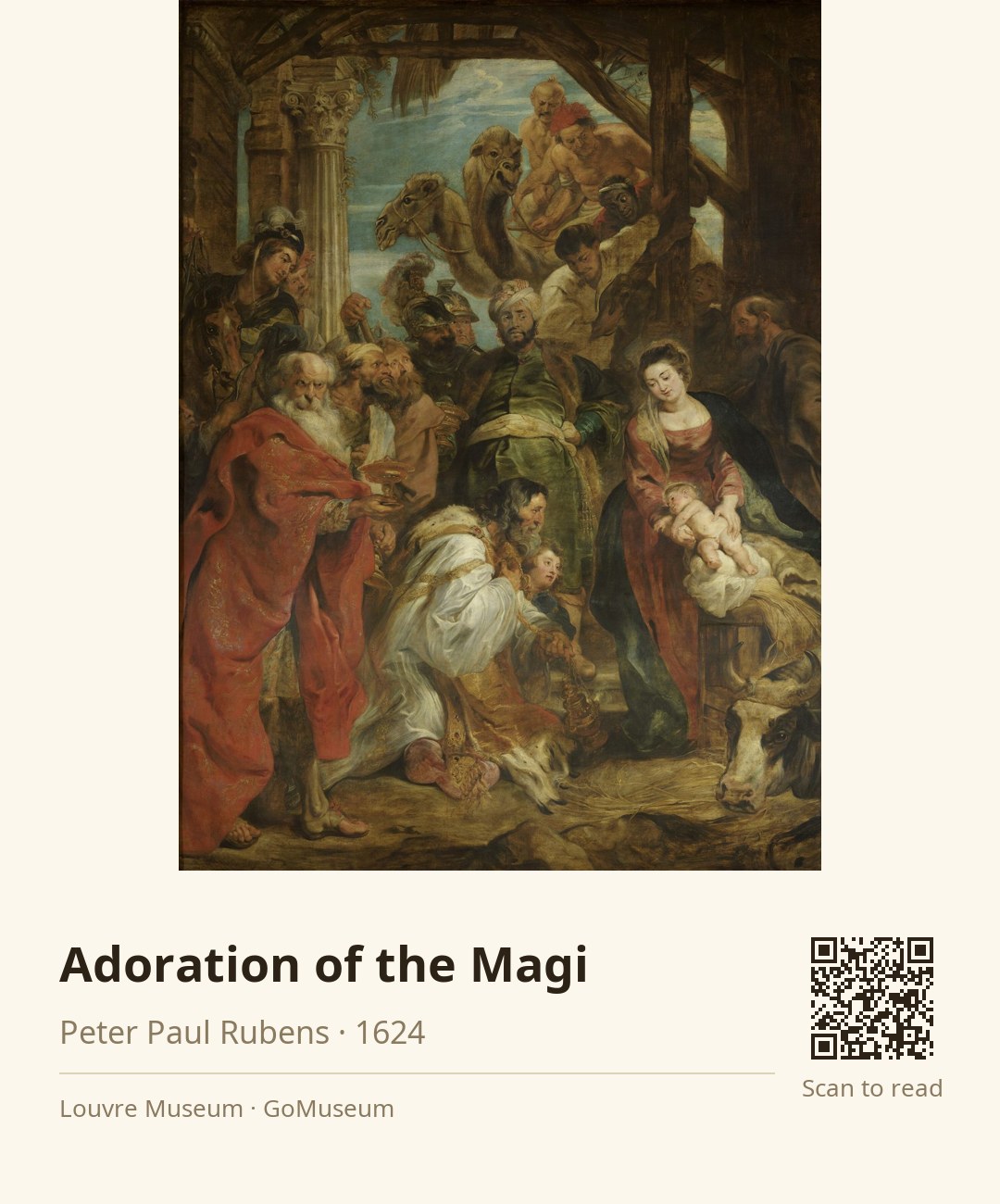
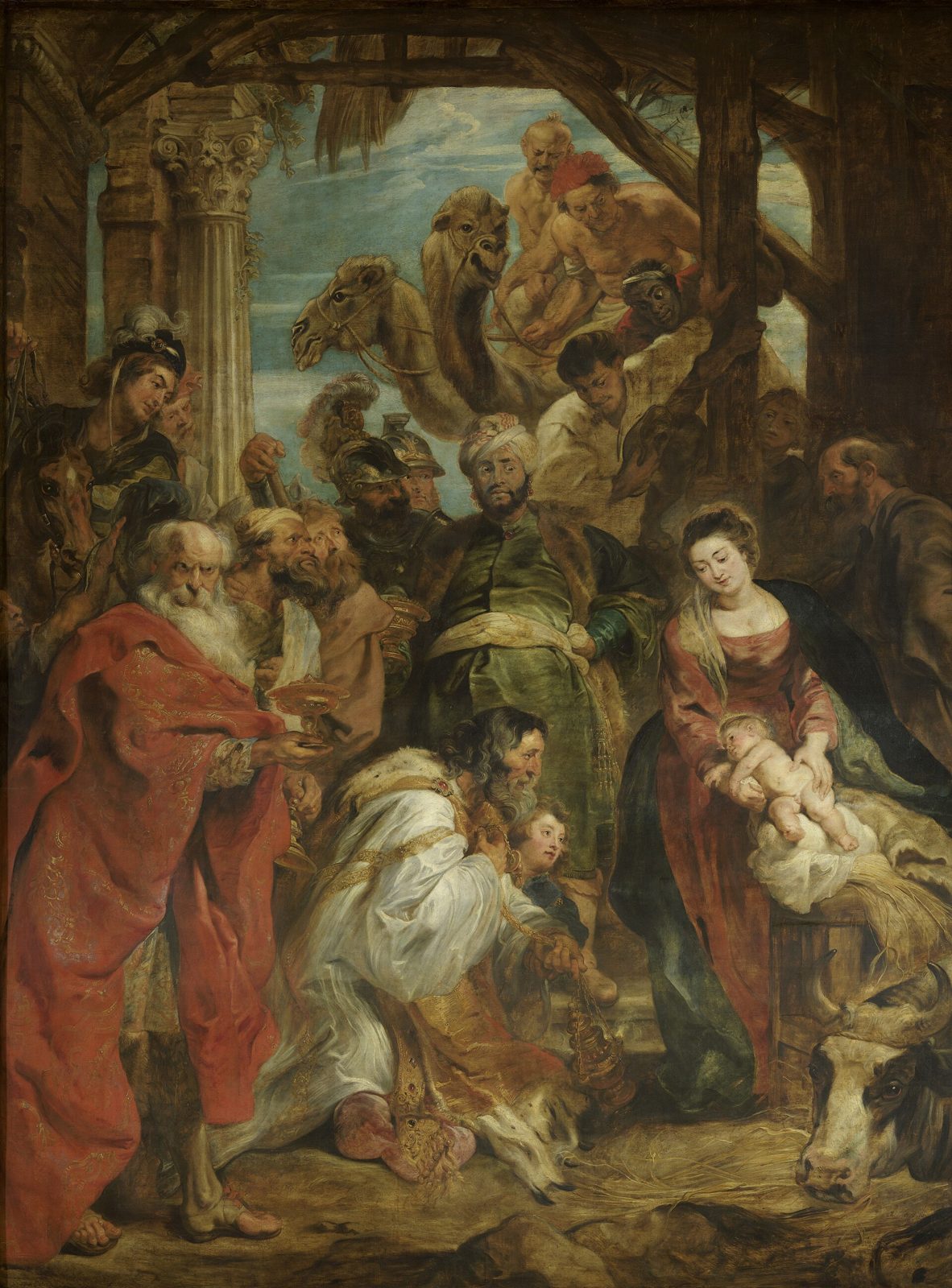
🎧 This work has audio narration — listen in the appTake a moment to really soak in the vibrancy of Rubens' "Adoration of the Magi." Notice how the figures seem to burst with life, especially the three kings in their richly colored robes. Look closely at the man in the striking red cloak—he’s not just a king; he’s a symbol of generosity, offering gold to the newborn Jesus.
This detail matters because it captures the essence of the moment: the kings are not merely presenting gifts, but acknowledging the significance of Jesus as both divine and human. Each gift—gold, frankincense, and myrrh—carries deep meaning, representing Christ’s kingship, divinity, and future suffering.
Rubens painted this masterpiece in 1624, commissioned for an abbey altar in Antwerp, and it reflects the Baroque style’s emphasis on emotion and movement, pulling you into the scene.
As you stand here, think about the rich tapestry of cultures represented by the Magi, each traveling from afar to honor a child who would change the world. What does this moment of unity and reverence say to you today?
Sir Peter Paul Rubens was a Flemish artist and diplomat born on June 28, 1577, in Siegen, Germany. He is celebrated as a leading figure of the Flemish Baroque tradition, renowned for his dynamic compositions that intertwine classical and Christian themes. Rubens's work is characterized by vibrant color, movement, and sensuality, aligning with the dramatic style of the Counter-Reformation. His prolific output includes altarpieces, portraits, landscapes, and history paintings, with a catalog of over 1,400 works.
Raised in Antwerp after fleeing religious persecution, Rubens was a well-educated humanist and skilled diplomat, knighted by both Philip IV of Spain and Charles I of England. He managed a large workshop that produced art for European nobility and collectors, and he was also an influential art dealer. Rubens's designs extended beyond painting; he created tapestries, prints, and even contributed to architectural projects.
His legacy endures in the art world, where he is recognized for his mastery of color and form, and his ability to convey emotion and drama. Rubens's impact on Baroque art is profound, making him a pivotal figure in the evolution of Western art history. He passed away on May 30, 1640, leaving behind a rich artistic heritage that continues to inspire.
In 1624, Peter Paul Rubens was commissioned to create 'Adoration of the Magi' by Matthæus Yrsselius, the abbot of St. Michael's Abbey in Antwerp. The painting was intended as an altarpiece, and Yrsselius paid for it in two installments of 750 guilders each, one in 1624 and the other in 1626. This work reflects Rubens' status as a leading artist of the Baroque period, returning to Antwerp after years abroad. It was returned to Antwerp in 1815, but by then, the abbey was abandoned. Today, it resides in the Royal Museum of Fine Arts Antwerp, where it continues to draw admiration for its vibrant colors and dynamic composition.
Rubens employed a striking technique in 'Adoration of the Magi,' using oil on canvas to create a large-scale work that measures 447 cm by 336 cm. Notice the brushwork—it's both fluid and energetic, capturing the movement of the figures as they converge on the Holy Family. The use of light is masterful; it highlights the faces of the Magi, drawing your eye to their expressions of reverence and awe. The color palette is rich and varied, with deep reds, golds, and earthy tones that evoke a sense of warmth and festivity. The composition is structured yet dynamic, with the figures arranged in a way that leads your gaze toward the center, where Mary and Jesus are positioned. This arrangement creates a sense of depth and invites you into the scene, making you feel as if you are part of this momentous occasion.
This work exemplifies Rubens' mastery in blending dramatic emotion with rich color and movement, influencing countless artists who followed. His ability to depict complex narratives through dynamic compositions helped shape the future of religious art, making it more accessible and emotionally resonant. The painting's grandeur and detail invite viewers into a world where the divine meets the human experience, a hallmark of Rubens' legacy that continues to inspire artists today.
One surprising tidbit about 'Adoration of the Magi' is that the Virgin Mary in the painting is believed to have been modeled after Rubens' first wife, Isabella Brant. This personal connection adds an intimate layer to the artwork, suggesting that Rubens infused his own life and relationships into this monumental religious scene.
During the French occupation, 'Adoration of the Magi' was transferred to Paris along with many other altarpieces, highlighting the tumultuous history of the region. It was returned to Antwerp in 1815, but by then, the abbey for which it was created had been abandoned.
The painting is featured in the Belgian comic book series 'Suske en Wiske,' where it plays a significant role in the storyline, showcasing its influence on popular culture and its ability to inspire narratives beyond traditional art appreciation.