 Image: Shonagon · Gary Todd from Xinzheng, China · MiguelHermoso · MiguelHermoso · MiguelHermoso
Statue of Karomama, the Divine Adoratrice of Amun
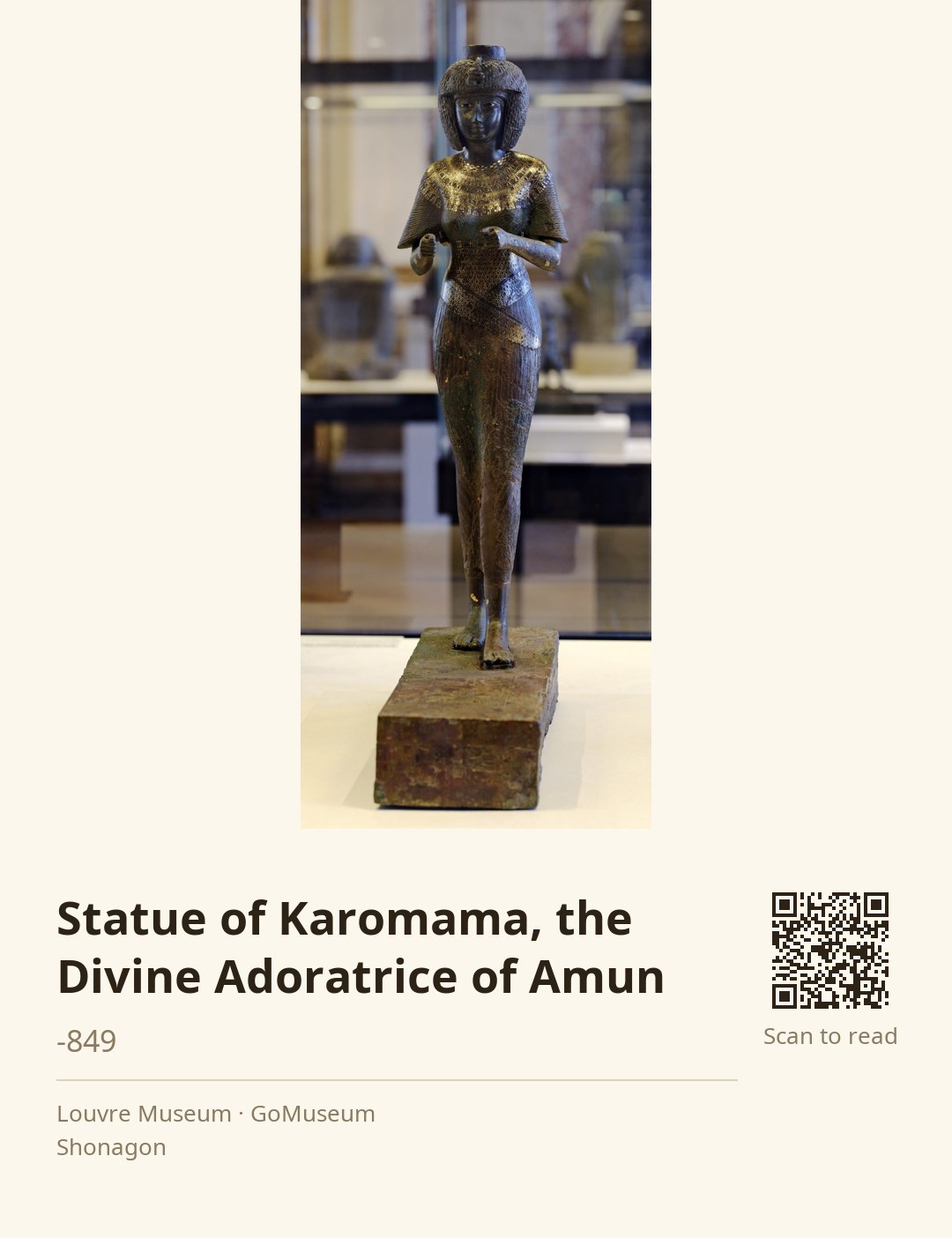
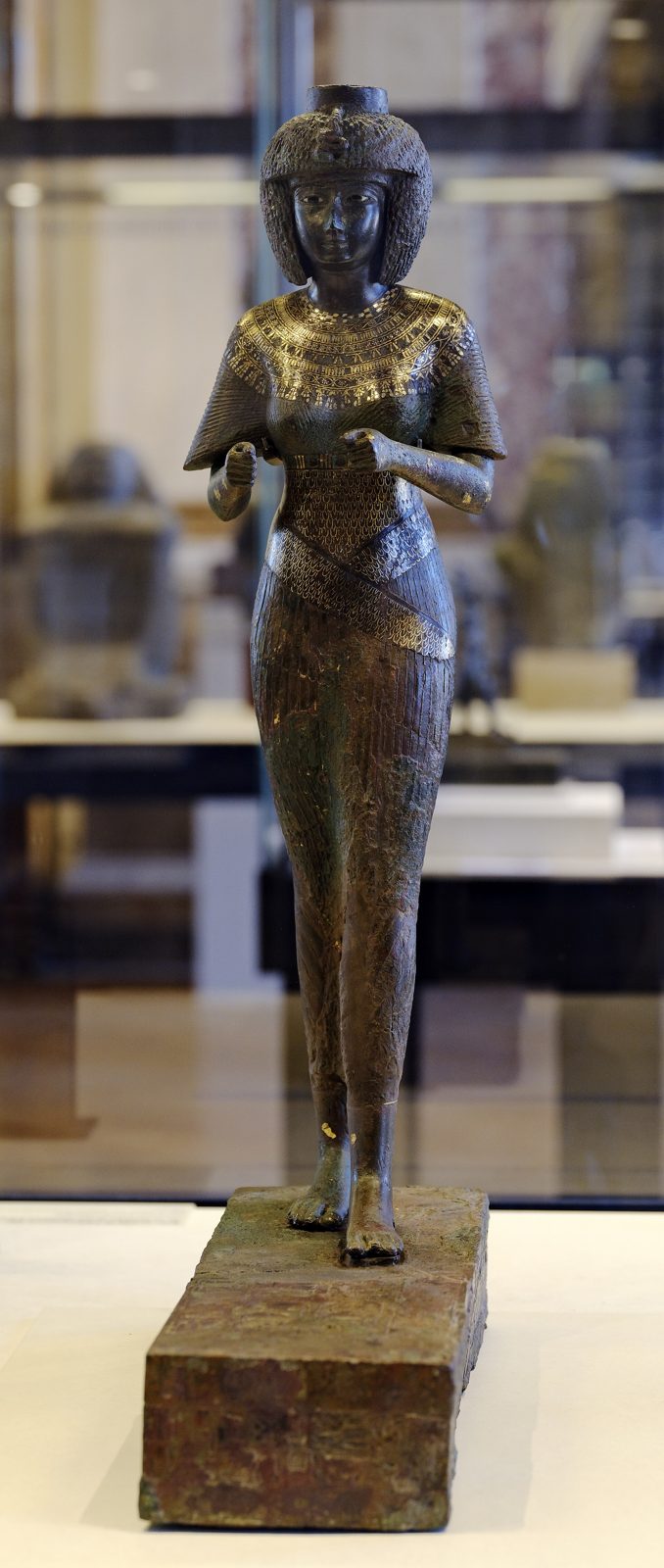
🎧 This work has audio narration — listen in the appTake a moment to really look at the Statue of Karomama, the Divine Adoratrice of Amun. Notice how her serene expression seems to transcend time, inviting you into the world of ancient Egypt. Focus on the intricate details of her attire, especially the shimmering inlays of gold and silver that catch the light. These embellishments aren’t just decorative; they signify her high status and divine connection, as she was a priestess dedicated to the powerful god Amun.
Karomama wasn’t just any priestess; she was a daughter of Osorkon I, embodying the divine role of a mediator between the gods and the people. The bronze used here, combined with the damascening technique, showcases the exceptional craftsmanship of the time, reflecting both artistry and devotion.
As you stand here, think about the journey this statue has taken—from the sands of ancient Egypt to the halls of the Louvre. What stories do you think she could tell if she could speak?
As you gaze at the Statue of Karomama, pay close attention to the bronze surface. The technique of damascening is particularly striking here; it involves inlaying gold, silver, and electrum into the bronze, creating a shimmering effect that enhances the statue's divine aura. This meticulous craftsmanship not only showcases the skill of ancient artisans but also serves a symbolic purpose, highlighting Karomama's elevated status as a priestess. The intricate details, from the folds of her garments to the delicate facial features, reveal a restless energy in the brushwork, inviting you to explore every nuance.
The Statue of Karomama was crafted around 849 BCE during Egypt's 22nd Dynasty, a time when religious devotion was paramount. Discovered in the sacred site of Karnak, it was commissioned by Ahentefnakht, the overseer of the treasury, to honor this esteemed priestess. Initially misidentified by Jean-François Champollion in 1829 as Karomama II, the wife of Pharaoh Takelot II, it was later clarified that this statue represents Karomama Meritmut, a daughter of Osorkon I.
This statue, with its intricate damascening of gold and silver, showcases the high level of craftsmanship of the time and highlights the importance of priestesses in the worship of Amun. Its misidentification by Jean-François Champollion sparked further interest in the lives of these powerful women, influencing future archaeological studies and interpretations of gender roles in ancient Egypt. This piece stands as a testament to the divine authority women held, reshaping how we view their influence in a male-dominated society. Remember, this isn't just a statue; it's a bridge to understanding a complex world where faith and power intertwined.
Here's a fascinating tidbit: when Jean-François Champollion acquired the Statue of Karomama in 1829, he mistakenly identified her as Karomama II, the wife of Pharaoh Takelot II. But in reality, this statue represents Karomama Meritmut, a daughter of Osorkon I. This mix-up adds a layer of intrigue to the statue's story, connecting us to the past and the scholars who sought to understand it.
The statue was found in Karnak, a major religious center in ancient Egypt, which was dedicated to the god Amun. This location underscores the statue's importance as a representation of divine worship and the priestess's role in mediating between the gods and the people.
The statue employs the damascening technique, which involves inlaying gold, silver, and electrum into bronze, creating a striking visual effect. This meticulous craftsmanship not only highlights the artistic skills of ancient artisans but also serves to elevate the status of the figure represented, emphasizing her divine connection.