 Image: anonymous
Great Mongol Shahnameh
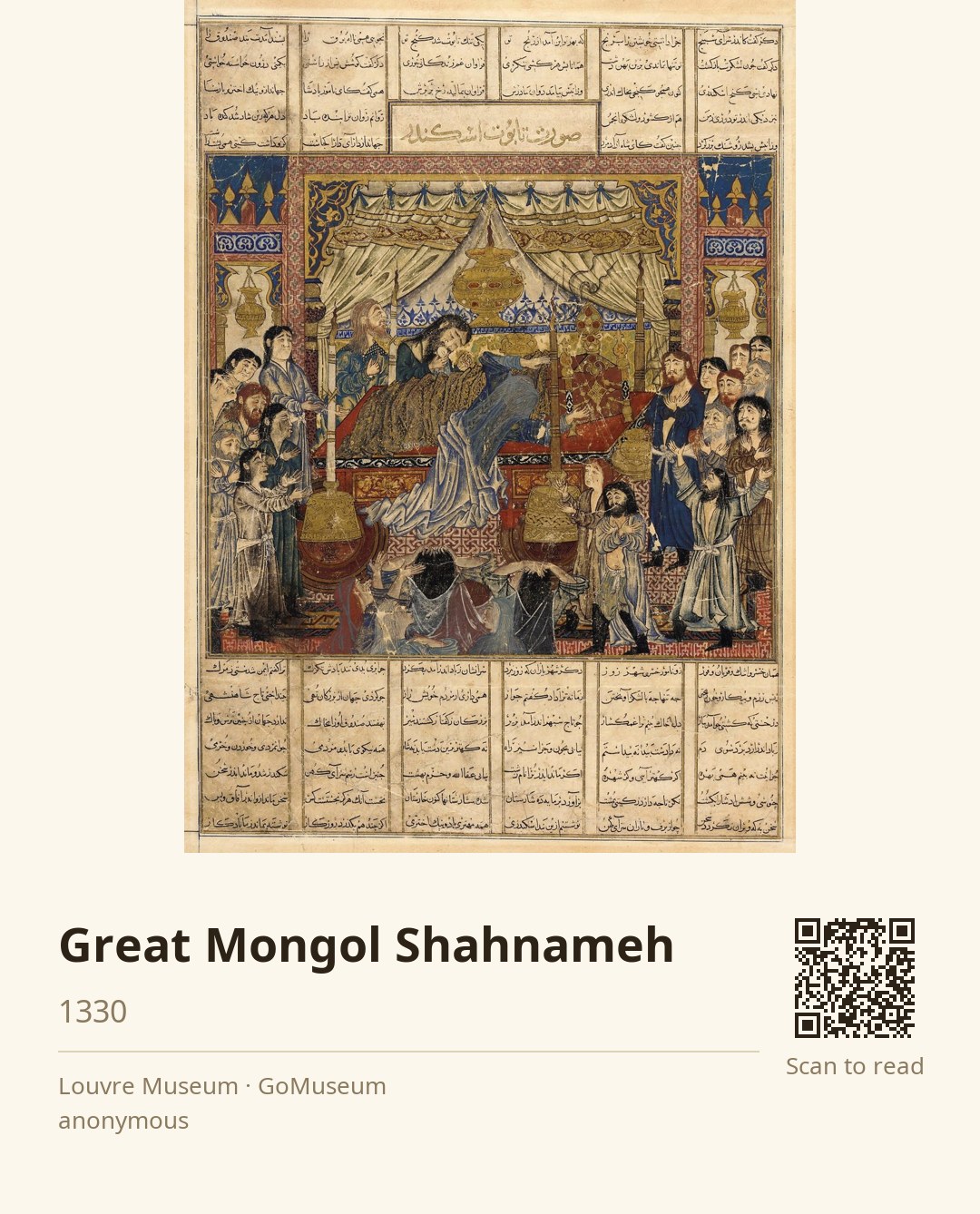
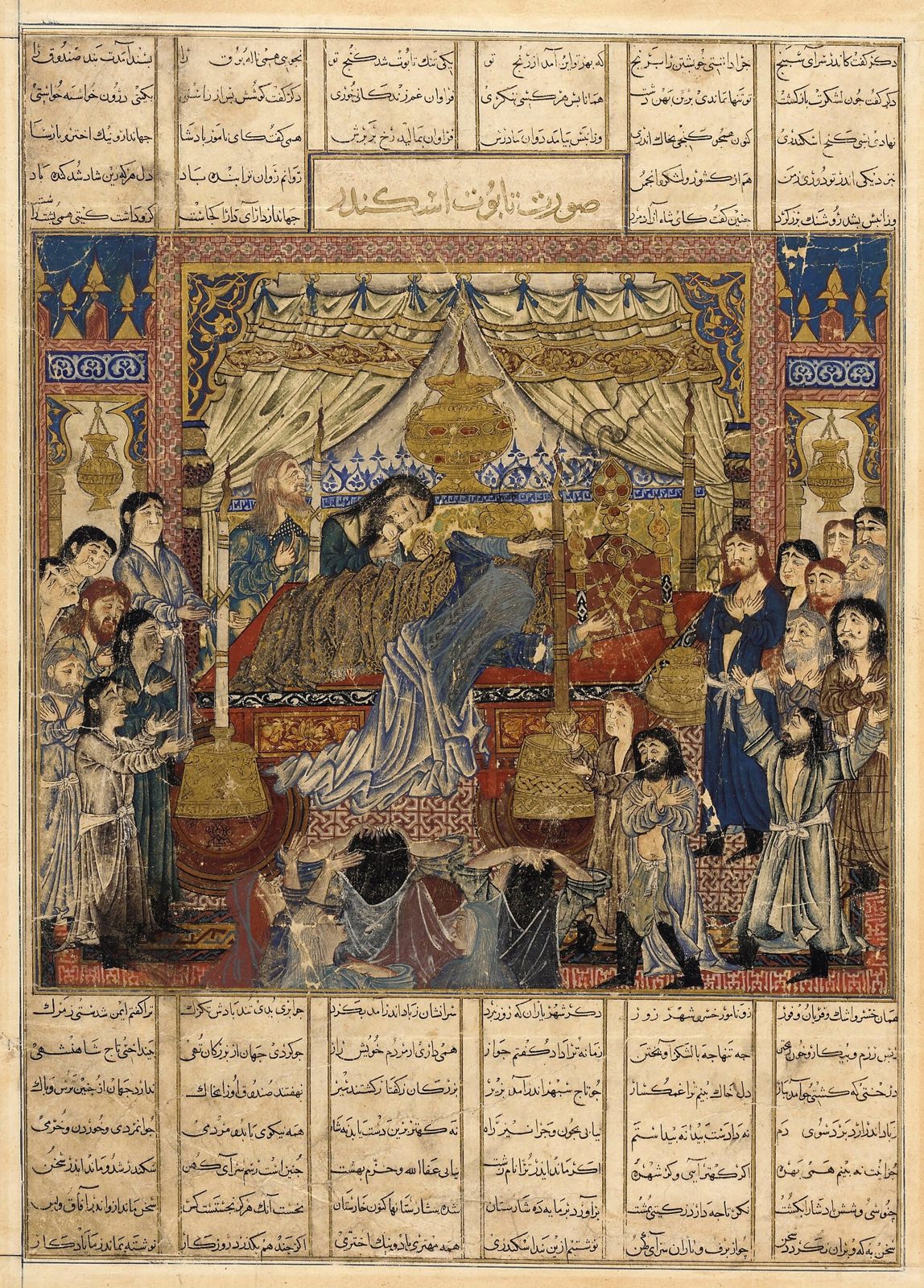
🎧 This work has audio narration — listen in the appAs you stand before the Great Mongol Shahnameh, let your eyes wander over the intricate details of the miniatures. Notice how the figures seem to leap off the page, their emotions vividly captured in a way that feels almost modern. Look closely at the gnarled trees and swirling clouds—these elements reflect the influence of Chinese art, merging seamlessly with Persian tradition.
The Ilkhanate dynasty, ruling Persia after the Mongol conquests, was a melting pot of ideas and styles, and this work embodies that blend. The emotional intensity and eclectic style of the miniatures reveal the political tensions and social dynamics of the era, from the role of women to the impact of the Black Death.
The Shahnameh itself is an epic poem that traces the history of Persia, a narrative that was crucial for asserting national identity during turbulent times. Imagine the artists, perhaps working in Tabriz, experimenting with new techniques and styles, knowing they were creating something that would resonate for centuries.
So, as you take in this masterpiece, think about the stories it holds. What emotions do you see reflected in the faces of the figures? What does it tell you about the world of the 14th century?
The Great Mongol Shahnameh, also known as the Demotte Shahnameh, was likely commissioned for a high-ranking official at the Ilkhanate court in Tabriz around the 1330s. Although the exact details of its commission remain murky, it was intended to be a monumental work, originally planned to consist of about 280 folios and 190 illustrations. However, it was never completed. This manuscript remained in Persia until the early 20th century when it was disassembled by art dealer George Demotte, who sought to profit from its individual pages. Today, only 57 miniatures survive, scattered across various collections worldwide, many altered or damaged in the process. The manuscript's journey reflects the turbulent history of Persia during the Mongol rule and the subsequent fragmentation of its cultural treasures.
One fascinating detail about the Great Mongol Shahnameh is its unique approach to illustrating the story of Iskandar, a Persianized version of Alexander the Great. Unlike the more extensive illustrations dedicated to the legendary hero Rustam, the manuscript dedicates a significant number of miniatures to Iskandar, suggesting a deliberate choice by the artists to highlight themes of dynastic legitimacy and the complexities of leadership during a time of political upheaval.
The Great Mongol Shahnameh features a significantly higher number of miniatures dedicated to Iskandar, suggesting a deliberate emphasis on themes of dynastic legitimacy and leadership complexities, contrasting with the less extensive illustrations of Rustam.
The miniatures showcase a blend of influences, including elements from Chinese art such as gnarled trees and swirling clouds, as well as Christian depictions of grief, indicating a rich cross-cultural exchange during the Ilkhanate period.