The Birth of the Virgin
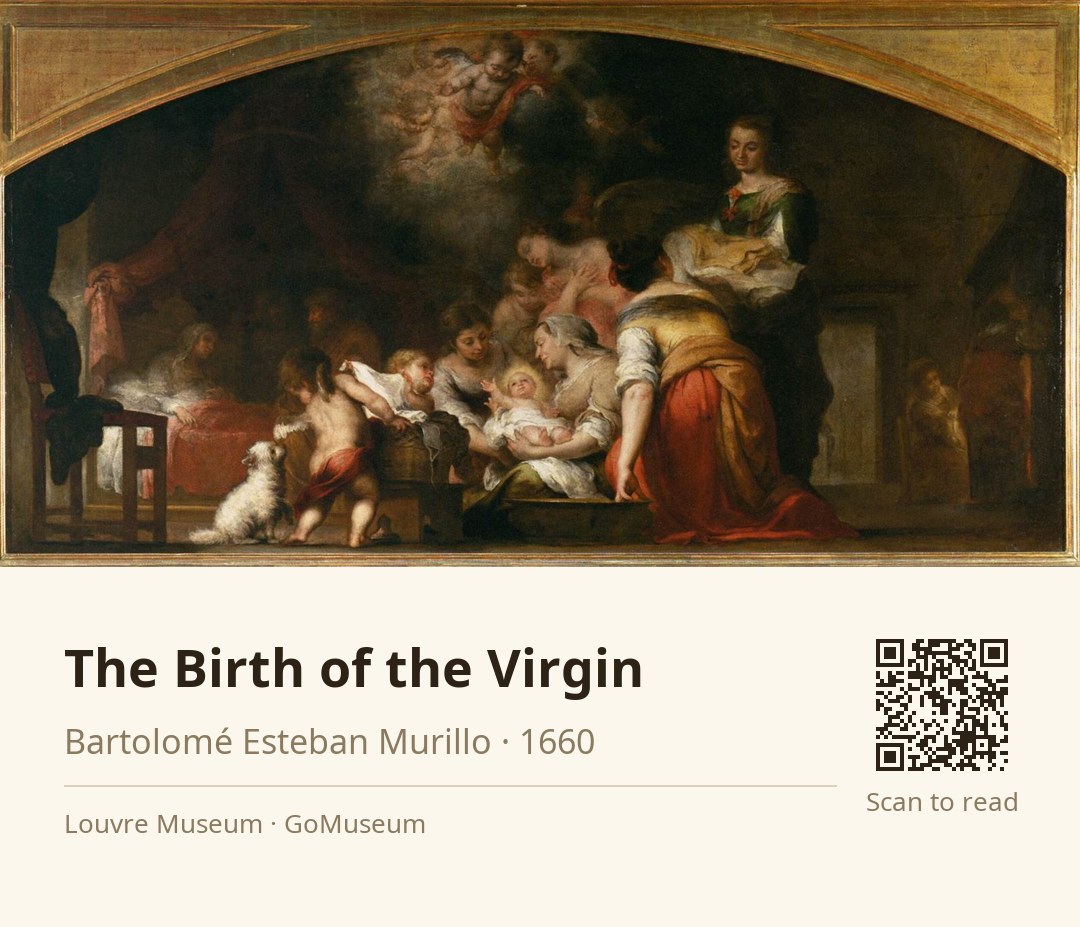
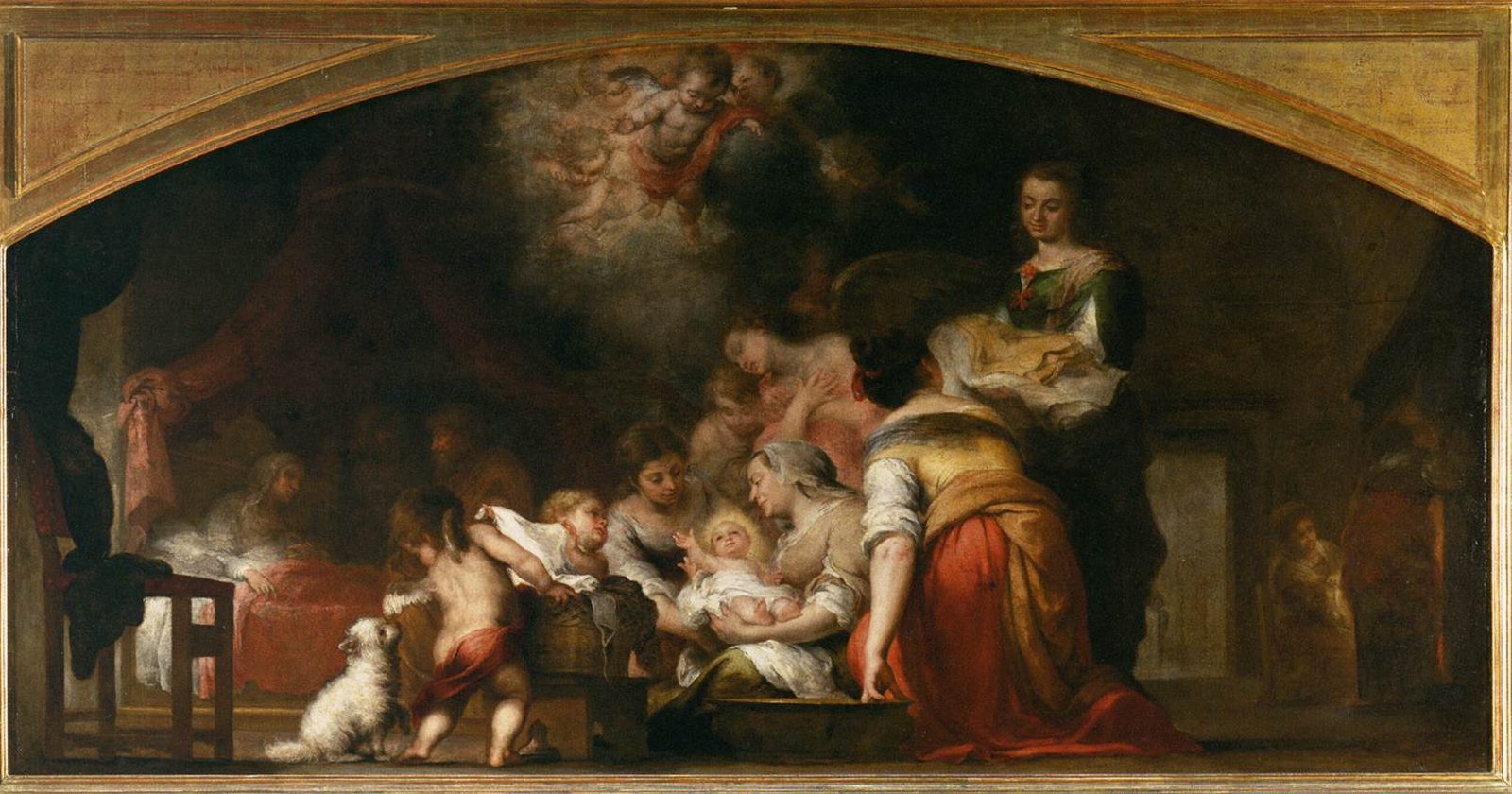
🎧 This work has audio narration — listen in the appTake a moment to really absorb the scene in front of you. In Bartolomé Esteban Murillo's "The Birth of the Virgin," the soft glow of light seems to cradle the Virgin Mary, who is at the heart of this intimate moment. Notice how the light spills over her, illuminating her serene expression while the surrounding figures remain in the shadows, creating a striking contrast.
This play of light is not just for show; it draws your eye to Mary, emphasizing her importance in this sacred moment. Murillo, known for his ability to capture the warmth of everyday life in Andalusia, uses this technique to elevate a deeply personal event into something divine. The gentle embrace of the women around her adds to the tenderness of the scene, making it feel like a celebration of life and motherhood.
As you take in this moment, consider how Murillo blends the sacred with the everyday. What feelings does this scene evoke in you about family and new beginnings?
Bartolomé Esteban Murillo was a prominent Spanish Baroque painter, born in Seville in late December 1617. Orphaned at a young age, he was raised by his sister and her husband, which fostered a close-knit family environment. Murillo began his artistic training under his uncle, Juan del Castillo, where he developed a realist style influenced by the tenebrism of Francisco de Zurbarán and the naturalism of Caravaggio. He married Beatriz Cabrera in 1645 and had ten children, though only five survived.
Murillo is celebrated for his religious works, particularly those commissioned by Franciscan convents, but he also gained fame for his genre paintings depicting the lives of the poor, including children and street urchins. His ability to capture the essence of everyday life set him apart from his contemporaries. He established an influential workshop in Seville and founded the Academy of Fine Arts, aiming to elevate the standards of artistic training.
Despite never leaving Seville, Murillo became a leading figure in the Spanish Golden Age, alongside Diego Velázquez and Francisco de Zurbarán. His legacy endures through his extensive body of work, which includes notable pieces in major museums like the Louvre and the Prado. Murillo died in 1682 after a fall while painting, leaving behind a rich artistic heritage that continues to resonate in the art world.
This painting was intended to enhance the sacred atmosphere of the chapel, a space dedicated to celebrating the Virgin Mary. However, the artwork's journey took a dramatic turn during the Napoleonic Wars when French troops, led by Marshal Jean de Dieu Soult, looted it along with other treasures from the cathedral. Interestingly, the French were initially after another painting, 'The Vision of Saint Anthony of Padua,' but the city council negotiated an exchange, leading to the removal of Murillo's work instead. Today, this masterpiece finds its home in the Louvre in Paris, a testament to its enduring legacy and the tumultuous history it has witnessed.
Murillo's technique in 'The Birth of the Virgin' is a masterclass in the interplay of light and shadow, reminiscent of the works of Rembrandt. Notice how the light seems to emanate from the Virgin Mary herself, bathing her in a warm glow that draws your eye immediately to her serene expression. The surrounding figures, including Saint Anne and Saint Joachim, are shrouded in shadow, creating a dramatic contrast that heightens the emotional impact of the scene. Murillo's brushwork is soft and fluid, lending a sense of tenderness to the figures, while the composition is carefully structured, with Mary at the center, supported by the arms of the women around her. This arrangement not only emphasizes her importance but also creates a sense of intimacy and connection among the figures, inviting the viewer to feel part of this sacred moment.
This painting exemplifies the Baroque style's capacity to blend the sacred with the everyday, influencing generations of artists who sought to capture the warmth and humanity of religious subjects. Murillo's focus on the emotional resonance of his characters paved the way for later movements that emphasized realism and emotional depth in religious art. His ability to depict divine moments with a touch of everyday life has left a lasting legacy, inspiring artists to explore the intersection of the sacred and the mundane.
One intriguing aspect of 'The Birth of the Virgin' is that it was painted during a time when Murillo was deeply influenced by the everyday life of Andalusia. Despite its religious theme, the painting lacks overt symbols of its sacred nature, relying instead on the warmth of human connection and the tenderness of maternal figures, reflecting Murillo's unique approach to religious art.
Murillo's experiences as a father and his close ties to family life in Andalusia deeply influenced his work, leading him to depict maternal figures and human connections with warmth and tenderness, as seen in 'The Birth of the Virgin'.
After being looted during the Napoleonic Wars, the painting was eventually taken to the Louvre in Paris, where it remains today, showcasing its enduring legacy despite its tumultuous history.