Self-portrait with easel
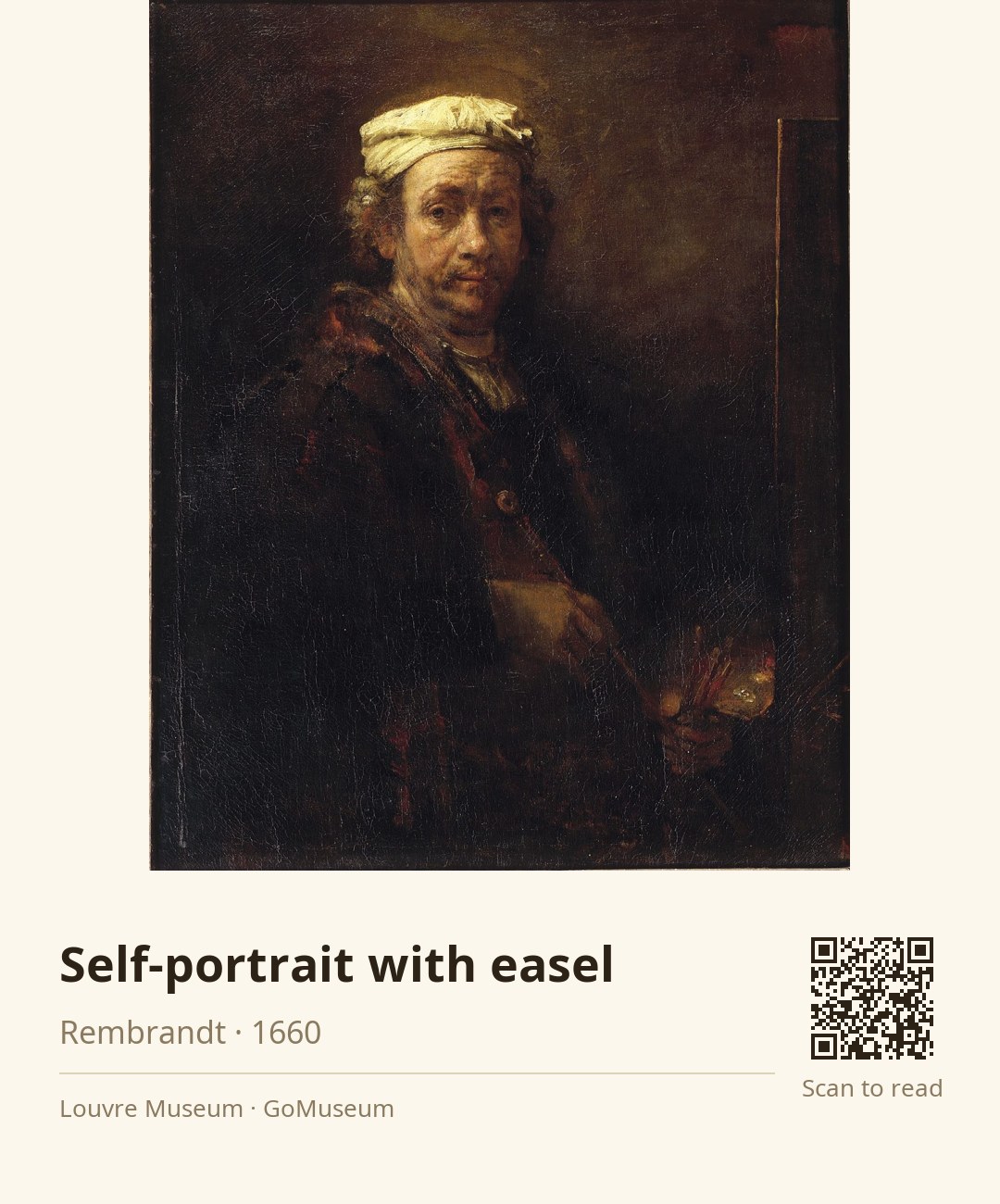
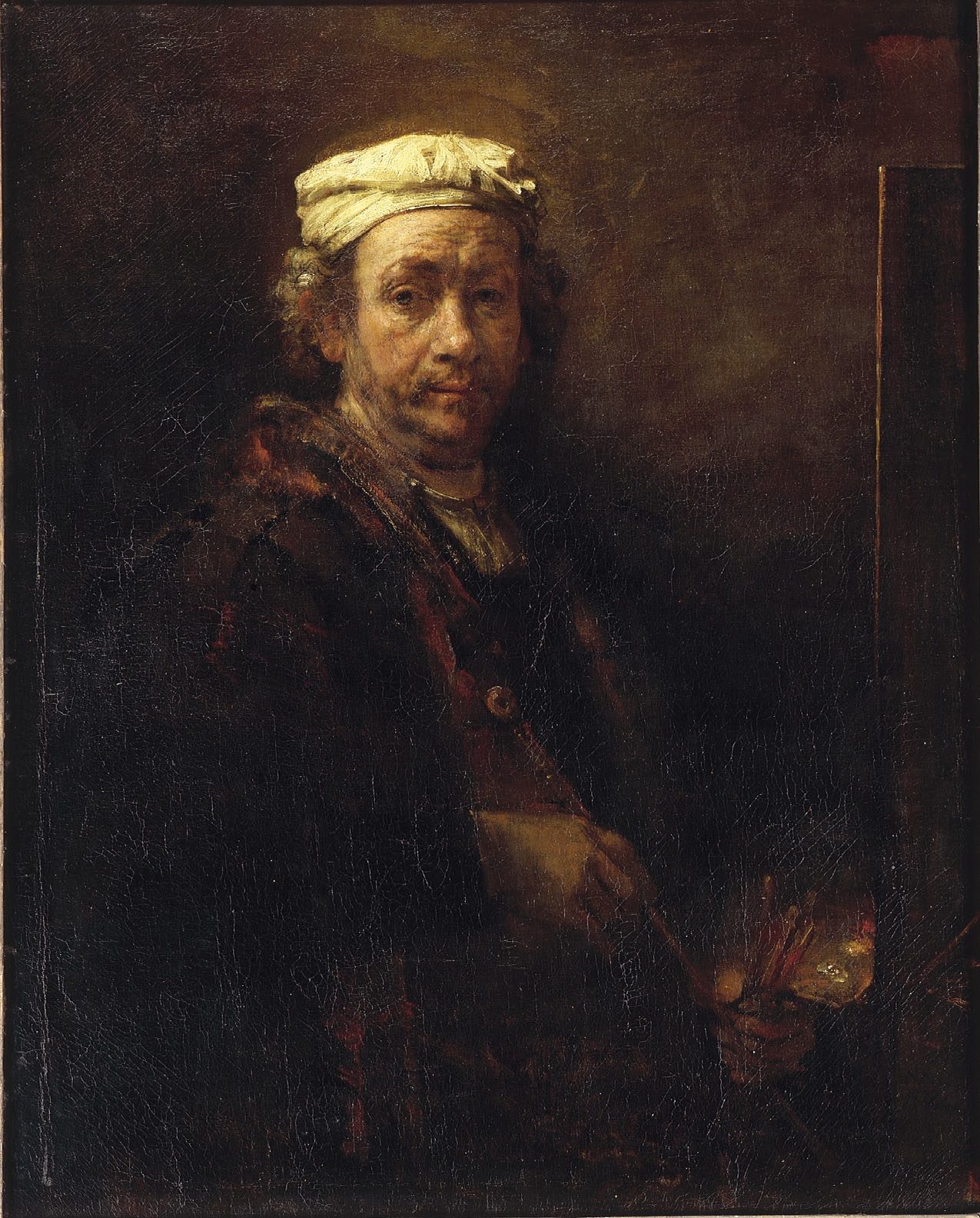
🎧 This work has audio narration — listen in the appTake a moment to really look at Rembrandt's "Self-portrait with easel." Notice how he’s not just posing; he’s fully engaged in his craft, with that easel right beside him. The way he captures the light on his face, especially that subtle touch of white, draws you in, doesn’t it? It’s like he’s inviting you to share a moment of creation with him.
He’s not flaunting wealth or status; instead, he’s presenting himself as a dedicated craftsman, embracing the raw beauty of his art. His palette has become more muted, reflecting a deeper, more introspective phase of his life.
Painted in 1660, this piece is one of the last self-portraits he created, a time marked by personal loss and financial struggles. Yet here he stands, resilient and proud, a testament to his enduring spirit.
As you take in this powerful image, think about what it means to you. What do you see in his expression? What stories do you think he might be telling through this canvas?
Rembrandt Harmenszoon van Rijn, born on July 15, 1606, in Leiden, was a pivotal figure of the Dutch Golden Age and is celebrated as one of the greatest artists in Western art history. His oeuvre includes around three hundred paintings, three hundred etchings, and numerous drawings, showcasing a remarkable range of styles and subjects, from intimate portraits to grand historical and biblical scenes.
Rembrandt's artistic journey began in Leiden, where he was influenced by both Dutch and Italian masters. He opened his studio in 1625 and quickly gained recognition for his portrait work. His move to Amsterdam marked a significant turning point, as he became a sought-after portraitist and married Saskia van Uylenburgh, a union that brought both joy and tragedy. The couple faced immense personal losses, including the deaths of their children and Saskia's own passing in 1642, which deeply affected his work.
Despite financial struggles later in life, Rembrandt's innovative techniques, particularly in etching, transformed the medium into a respected art form. His mastery of light and shadow, known as chiaroscuro, and his empathetic portrayal of human experience set him apart from his contemporaries. Rembrandt's legacy endures through his profound ability to capture the complexities of the human condition, making him a cornerstone of art history.
Rembrandt's 'Self-portrait with easel' was painted in 1660, during a pivotal time in his life. This piece is one of his final self-portraits, created when he was grappling with personal loss and financial difficulties. The painting was not commissioned but rather a personal exploration of his identity as an artist. It was later exhibited in 2014 as part of the exhibition 'La pointe et l'ombre' at the Musée de Grenoble, showcasing Northern European drawings from the 16th to 18th centuries. The painting has been preserved at the Louvre in Paris, where it continues to draw attention and admiration from visitors, reflecting Rembrandt's enduring legacy in the art world.
As you gaze at the painting, notice the way Rembrandt's brushwork feels both confident and intimate. The thick, textured application of paint creates a sense of depth and movement, almost as if you can feel the artist's hand at work. His use of chiaroscuro—contrasting light and shadow—draws your eye to his face, where a subtle touch of white captures the light, illuminating his expression. The muted palette, characteristic of his later works, reflects a more introspective phase, allowing the viewer to connect with the emotional weight of the piece.
Unlike earlier works where status and grandeur were emphasized, here Rembrandt presents himself with a raw honesty, embodying the wisdom of age and experience. His reduced palette and thick brushwork convey a sense of intimacy and introspection, influencing generations of artists to embrace vulnerability in their self-portraits. This piece not only reflects Rembrandt's mastery but also his profound understanding of human emotion, setting a new standard for authenticity in art that resonates even today.
One fascinating tidbit about this painting is that Rembrandt was notoriously reluctant to paint his own hands. In this piece, he chose to hire a model specifically to pose for the hands depicted in the artwork, highlighting his struggle with self-representation and his desire for authenticity in his craft.
Rembrandt was known to be reluctant to paint his own hands, which is why he hired a model specifically to pose for the hands depicted in this self-portrait. This choice highlights his struggle with self-representation and his desire for authenticity in his craft.
This self-portrait is one of the last he painted, marking a significant moment in his artistic journey where he shifted from portraying a status-driven image to embracing a more authentic representation of himself as a dedicated craftsman.