The Young Beggar
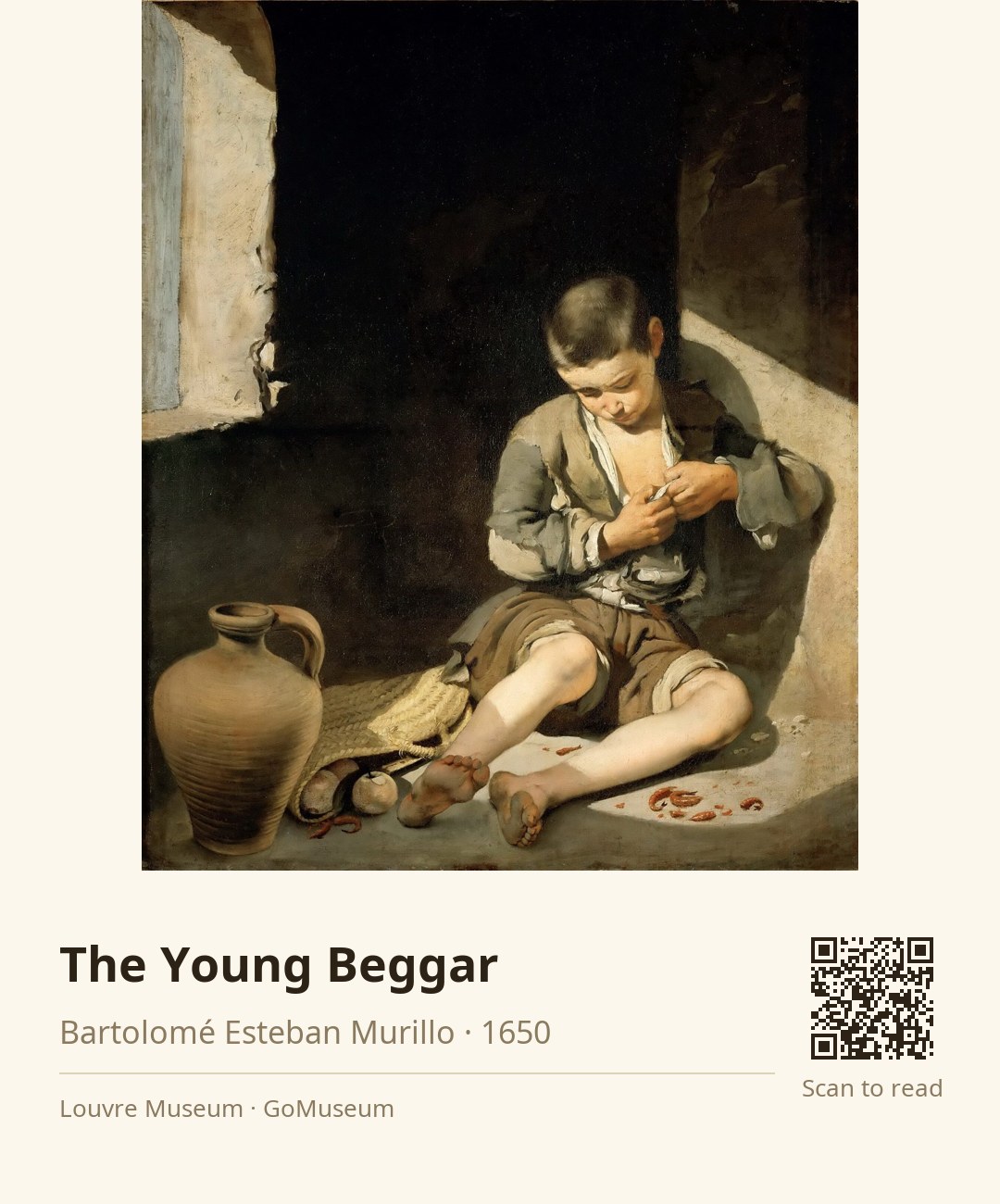
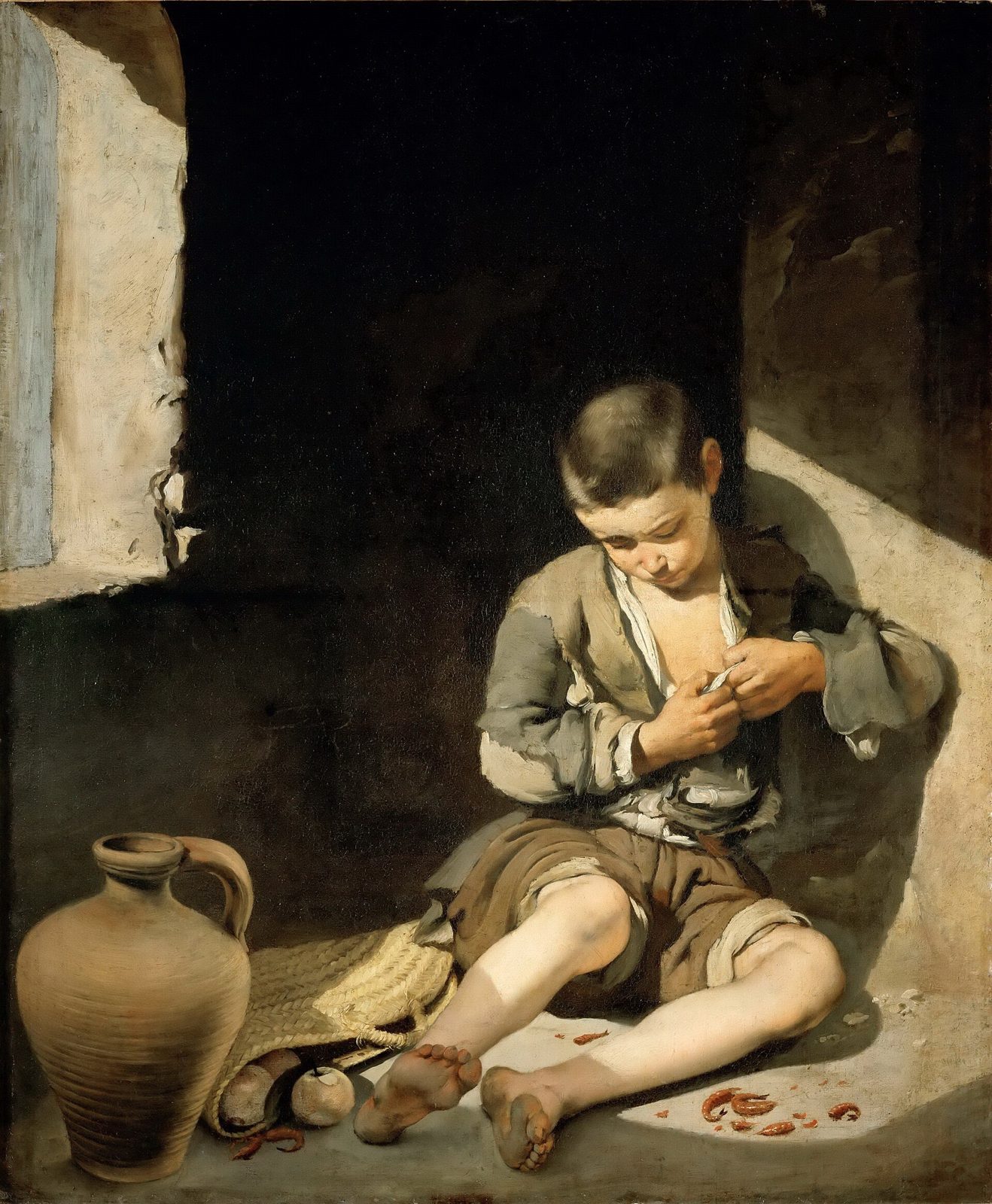
🎧 This work has audio narration — listen in the appTake a moment to really look at "The Young Beggar" by Murillo. Notice how the boy, with his tattered clothes and focused expression, is delousing himself, a small yet intimate act of self-care amidst his harsh reality. His posture, slightly hunched, suggests both vulnerability and resilience, while the light streaming in from the window highlights his face, creating a striking contrast against the darker background.
This detail matters because it captures the essence of childhood in 17th-century Seville, where many children were left to fend for themselves in the streets. Murillo's choice to depict this moment of mundane struggle reflects not just the boy's poverty but also his dignity. It’s a poignant reminder of the humanity that exists even in the depths of hardship.
Murillo, known primarily for his religious works, was deeply influenced by the plight of the poor around him, perhaps drawing from his own experiences as an orphan. This painting, created between 1645 and 1650, marks a significant shift in his focus towards genre scenes, showcasing the everyday lives of those often overlooked.
As you stand here, think about the boy's story. What do you imagine his life was like beyond this moment? How does this painting challenge your perceptions of poverty and resilience? Let that linger as you move on.
Bartolomé Esteban Murillo was a prominent Spanish Baroque painter, born in Seville in late December 1617. Orphaned at a young age, he was raised by his sister and her husband, which fostered a close-knit family environment. Murillo began his artistic training under his uncle, Juan del Castillo, where he developed a realist style influenced by the tenebrism of Francisco de Zurbarán and the naturalism of Caravaggio. He married Beatriz Cabrera in 1645 and had ten children, though only five survived.
Murillo is celebrated for his religious works, particularly those commissioned by Franciscan convents, but he also gained fame for his genre paintings depicting the lives of the poor, including children and street urchins. His ability to capture the essence of everyday life set him apart from his contemporaries. He established an influential workshop in Seville and founded the Academy of Fine Arts, aiming to elevate the standards of artistic training.
Despite never leaving Seville, Murillo became a leading figure in the Spanish Golden Age, alongside Diego Velázquez and Francisco de Zurbarán. His legacy endures through his extensive body of work, which includes notable pieces in major museums like the Louvre and the Prado. Murillo died in 1682 after a fall while painting, leaving behind a rich artistic heritage that continues to resonate in the art world.
This painting is notable as the first known depiction of a street urchin by Murillo, reflecting the harsh realities faced by children in 17th-century Seville. Initially, it faced criticism for its idealized portrayal of poverty, which some felt did not accurately represent the struggles of the time. However, over the years, it gained recognition and became one of Murillo's most celebrated works, eventually finding its home in the Louvre Museum after passing through various collections, including that of Louis XVI.
Murillo's technique in 'The Young Beggar' is a masterclass in chiaroscuro, where light and shadow play a crucial role in conveying emotion. The stark contrast between the illuminated figure of the boy and the dark background draws your eye immediately to his focused expression. Notice how the light cascades from the window, bathing the boy in a warm glow that emphasizes his vulnerability yet also his dignity. The brushwork is both delicate and expressive, capturing the textures of his tattered clothes and the roughness of the surrounding environment. The composition is dynamic, with the boy positioned at the bottom right, creating a diagonal line that leads the viewer's gaze across the canvas. This careful arrangement, combined with the complementary colors of the shrimp and apples, adds layers of meaning to the scene, suggesting a moment of pause amidst hardship.
Interestingly, despite its eventual acclaim, 'The Young Beggar' was not initially well-received. Critics argued that Murillo's portrayal of the boy was too theatrical and idealized, failing to capture the grim realities of poverty. However, this very quality later became a hallmark of the painting's charm, as viewers began to appreciate the boy's unaffected demeanor amidst his circumstances.
Murillo himself was orphaned at a young age and raised by relatives, which likely deepened his empathy for the plight of abandoned children and informed his artistic focus on their lives.
Initially criticized for its idealized portrayal of poverty, 'The Young Beggar' later gained acclaim as viewers began to appreciate the boy's unaffected demeanor, which highlighted his dignity amidst hardship, ultimately becoming one of Murillo's most celebrated works.