Boy with a Spinning-Top
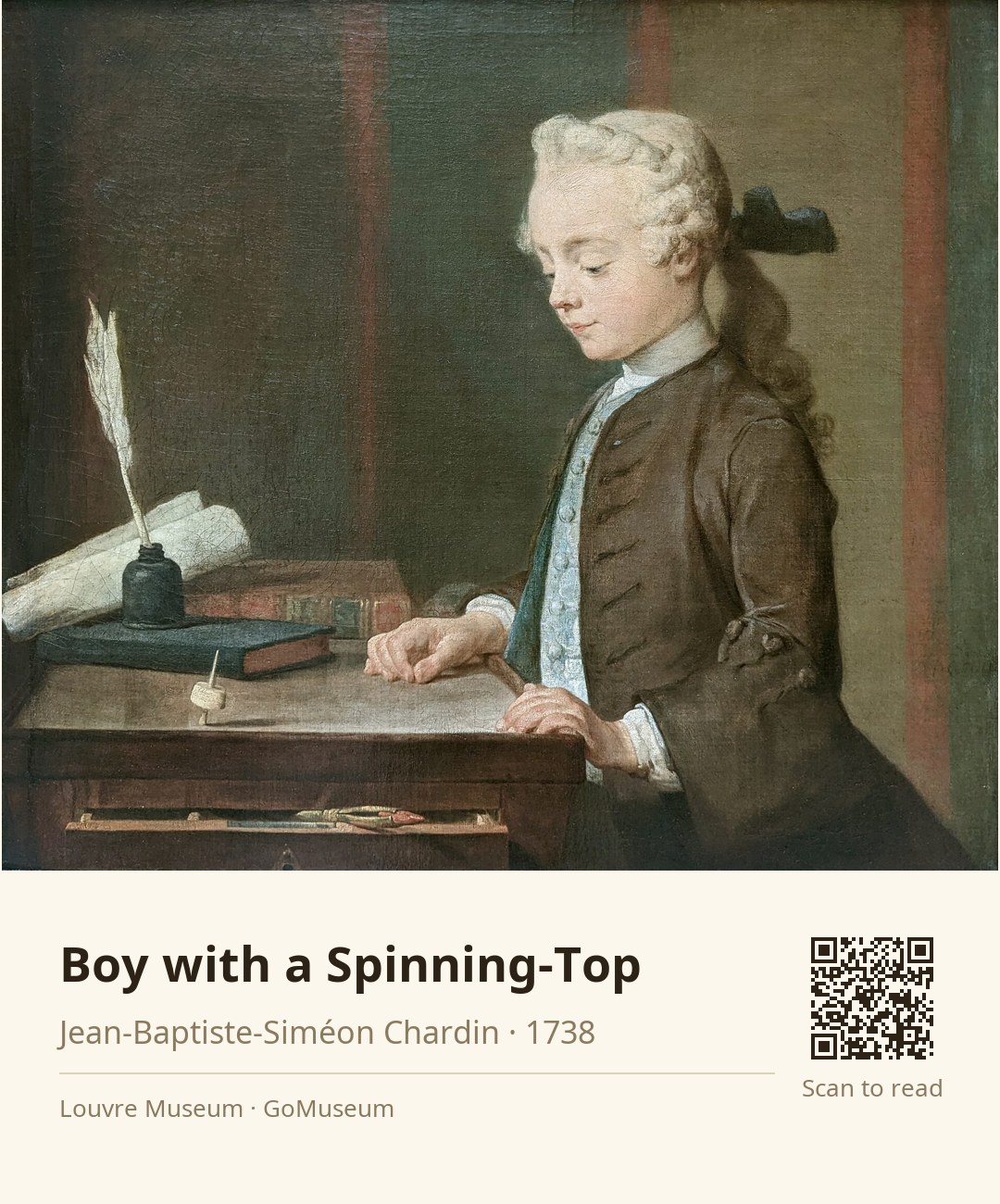
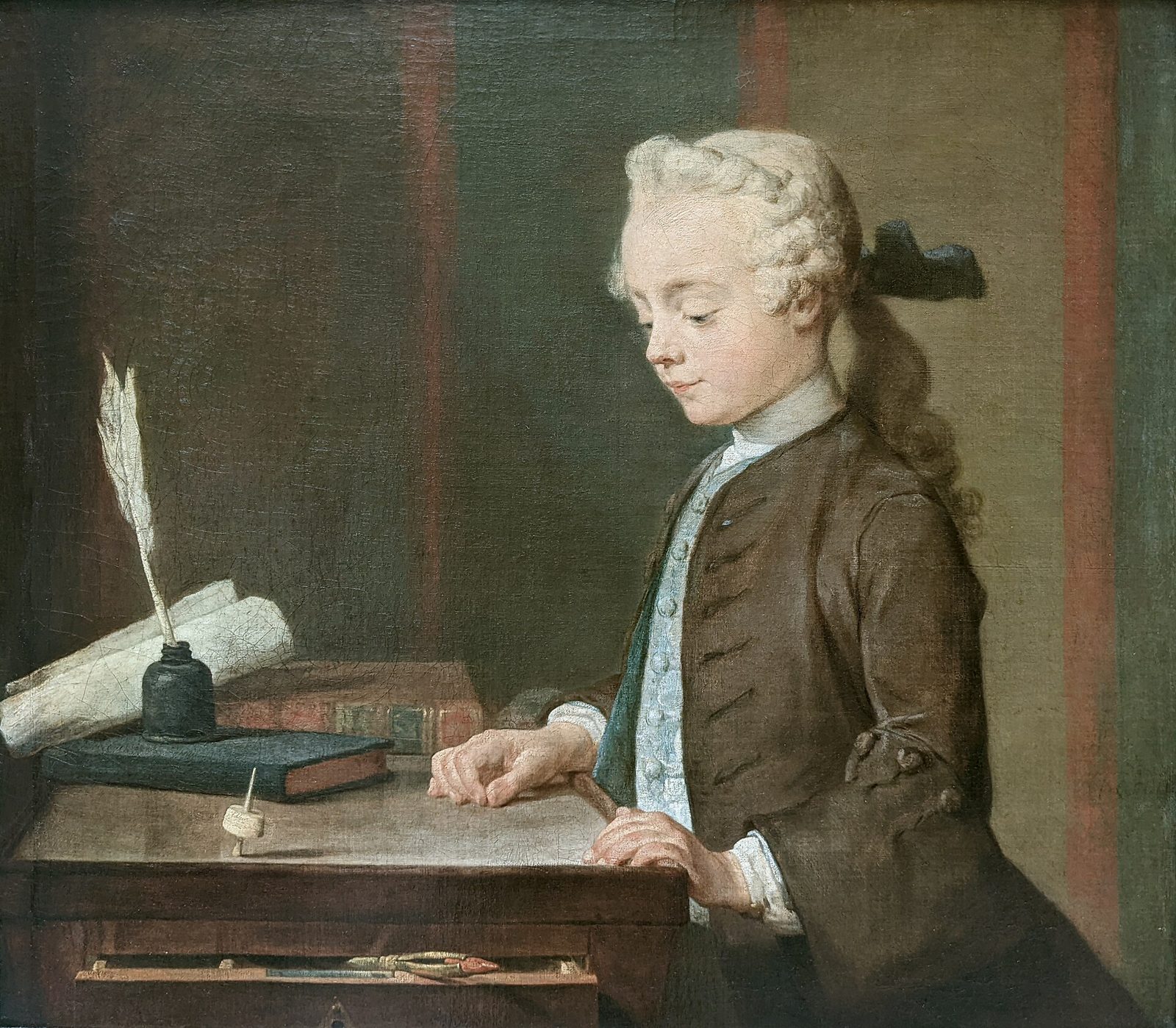
🎧 This work has audio narration — listen in the appTake a moment to really look at "Boy with a Spinning-Top." Notice how the child, Auguste-Gabriel, is completely absorbed in the simple act of watching his toy spin. His expression is one of pure concentration, almost as if time stands still for him. Now, focus on the way the light gently illuminates his face and the spinning top, creating a soft contrast against the darker background.
These details matter because they capture the essence of childhood—this fleeting moment of joy and innocence. Chardin painted this in 1738, during a time when the Enlightenment was reshaping ideas about childhood and play. He believed in the importance of these moments, reflecting a growing appreciation for the inner world of children, as championed by thinkers like Rousseau.
Chardin himself was a master of depicting everyday life, often focusing on domestic scenes that resonate with warmth and authenticity. This painting is not just about a boy and his toy; it’s a celebration of the simple pleasures that define our early years.
So, as you stand here, think about your own childhood moments of wonder. What simple joys captured your attention like that spinning top?
Jean Siméon Chardin, born in Paris on November 2, 1699, and passing away on December 6, 1779, is celebrated as a master of still life and genre painting in the 18th century. The son of a cabinetmaker, Chardin's artistic journey began with apprenticeships under prominent history painters, leading to his recognition at the Académie Royale de Peinture et de Sculpture in 1728. His work, characterized by balanced compositions, soft light, and textured surfaces, diverged from the Rococo style prevalent in his time, focusing instead on the beauty of everyday objects and domestic scenes.
Chardin's life was marked by personal tragedies, including the deaths of his first wife and daughter, which deeply affected him. Despite these hardships, he found success and stability through his second marriage and the support of influential patrons. His paintings gained popularity through engravings, providing him with a steady income. Chardin's meticulous approach resulted in a modest oeuvre of around 200 works, reflecting his dedication to quality over quantity.
His legacy endures as he is recognized for elevating still life and genre subjects to a respected status in art history, influencing future generations of artists. Chardin's ability to capture the essence of human experience and the beauty of the mundane continues to resonate, securing his place as a pivotal figure in the evolution of European art.
The painting 'Boy with a Spinning-Top' was created by Jean-Baptiste-Siméon Chardin in 1738 and is now housed in the Louvre, having been acquired in 1907. This work is based on an earlier piece from 1735, which is currently in the São Paulo Museum of Art. The subject, Auguste-Gabriel, was the son of jeweler Charles Godefroy, and the painting captures a moment of pure childhood concentration. During this period, Enlightenment thinkers like Rousseau were reshaping societal views on childhood, emphasizing the value of play and innocence. Chardin's work was well-received, aligning with these evolving ideas, and it reflects a growing interest in the inner lives of children.
Painted in 1738, it reflects Enlightenment ideals, particularly those of Rousseau, who emphasized the importance of play and the innocence of youth. This painting shifted the focus from grand historical narratives to intimate, everyday moments, influencing generations of artists who followed. Chardin's ability to portray the simplicity and joy of childhood helped elevate genre painting, making it a respected art form. His work invites viewers to appreciate the beauty in the mundane, a legacy that resonates in contemporary art today.
Did you know that Chardin's model for this painting, Auguste-Gabriel, was the son of a jeweler? This connection hints at the social aspirations of the time, as Chardin's work often reflected the emerging middle class's values during the Enlightenment. The boy's contemplative gaze at the spinning top isn't just a moment of play; it symbolizes a shift in how society began to view childhood as a precious stage of life, worthy of reflection and art.
On the table, there are an inkwell, a pen, and books, which suggest a scholarly environment and hint at the boy's potential future, contrasting with the playful moment he is experiencing.
Chardin faced significant personal loss, including the deaths of his first wife and daughter, which may have deepened his sensitivity to the themes of innocence and the fleeting nature of childhood depicted in his works.