The Wedding at Cana
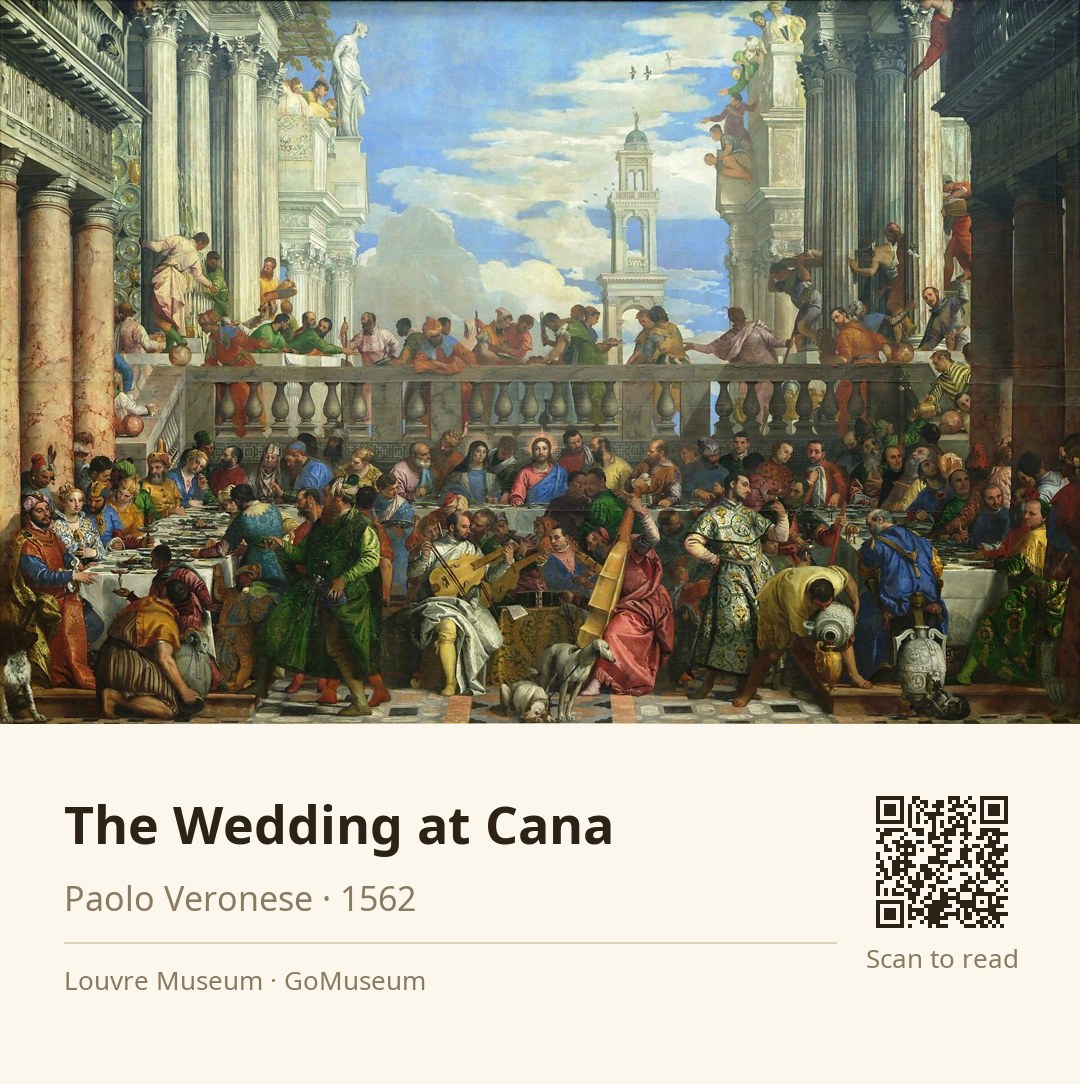
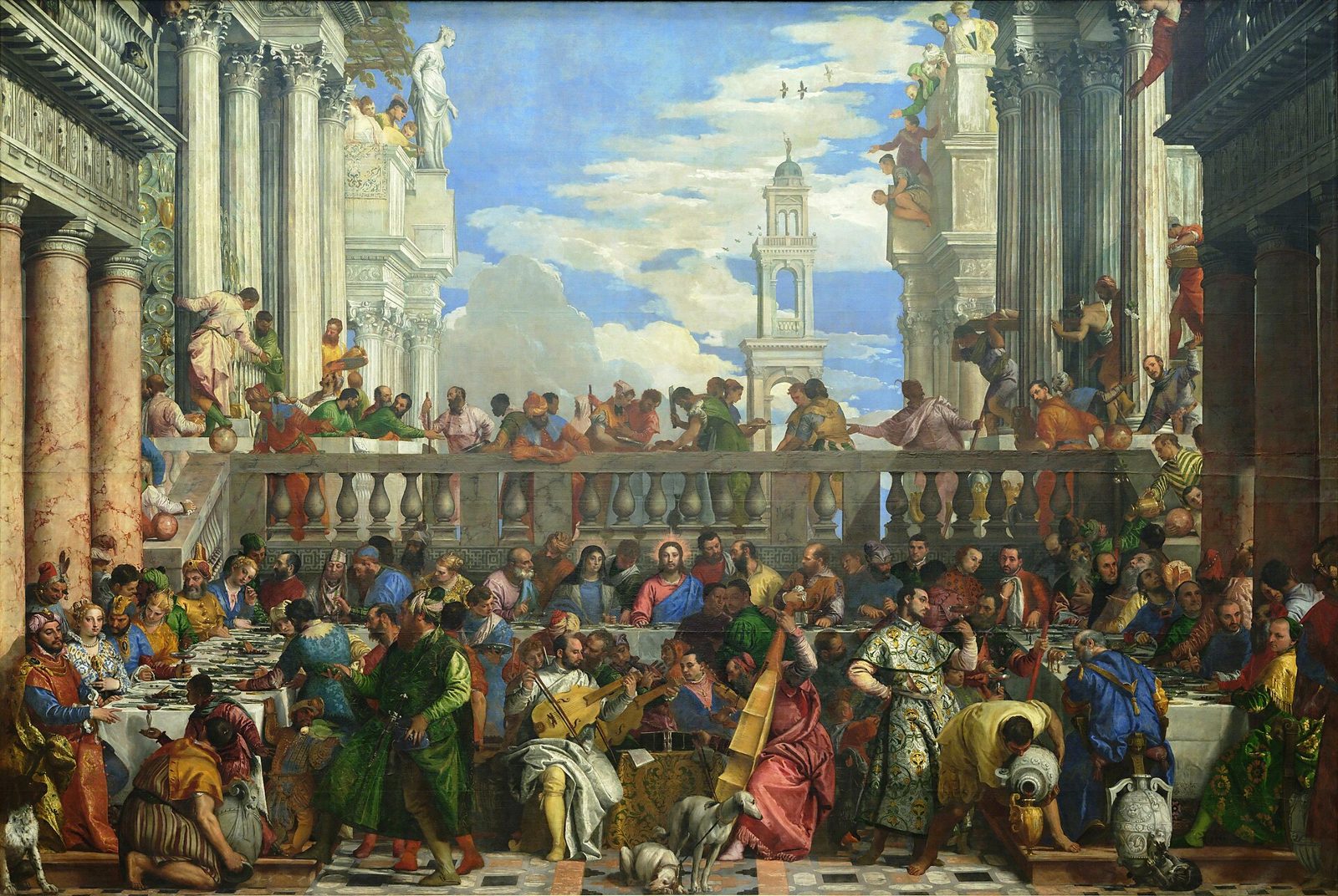
🎧 This work has audio narration — listen in the appAs you stand before Paolo Veronese's magnificent "The Wedding at Cana," take a moment to absorb the sheer scale of this painting. Stretching nearly 7 meters wide, it’s like stepping into a vibrant celebration of life itself. Now, focus on the figures—notice how they seem to spill out of the canvas, their faces animated with joy and surprise. Look closely at the man in the foreground, lifting a goblet, his expression caught between awe and delight.
These details matter because they invite you into the scene, making you feel as if you’re part of the gathering. Veronese masterfully captures the moment when Jesus performs his first miracle, transforming water into wine, a symbol of abundance and joy. This moment isn’t just a biblical event; it reflects the Renaissance ideals of celebration, community, and the divine in everyday life.
Commissioned in 1562 for the refectory of the San Giorgio Monastery in Venice, this painting was designed to be viewed from below, enhancing its grandeur. The monks wanted a piece that would not only tell a story but also elevate the spirit of those dining in their company.
As you take in this feast of color and detail, think about the significance of gatherings in your own life. What moments of joy and transformation do you cherish? Veronese invites you to reflect on the miracles that happen when we come together.
Paolo Caliari, known as Paolo Veronese, was an influential Italian Renaissance painter born in Verona in 1528. He became a prominent figure in Venice, celebrated for his grand history paintings that depicted religious and mythological themes, such as The Wedding at Cana and The Feast in the House of Levi. Veronese was part of the esteemed trio of Venetian painters alongside Titian and Tintoretto, shaping the Late Renaissance with his vibrant color palette and dramatic compositions.
His early training under notable artists like Antonio Badile and Giovanni Francesco Caroto laid the foundation for his distinctive style, which evolved from Mannerism to a more naturalistic approach influenced by Titian. Veronese's works are characterized by elaborate narratives, majestic architectural settings, and a sense of opulence, often commissioned for the refectories of monasteries.
Despite his popularity during his lifetime, Veronese's contributions were somewhat overshadowed by his contemporaries in modern criticism. However, he garnered admiration from later artists, including Rubens and Renoir, who recognized his chromatic brilliance and elegant figures. His legacy endures, with many of his masterpieces remaining in Venice, showcasing his significant role in the history of art. Veronese passed away in 1588, leaving behind a rich artistic heritage that continues to inspire.
In June 1562, the Black Monks of the Order of Saint Benedict commissioned Paolo Veronese to create a monumental painting for the newly renovated refectory of the San Giorgio Monastery in Venice. The contract specified that Veronese should be paid 324 ducats, provided with a barrel of wine, and fed in the refectory. They wanted a vibrant depiction of Christ's miracle at the Wedding at Cana, with as many figures as could fit into the composition. Veronese delivered the completed work in September 1563, just in time for the Festa della Madonna della Salute in November. For over two centuries, the painting graced the monastery until it was seized by Napoleon's troops in 1797 during the Italian campaigns. The massive canvas, measuring nearly 67 square meters, was cut into seven pieces for transport and eventually made its way to the Louvre, where it remains today, facing off against the Mona Lisa. Its journey reflects the tumultuous history of art during times of conflict and cultural exchange.
Notice how the figures are arranged in a dynamic, almost theatrical manner, creating a sense of movement and interaction. The use of light is particularly striking; it bathes the scene in a warm glow, enhancing the festive atmosphere. Veronese employed a technique known as 'colorito,' prioritizing color to convey emotion and depth, while also incorporating elements of 'disegno,' or drawing, to maintain structure. The asymmetrical arrangement of the figures, with some spilling out towards the viewer, draws you into the celebration. The canvas was designed to be viewed from below, enhancing its grandeur and making the viewer feel part of the gathering. Each brushstroke feels deliberate, yet there's a restlessness that invites you to explore every corner of this lively scene.
This piece, executed in the Mannerist style, pushes the boundaries of traditional representation, blending vibrant colors and dynamic compositions that captivated viewers of his time and beyond. Veronese's ability to infuse a biblical narrative with a sense of grandeur and festivity influenced countless artists who followed, encouraging them to explore the interplay of color and form in ways that echoed his dramatic flair. His work became a benchmark for large-scale narrative paintings, inspiring future generations to embrace complexity and richness in their own creations.
One intriguing anecdote about 'The Wedding at Cana' involves its restoration in the early 1990s. During this extensive process, it was discovered that the color of one character's cloak had changed over time, leading to debates about whether this was due to a previous restoration or simply the aging of the paint. The restoration team worked meticulously, ensuring that their methods were consistent and that the painting's integrity was preserved, ultimately revealing the vibrant colors that Veronese intended.
The Black Monks specified that Veronese should be provided with a barrel of wine and fed in the refectory, highlighting the importance of hospitality and community in their commissioning process.
The monumental size of 'The Wedding at Cana' was designed to be viewed from below, enhancing its grandeur and making the viewer feel as if they were part of the celebration, which was a deliberate choice by Veronese to engage the audience.
During Napoleon's campaigns, 'The Wedding at Cana' was seized as war booty, cut into seven pieces for transport, and eventually made its way to the Louvre, reflecting the tumultuous history of art during times of conflict.