Venus and Adonis
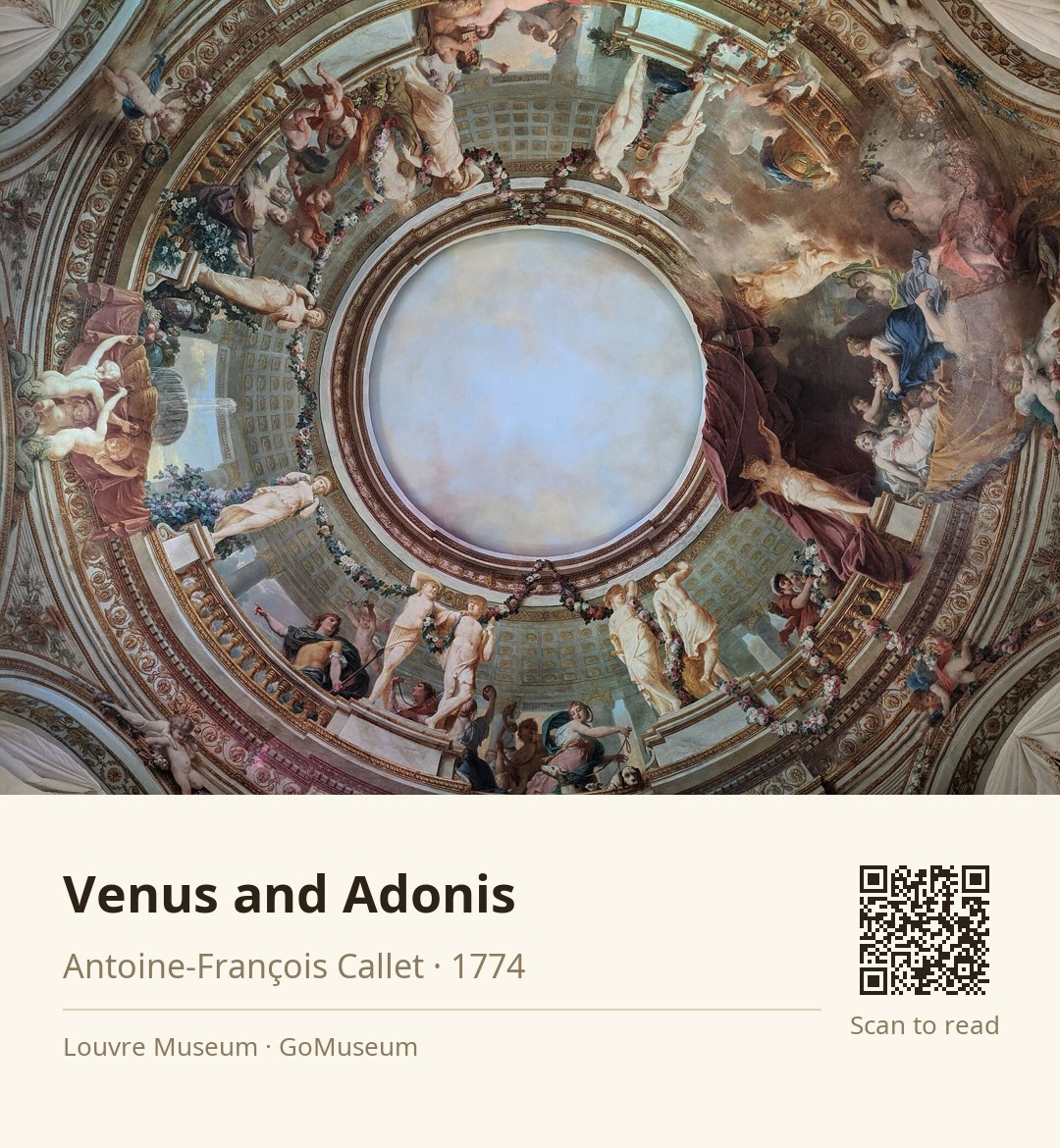
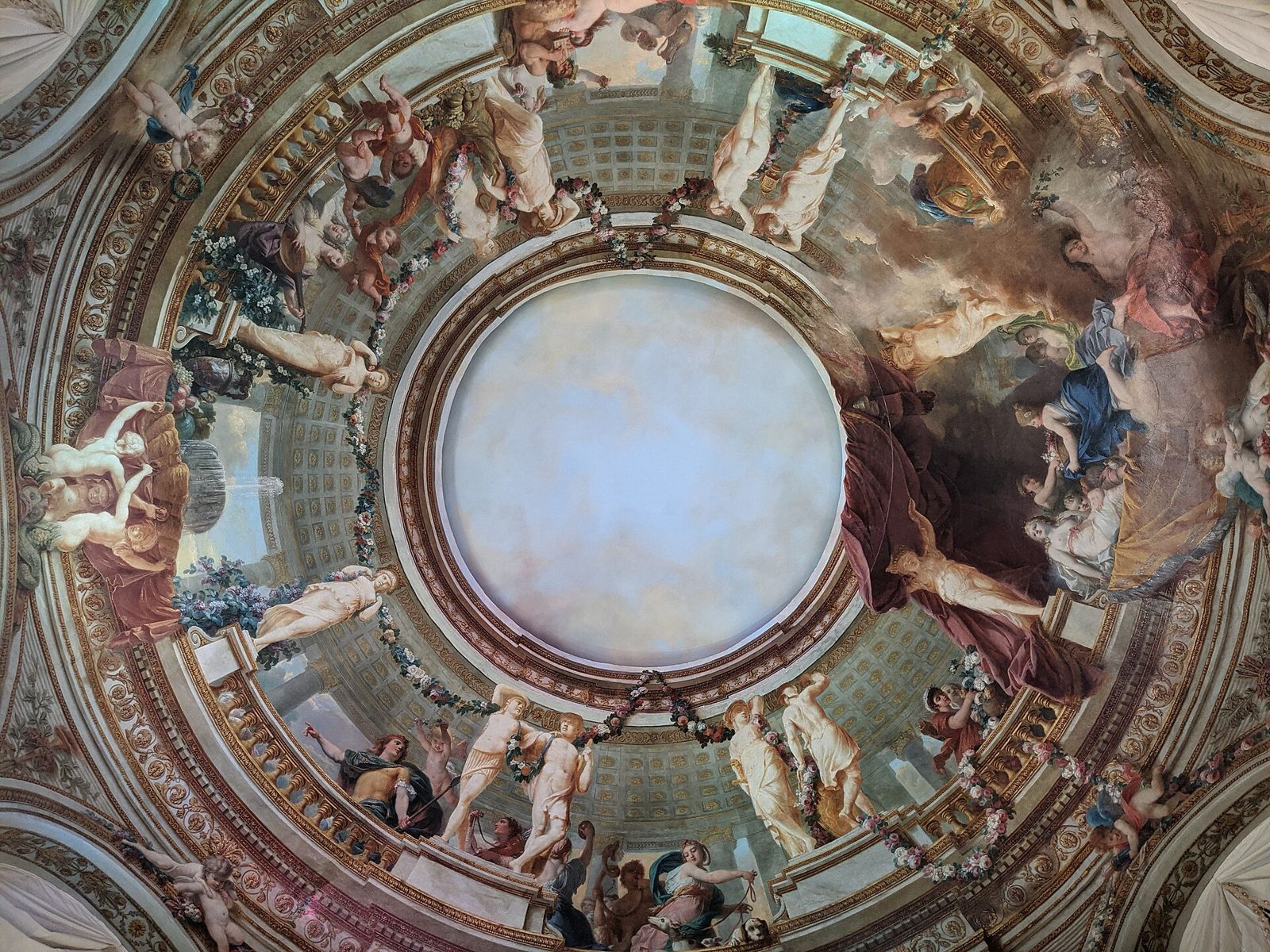
🎧 This work has audio narration — listen in the appThe vibrant scene of Venus and Adonis unfolds in a circular composition, where a light blue dome serves as the backdrop for a flurry of dynamic figures. Draped in flowing garments of reds, blues, and golds, these figures—both male and female—interact in a lively manner, some reclining, others standing or seated, creating a sense of movement and energy. Cherubs and garlands of flowers weave through the scene, enhancing its opulence and inviting a closer look at the intricate details of fabric and anatomy.
This rich visual tapestry reflects not only the technical skill of Antoine-François Callet but also the themes of love and desire inherent in the mythological narrative. The careful rendering of each figure and the harmonious palette of warm and cool tones contribute to a sense of depth and emotion, drawing the viewer into the story being told. The architectural elements, such as columns and arches, frame the scene, further emphasizing its grandeur and the artist's ambition to create a captivating experience.
Callet, who became the official portraitist to Louis XVI, painted this fresco in 1774, showcasing his mastery in allegorical works and his ability to blend classical themes with a contemporary flair. His contributions to the decorative arts, especially in significant public spaces like the palais du Luxembourg, marked him as a prominent figure in the French art scene of his time.
Antoine-François Callet, known as Antoine Callet, was a prominent French painter born in 1741 and active until his death in 1823. Renowned for his portraits and allegorical works, he served as the official portraitist for Louis XVI, establishing his reputation in the royal court. Callet's artistic journey began with winning the grand prix de Rome in 1764, which propelled him into the elite circles of the French art world. His acceptance into the Académie des beaux-arts in 1779 marked a significant milestone, showcasing his talent with notable works like the portrait of the comte d'Artois and the allegorical piece "Le Printemps."
Throughout his career, Callet created significant works, including the ceiling of the grande galerie at the palais du Luxembourg and various allegories during the French Consulate and Empire, such as "Allegory of the Battle of Austerlitz." His ability to blend portraiture with allegorical themes positioned him as one of the leading portraitists of his time. Callet's legacy endures in the annals of art history, reflecting the transition of French art through the revolutionary and imperial periods, and his works remain celebrated in major collections, including the Louvre and the château de Versailles.
In 'Venus and Adonis,' Callet employs a circular composition that draws the eye into the center of the scene, where the light blue dome creates an airy backdrop. The figures are painted with a fluidity that suggests movement, enhanced by the careful handling of drapery in reds, blues, and golds. Callet's brushwork is both precise and expressive, allowing for intricate details in fabric and anatomy that evoke a sense of realism. The use of a harmonious palette, with warm and cool tones intermingling, adds depth and emotional resonance to the scene. Architectural elements like columns and arches frame the composition, guiding the viewer's eye and enhancing the grandeur of the narrative. This meticulous attention to detail not only showcases Callet's technical prowess but also invites viewers to immerse themselves in the rich storytelling of the myth.
Callet painted the center of the ceiling of the grande galerie of the palais du Luxembourg, creating a composition called 'L'Aurore'.