 Image: Tangopaso · Rama · Rama · Rama
Petit chien à bélière
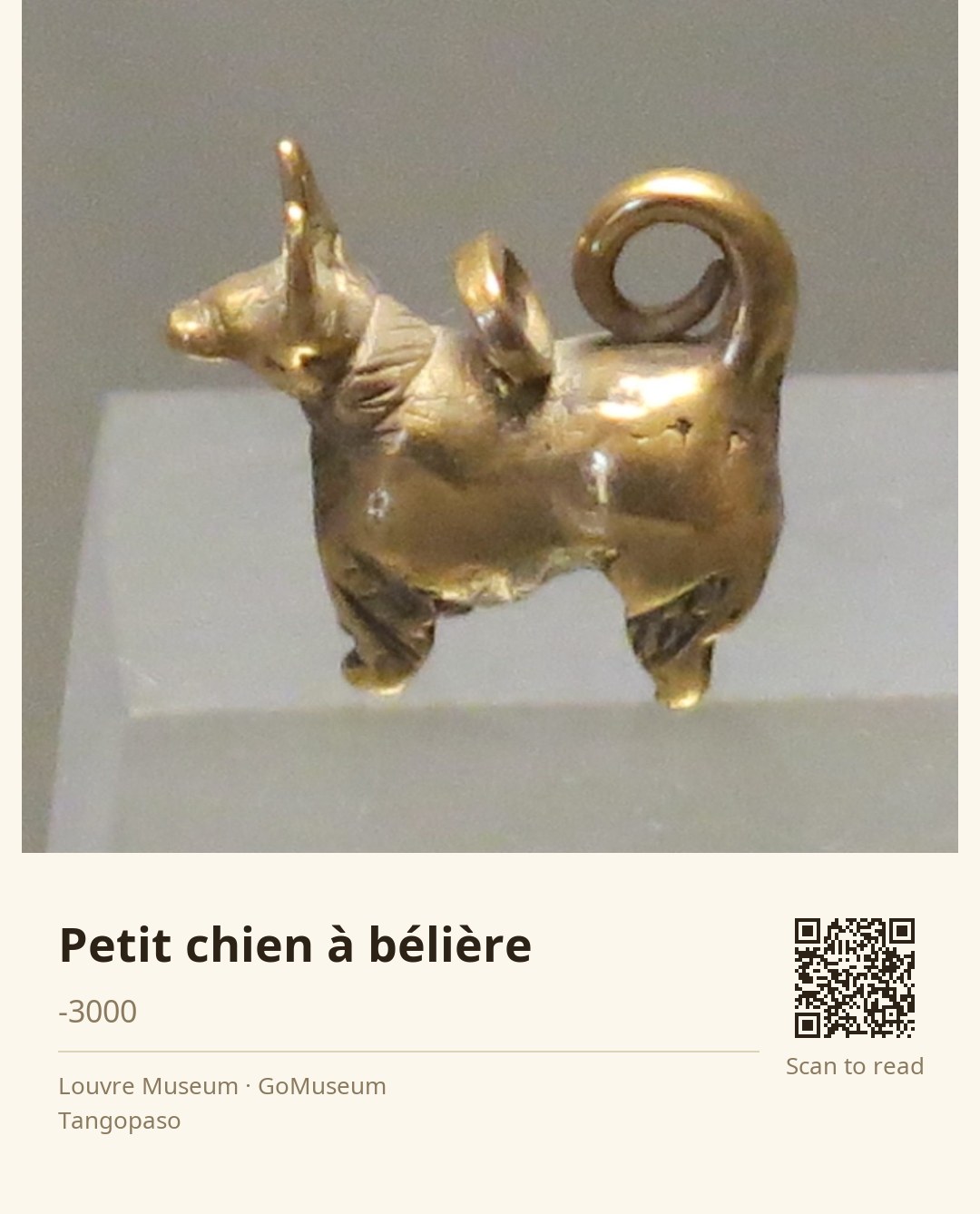
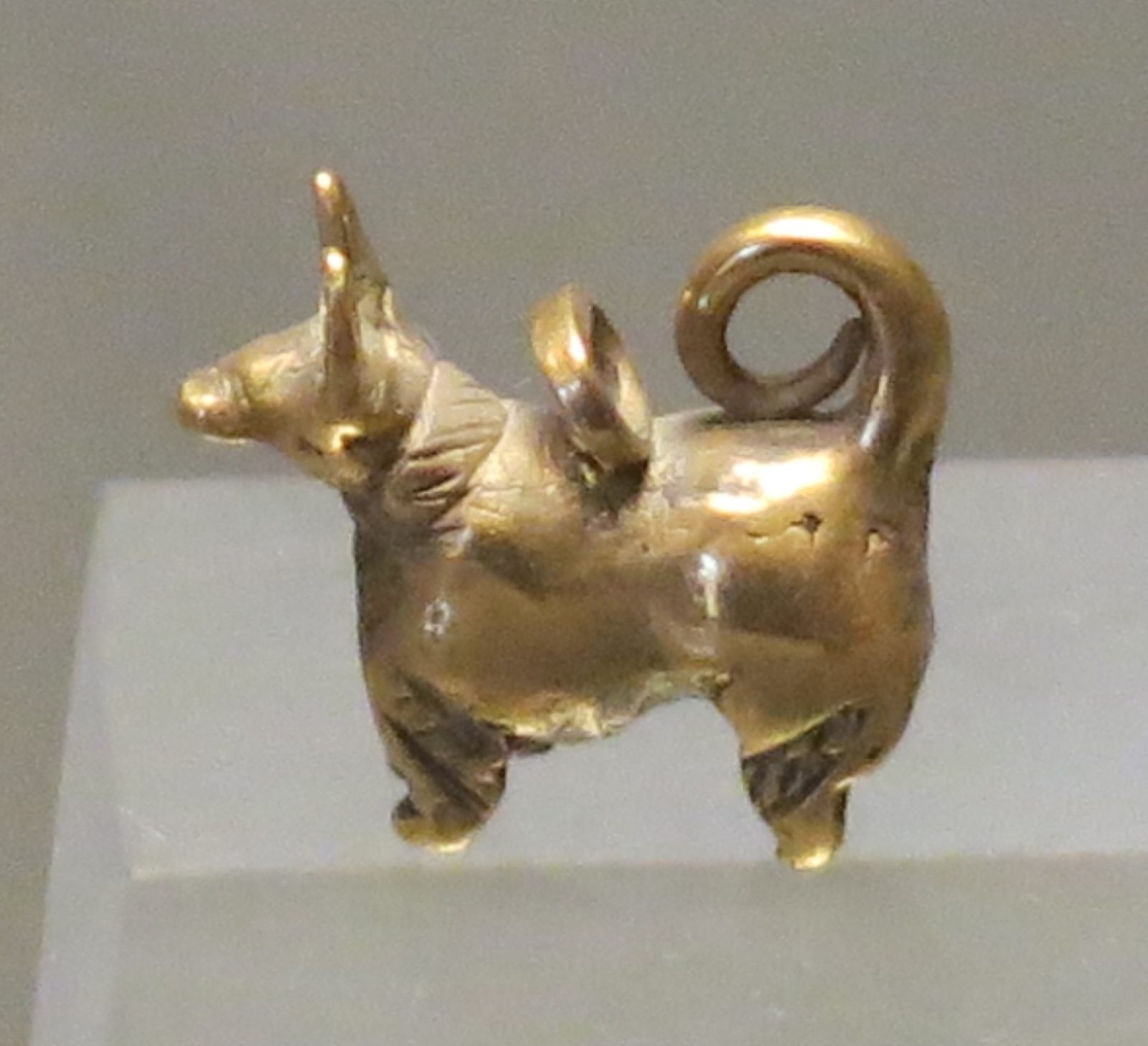
🎧 This work has audio narration — listen in the appTake a moment to really look at the Petit chien à bélière, this tiny pendant shaped like a dog. Notice how it’s only about 1.5 centimeters long—so small, yet so significant. The way the ears and tail are delicately drawn out shows the skill of ancient metalworkers, who were already experimenting with techniques like hot drawing and lost-wax casting around 3000 BCE.
Well, this little dog isn’t just a charming trinket; it represents one of the earliest examples of metalsmithing in history. The craftsmanship reflects a time when people were beginning to master the art of working with metals, and this pendant gives us a glimpse into their lives and the domesticated breeds they relied on for herding sheep.
Discovered in the ruins of Susa, this pendant connects us to a world long gone, where metal was melted and molded at temperatures over 800 degrees Celsius. Imagine the heat and the ingenuity involved in creating such a piece!
As you stand here, think about the stories this small dog could tell if it could speak. What do you think it witnessed in its lifetime?
The Petit chien à bélière, or dog pendant of Susa, dates back to around 3300 to 3100 BCE, making it one of the earliest examples of metalsmithing from the end of the 4th millennium. Discovered in 1939 by Roland de Mecquenem during excavations at the Susa acropolis, this small pendant, only 1.5 cm long, showcases the advanced metallurgical techniques of its time. It was crafted using cire perdue casting and hot drawing, demonstrating a sophisticated understanding of metalwork. Notably, it features one of the earliest known uses of brazing, combining copper and gold in a way that avoided the melting of the main body. This artifact not only reflects the artistry of its creators but also provides insight into the domesticated dog breeds of the Susa region, distinct from the elegant greyhounds depicted in contemporary art.
Dating back to around 3300 BCE, it showcases some of the earliest known techniques of metalsmithing, including one of the first uses of brazing—a method that allowed artisans to join metals without melting the entire piece. Imagine the excitement of those early craftsmen in Susa, experimenting with fire and metal, laying the groundwork for future generations. This tiny dog pendant, just 1.5 cm long, carries with it the weight of human ingenuity and the evolution of craftsmanship, making it a significant artifact in the story of art and technology.
One fascinating aspect of the Petit chien à bélière is its construction technique. It is one of the earliest known examples of brazing, a process that allowed the artisans to attach the ring to the body of the pendant without risking the melting of the main piece. This innovative approach showcases the ingenuity of ancient metalworkers, who were already experimenting with complex techniques thousands of years ago.
The pendant represents a domesticated rustic breed adapted for herding sheep, differing from the elegant Arab greyhounds depicted in other artifacts, indicating a diversity of dog breeds and their roles in ancient societies.