 Image: anonymous
Gabrielle d'Estrées et une de ses sœurs
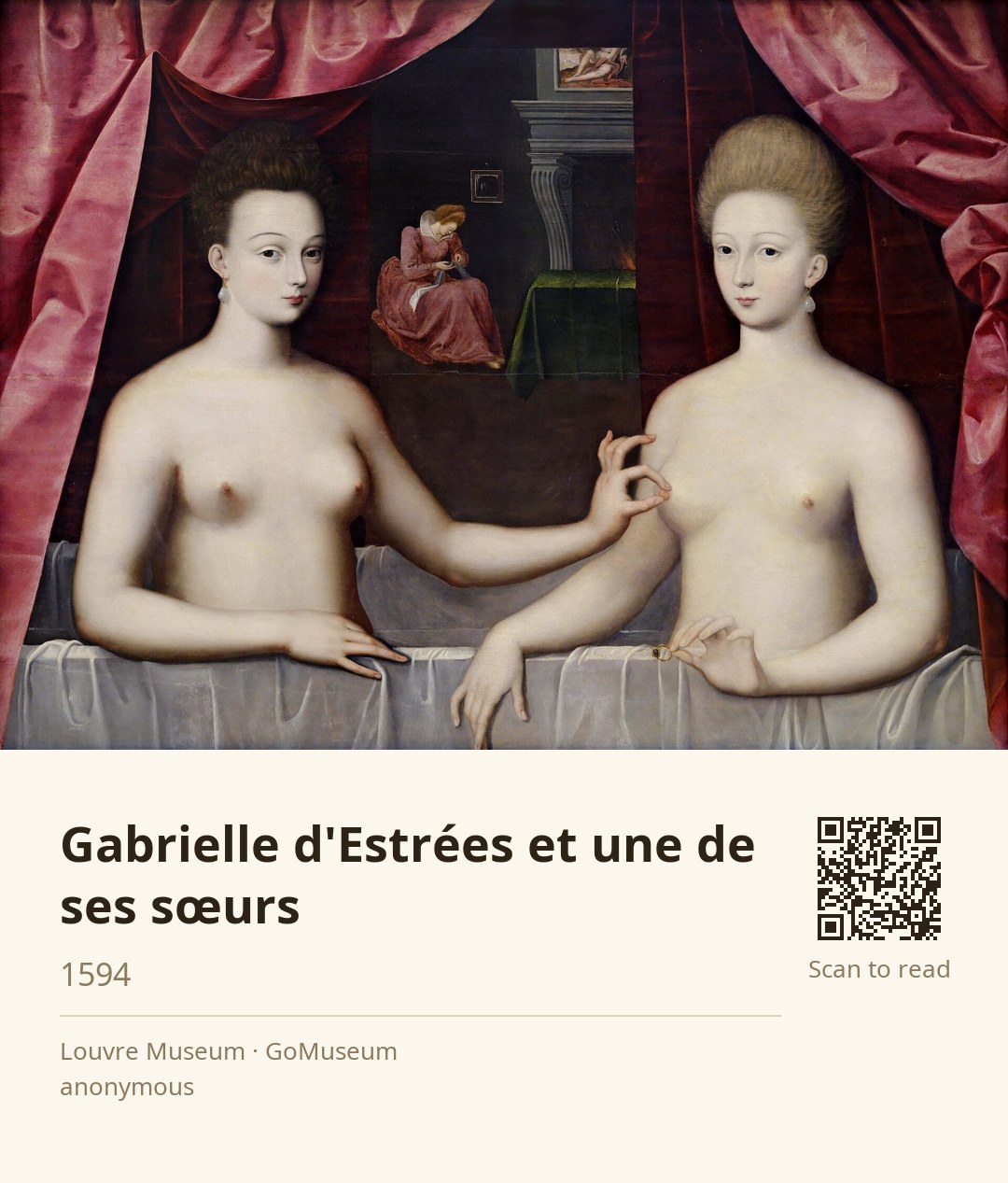
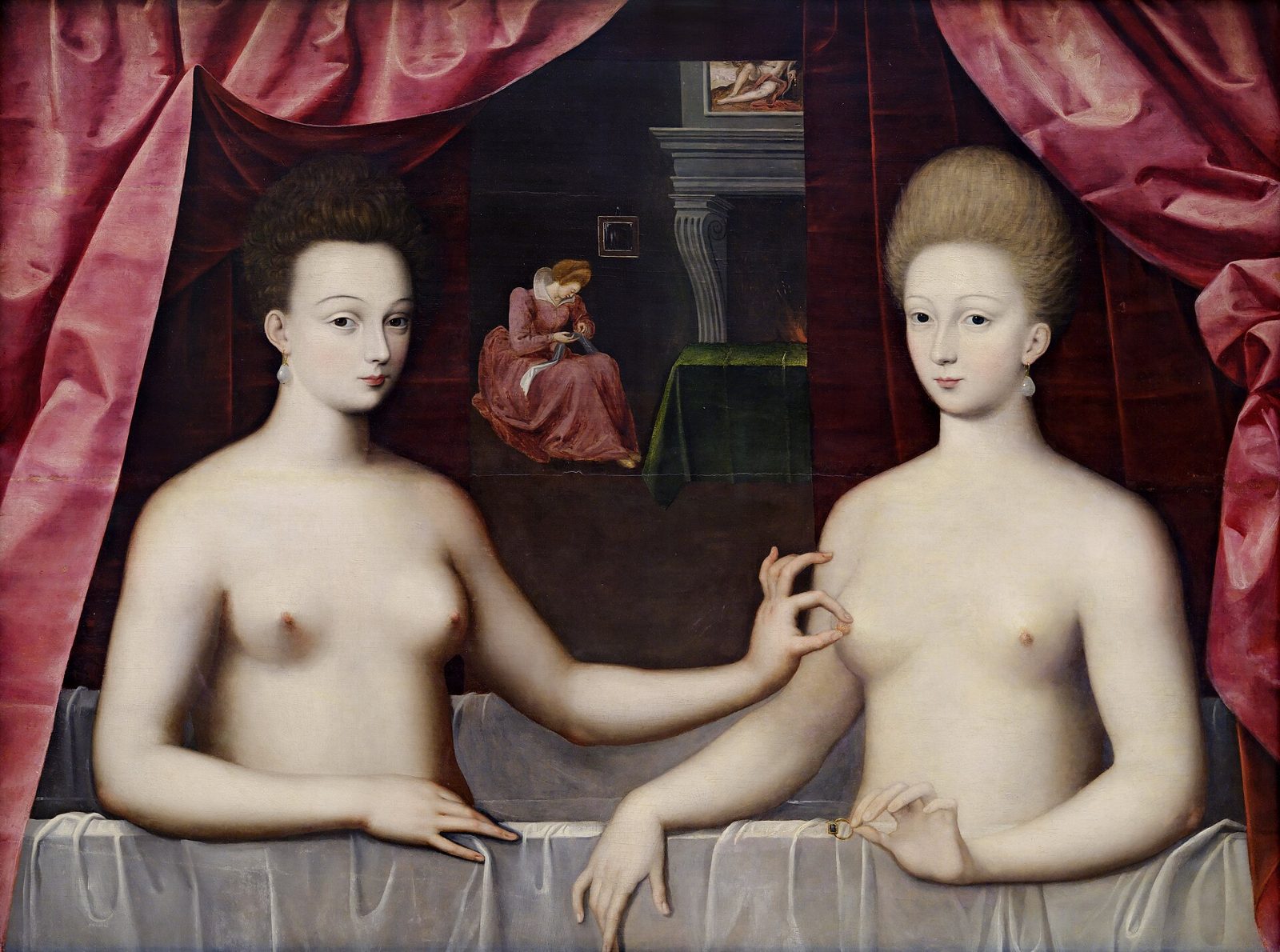
🎧 This work has audio narration — listen in the appTake a moment to really look at this painting, “Gabrielle d’Estrées et une de ses sœurs.” Notice how the two women are framed by that sumptuous red curtain, almost like they’re stepping out of a dream. Now, focus on Gabrielle’s hand, delicately holding a ring, while her sister pinches her nipple. It’s a bold gesture, isn’t it? This isn’t just playful; it’s often interpreted as a symbol of Gabrielle’s pregnancy with King Henry IV’s child.
Why does that matter? Well, it hints at the intimate and complex relationships of power and desire in the late 16th century. Gabrielle was not just a mistress; she was a woman navigating the treacherous waters of royal affection and societal expectation. The ring she holds is said to be a token of love from Henry, a promise that carries both hope and scandal.
Created around 1594 by an unknown artist from the Fontainebleau School, this painting captures a moment that’s both personal and public, a blend of eroticism and familial bond. It’s fascinating to think about how this artwork has sparked conversations about female sexuality and representation throughout history.
As you stand here, consider this: What stories do you think these women would tell if they could speak?
This painting, 'Gabrielle d'Estrées et une de ses sœurs,' created around 1594, has a fascinating history tied to its reception and display. Initially attributed to an unknown artist from the Fontainebleau School, it found its way to the Louvre in Paris, where it has been housed since 1937. The work was once displayed in the Prefecture of Police in Paris during the early 19th century, where it sparked enough controversy that a high official decided to veil it with a green curtain, deeming it too provocative for public view. The painting's narrative was further enriched by Pierre de Bourdeille, seigneur de Brantôme, who recounted a scandalous tale of a lady so entranced by the painting that she rushed to her lover, overwhelmed by desire. Such stories illustrate not only the painting's erotic nature but also its impact on the social fabric of its time.
As you gaze at this painting, pay attention to the way the artist has crafted the figures of Gabrielle and her sister. The brushwork is both delicate and deliberate, capturing the softness of their skin against the starkness of the red curtain that frames them. The use of light is particularly striking; it illuminates their bodies while casting shadows that add depth and dimension. Notice how the composition draws your eye to the intimate gesture of the sister pinching Gabrielle's nipple, a bold focal point that conveys both affection and a hint of scandal. The background features a seamstress, subtly suggesting preparation for a child, which adds layers to the narrative. The colors are rich yet harmonious, with the red curtain symbolizing both passion and secrecy, effectively setting the stage for this intimate moment.
This painting has left a lasting legacy in the art world, influencing perceptions of female sexuality and representation. Its bold portrayal of intimacy between women has resonated through the ages, often being referenced in discussions about lesbianism and female empowerment. In the late 20th century, it was featured on magazine covers and posters advocating for same-sex marriage, showcasing its relevance in contemporary dialogues about love and identity. Artists and scholars alike have drawn inspiration from its themes, ensuring that 'Gabrielle d'Estrées et une de ses sœurs' continues to provoke thought and discussion long after its creation.
One curious anecdote about this painting involves its time in the Prefecture of Police, where it was veiled by a high official who deemed it too risqué for public viewing. Ironically, this act of censorship only served to elevate the painting's status, transforming it into a tantalizing secret that drew even more attention.
While at the Prefecture of Police in the early 19th century, the painting was deemed too provocative, leading a high official to cover it with a green curtain, which ironically turned it into a tantalizing secret that attracted even more curiosity.
Yes, a second, clothed version of 'Gabrielle d'Estrées et une de ses sœurs' was produced shortly after the original, showcasing the same figures but with different attire.