Holy Family with Saint Elizabeth and the infant St. John
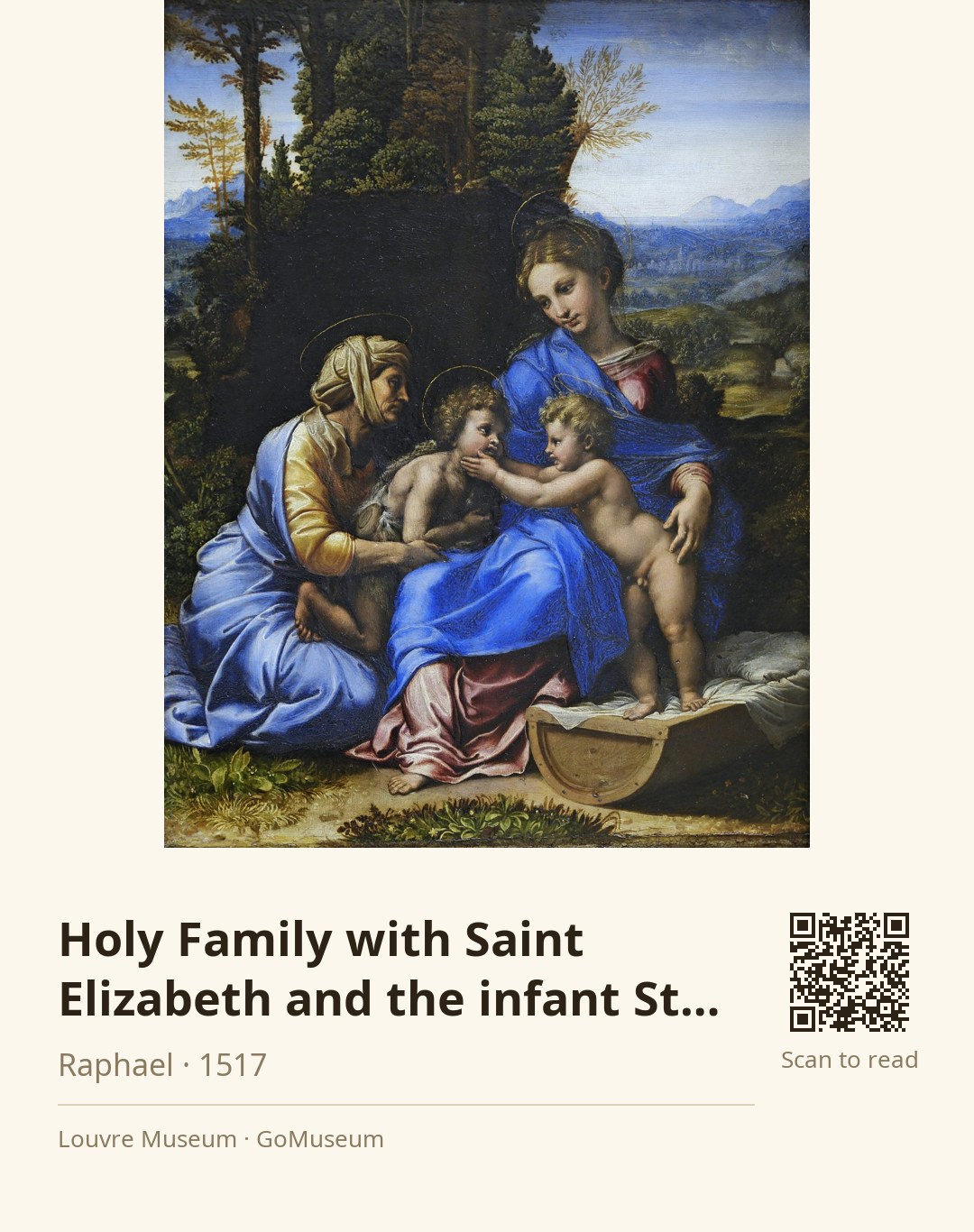
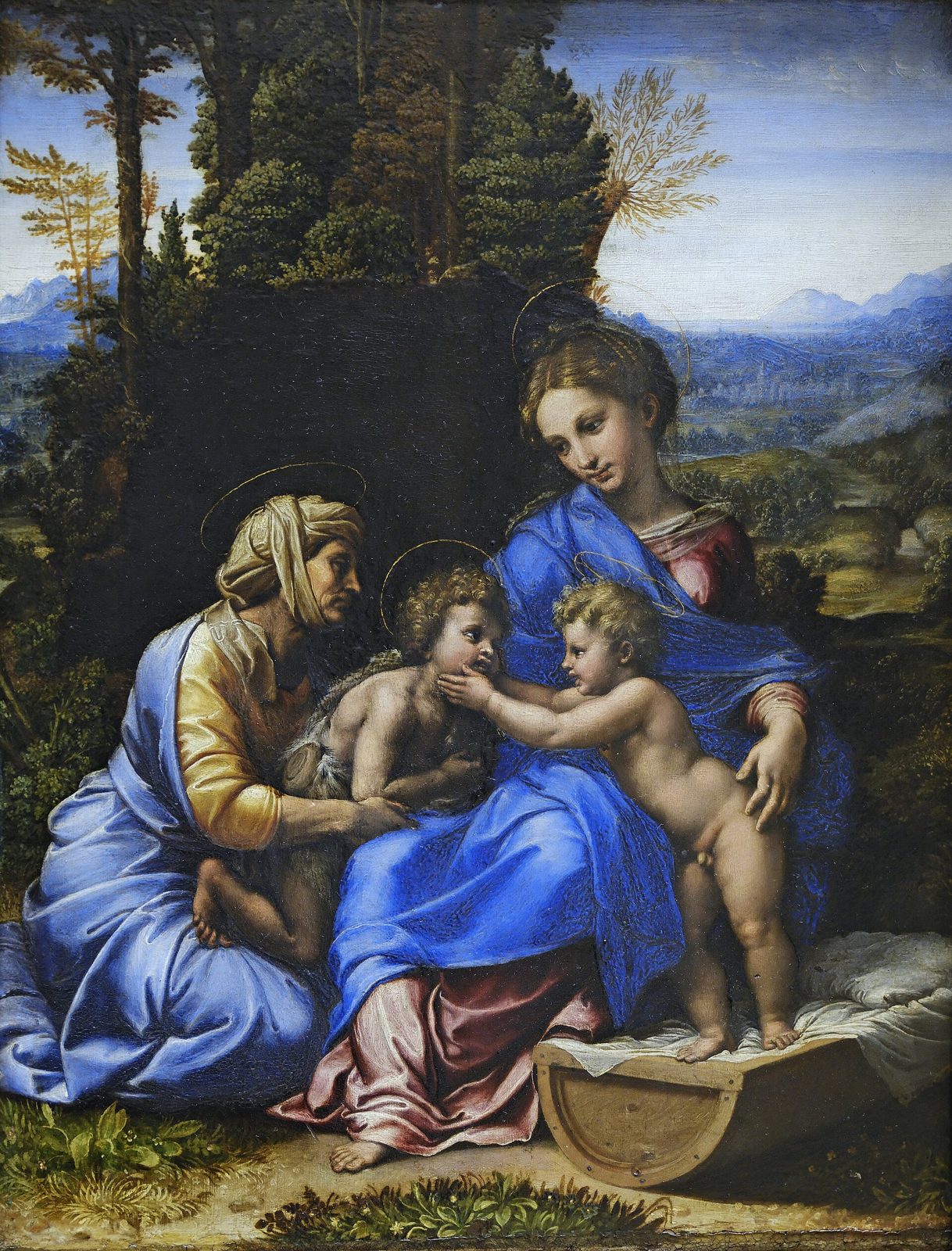
🎧 This work has audio narration — listen in the appTake a moment to really look at Raphael’s “Holy Family with Saint Elizabeth and the infant St. John.” Notice how Mary is seated, her vibrant blue and red robes almost glowing against the earthy tones of the background. Now, focus on the cradle shaped like an inverted tree trunk—what a striking detail! This isn’t just a quirky design choice; it symbolizes life and growth, connecting the Holy Family to nature and the world around them.
The way Mary cradles Jesus, her foot peeking out from her robe, suggests intimacy and tenderness. Meanwhile, Saint Elizabeth kneels beside them, her expression filled with warmth and reverence for the moment.
This painting is a part of a larger tradition of depicting the Holy Family, but Raphael’s unique touch brings a fresh perspective.
As you stand here, consider this: what emotions does this scene evoke for you? How does Raphael’s portrayal of family resonate with your own experiences?
Raffaello Sanzio da Urbino, known as Raphael, was an Italian painter and architect of the High Renaissance, born in Urbino in 1483. Orphaned by age eleven, he managed his family's workshop and trained under Pietro Perugino, establishing himself as a master by 1500. His move to Rome in 1508 marked the beginning of a prolific period, where he received significant commissions, including the renowned frescoes in the Vatican's Raphael Rooms. His art is celebrated for its clarity, harmonious composition, and embodiment of Neoplatonic ideals. Raphael's influence was profound, shaping the trajectory of Western art and serving as a model for academies until the 19th century. His legacy, characterized by serenity and grace, was later revived in the 18th and 19th centuries, contrasting with the dramatic styles of his rival Michelangelo. Despite his early death at 37, Raphael's extensive body of work and innovative techniques left an indelible mark on the art world, influencing generations of artists and extending into contemporary culture.
John' was likely commissioned around 1519 by Pope Leo X as a gesture of gratitude towards Adrien Gouffier de Boissy, the papal legate to France. This painting, along with its protective cover featuring the figures of Abundance and Ceres, was intended to honor de Boissy's diplomatic efforts. The work was recorded in the collection of the Count of Brienne in 1622 and later became part of Louis XIV's collection. Over the years, it has been attributed to various artists, including Giulio Romano, Raphael's assistant, which reflects the complexities of its provenance. Today, it resides in the Louvre, where it continues to captivate viewers with its intimate portrayal of the Holy Family.
As you gaze at this painting, notice how Raphael's brushwork creates a sense of warmth and intimacy. The vibrant colors of Mary's robes—deep blues and rich reds—contrast beautifully with the earthy tones of the background, drawing your eye directly to her. The cradle, shaped like an inverted tree trunk, is not just a clever design; it symbolizes the connection between the divine and nature. The figures are arranged in a triangular composition, with Mary at the apex, which enhances the sense of stability and harmony. The light subtly illuminates their faces, highlighting their expressions and the tender interaction between the characters. This careful manipulation of light and color, combined with the serene landscape, invites you into a moment of familial closeness.
Raphael's 'Holy Family with Saint Elizabeth and the infant St. John' is a remarkable piece that embodies the High Renaissance's ideals of harmony and grace. This painting not only showcases Raphael's masterful technique but also influenced countless artists who followed. The way he captures the tender interaction between the figures set a new standard for religious art, emphasizing emotional connection over mere representation. It’s a pivotal moment in art history that shifted the focus towards more intimate, human portrayals of sacred subjects, making the divine feel accessible and relatable. Remember, this painting is not just a depiction; it’s a heartfelt invitation into the sacred family dynamic.
John, was likely a gift from Raphael to a prominent papal legate in France? It was presented around 1519 as a token of gratitude for the legate's services to Pope Leo X. Imagine the conversations that must have swirled around this piece as it moved through the hands of powerful figures!
The cradle's shape, resembling an inverted tree trunk, symbolizes life and growth, linking the Holy Family to nature and the divine. This design choice reflects Raphael's interest in integrating natural elements into sacred themes.
Initially attributed to Raphael, the painting was later ascribed to his assistant Giulio Romano and even to Guido Reni in the 1900s, showcasing the complexities of art attribution and the challenges in determining an artist's true contribution.
The landscape in the background of the painting shows influences from the Danubian School, characterized by its serene and atmospheric settings, which adds depth and context to the intimate scene of the Holy Family.