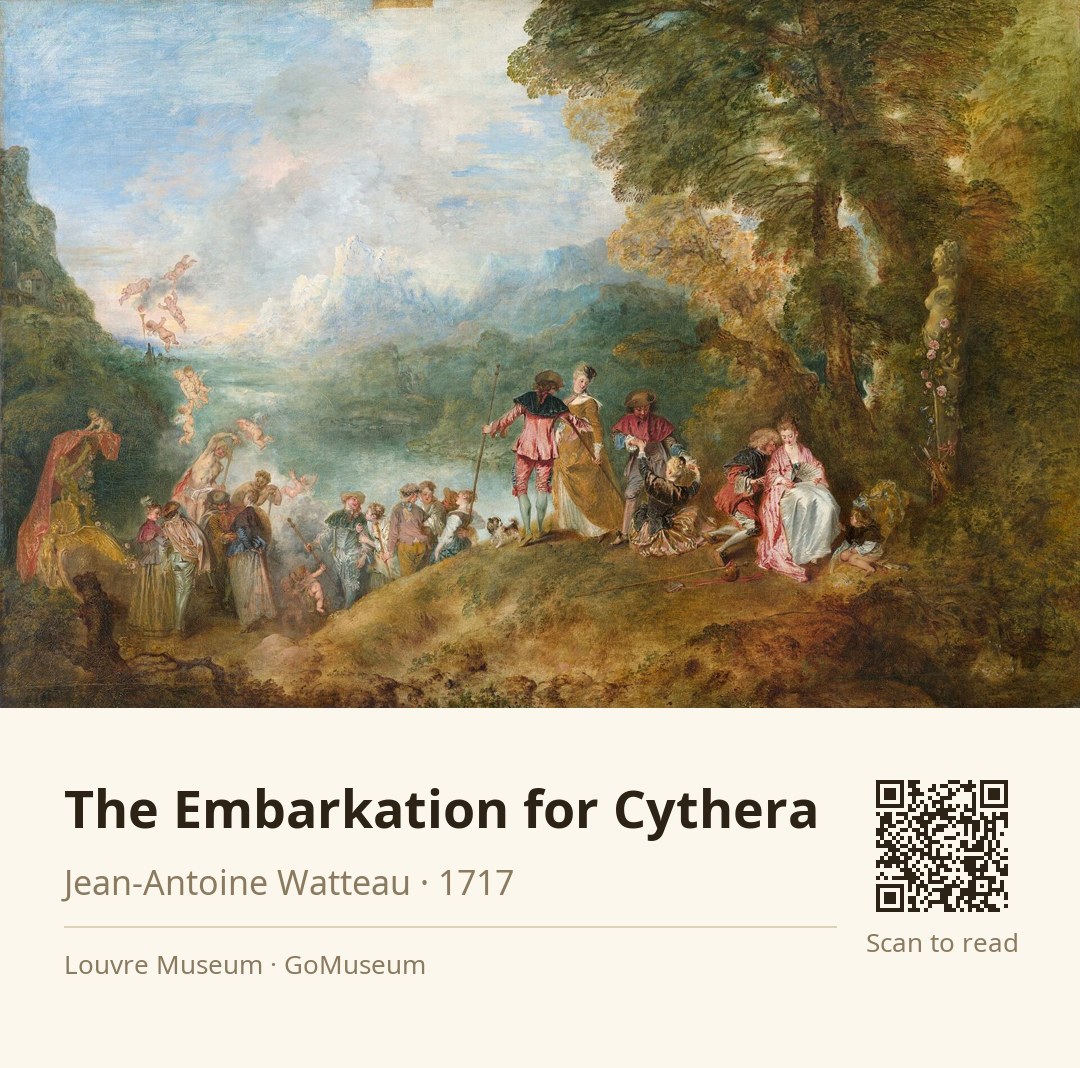
The Embarkation for Cythera
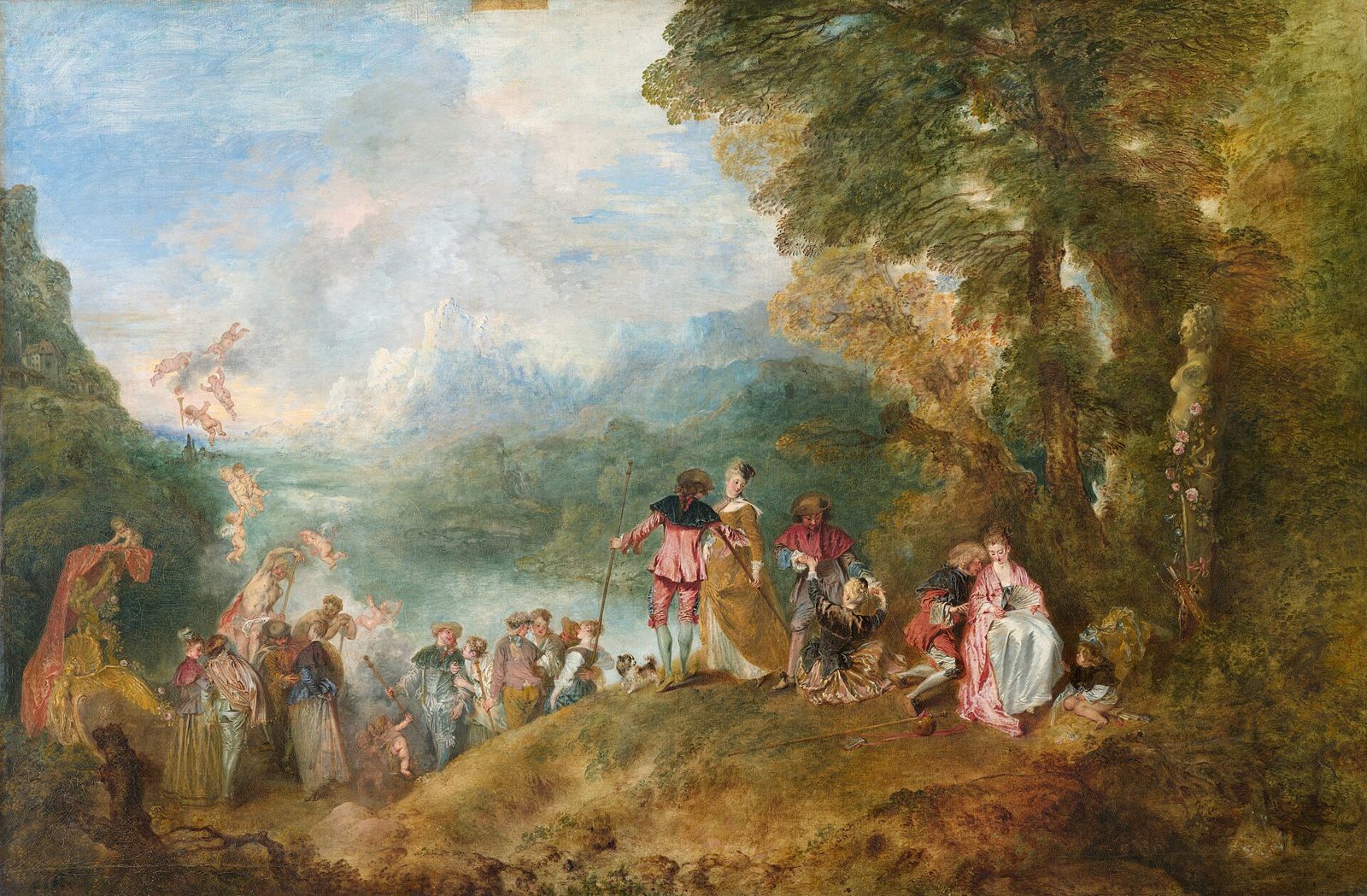
🎧 This work has audio narration — listen in the appTake a moment to soak in the enchanting scene before you in Watteau's "The Embarkation for Cythera." Notice the couples, blissfully intertwined, as they prepare to board a boat shimmering in golden light. Look closely at the statue of Venus, the goddess of love, standing sentinel over their romantic escapade.
These details matter because they encapsulate the essence of a "fête galante," a celebration of love and pleasure that flourished in the wake of Louis XIV's reign. Watteau's brushstrokes create a dreamy haze, blurring the lines between reality and fantasy, inviting you to ponder: are these lovers arriving at the island of love, or are they reluctantly departing?
Painted in 1717 as Watteau's reception piece for the Royal Academy, this work not only secured his place in the art world but also birthed a new genre. The island of Cythera, believed to be the birthplace of Venus, symbolizes the allure of love and desire, making this painting a timeless reflection on romance.
As you stand here, consider the emotions captured in this moment. Are the lovers filled with joy or melancholy? What stories do you think they carry with them as they embark on their journey?
Jean-Antoine Watteau, born in Valenciennes in 1684, was a pivotal French painter whose brief but impactful career transformed the Baroque style into the more playful Rococo. He is renowned for pioneering the genre of fêtes galantes, which depicted charming, idyllic scenes infused with theatricality, often inspired by the commedia dell'arte. Watteau's early life was marked by a tumultuous family environment, which likely influenced his introspective nature and artistic sensibilities.
After moving to Paris in 1702, he honed his skills under various influences, notably Claude Gillot and Claude Audran III, before establishing his unique style characterized by vibrant colors and fluid movement. His masterpieces, including "Pilgrimage to Cythera" and "Pierrot," reflect his fascination with love and leisure, capturing the essence of 18th-century French society.
Despite his struggles for recognition, Watteau achieved success during his lifetime, becoming a full member of the Académie Royale in 1717. His legacy endures through his extensive body of work, which continues to inspire artists and collectors alike, solidifying his place in art history as a master of color and emotion. Watteau passed away in 1721, leaving behind a rich artistic heritage that would influence generations to come.
In 1717, Jean-Antoine Watteau presented 'The Embarkation for Cythera' as his reception piece to the Royal Academy of Painting and Sculpture. This moment was pivotal, as it not only secured his membership but also marked the birth of a new genre: the fête galante. The painting was quickly recognized for its innovative subject matter, leading the Academy to create a new classification for such works. Watteau had previously painted a simpler version of this theme around 1710, but the 1717 piece was more elaborate and dreamlike. After its debut, the painting was housed in the Louvre, where it remains today. Interestingly, during the upheaval of the French Revolution, this very artwork was subjected to vandalism, with students reportedly using it for target practice. It wasn't until the 1830s that Watteau's work regained popularity, reflecting the changing tides of artistic appreciation in France.
As you gaze at 'The Embarkation for Cythera,' take note of Watteau's masterful brushwork. The delicate strokes create a soft, hazy atmosphere that blurs the lines between reality and fantasy. The light dances across the canvas, with warm golden hues mingling with gentle pinks and greens, evoking a sense of twilight. Watteau's composition is carefully structured; the couples are arranged in a diagonal line that leads your eye toward the boat, creating a sense of movement and anticipation. The statue of Venus stands tall, anchoring the scene while the surrounding cupids seem to playfully push the lovers together. This interplay of light, color, and form not only draws you in but also invites you to ponder the emotional weight of the moment—are these lovers departing joyfully or with a hint of regret?
Watteau's 'The Embarkation for Cythera' is a pivotal piece in art history, marking the birth of the 'fête galante' genre, which celebrates love and leisure among the French aristocracy. This painting not only captivated audiences of its time but also inspired a wave of artists who sought to emulate its enchanting charm. Watteau's innovative approach to color and movement shifted the trajectory of art from the rigid Baroque to the more fluid Rococo style. His work challenged traditional classifications, leading the Royal Academy to create a new category for such scenes, forever altering the landscape of European painting.
One surprising tidbit about 'The Embarkation for Cythera' is that it was painted in a remarkably short span of just eight months. Watteau faced pressure from the Royal Academy to deliver his reception piece after several reprimands for his delays. This urgency likely contributed to the painting's spontaneous and ethereal quality, as he worked quickly to meet the expectations of the Academy.
During the French Revolution, 'The Embarkation for Cythera' was vandalized, with art students reportedly using it for target practice, reflecting the painting's association with the old regime and its eventual decline in popularity.