 Image: Onceinawhile · Onceinawhile · Honoré Théodore Paul Joseph d'Albert, 8th Duke of Luynes (15 December 1802 – 15 December 1867) · Roi Roiability
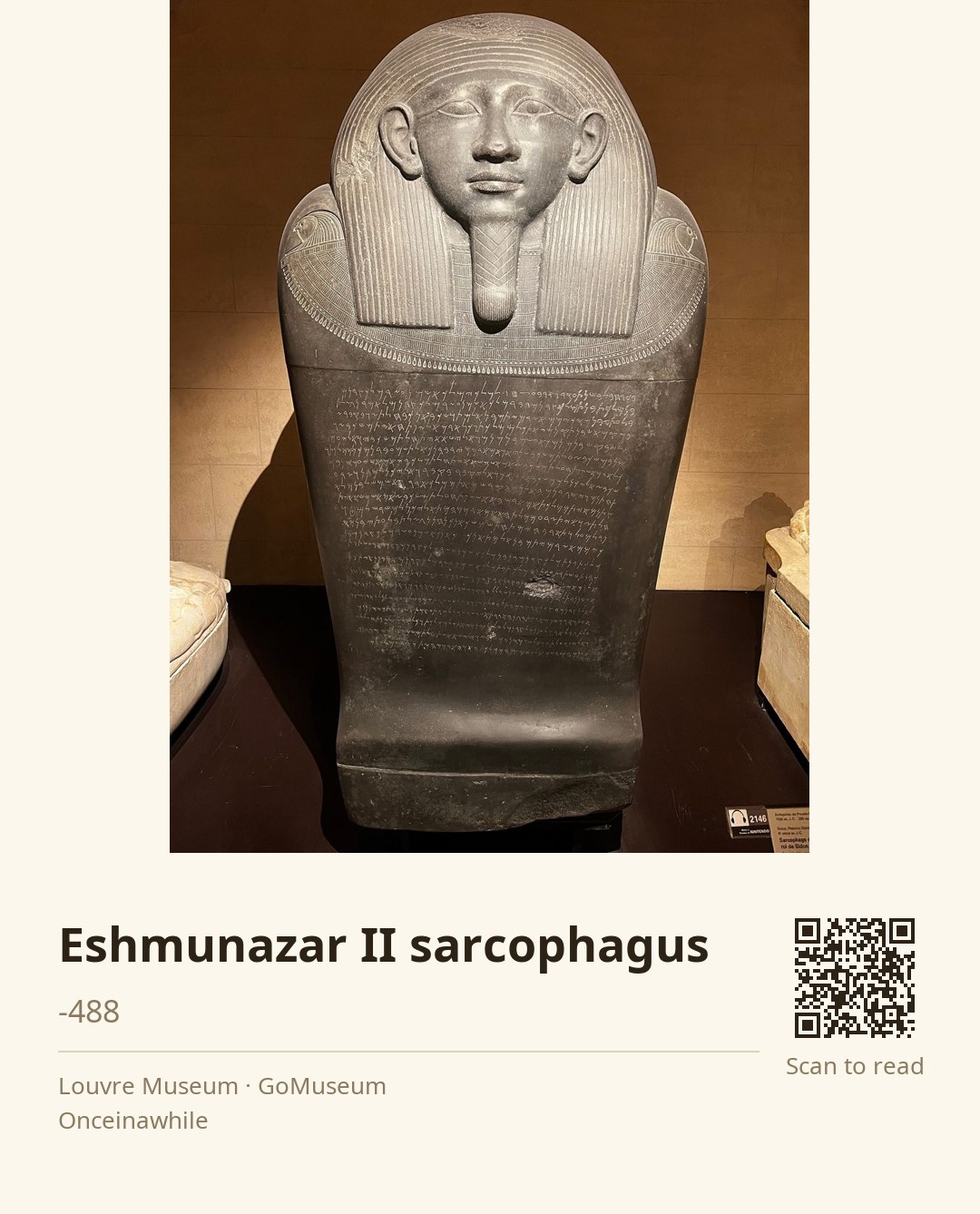
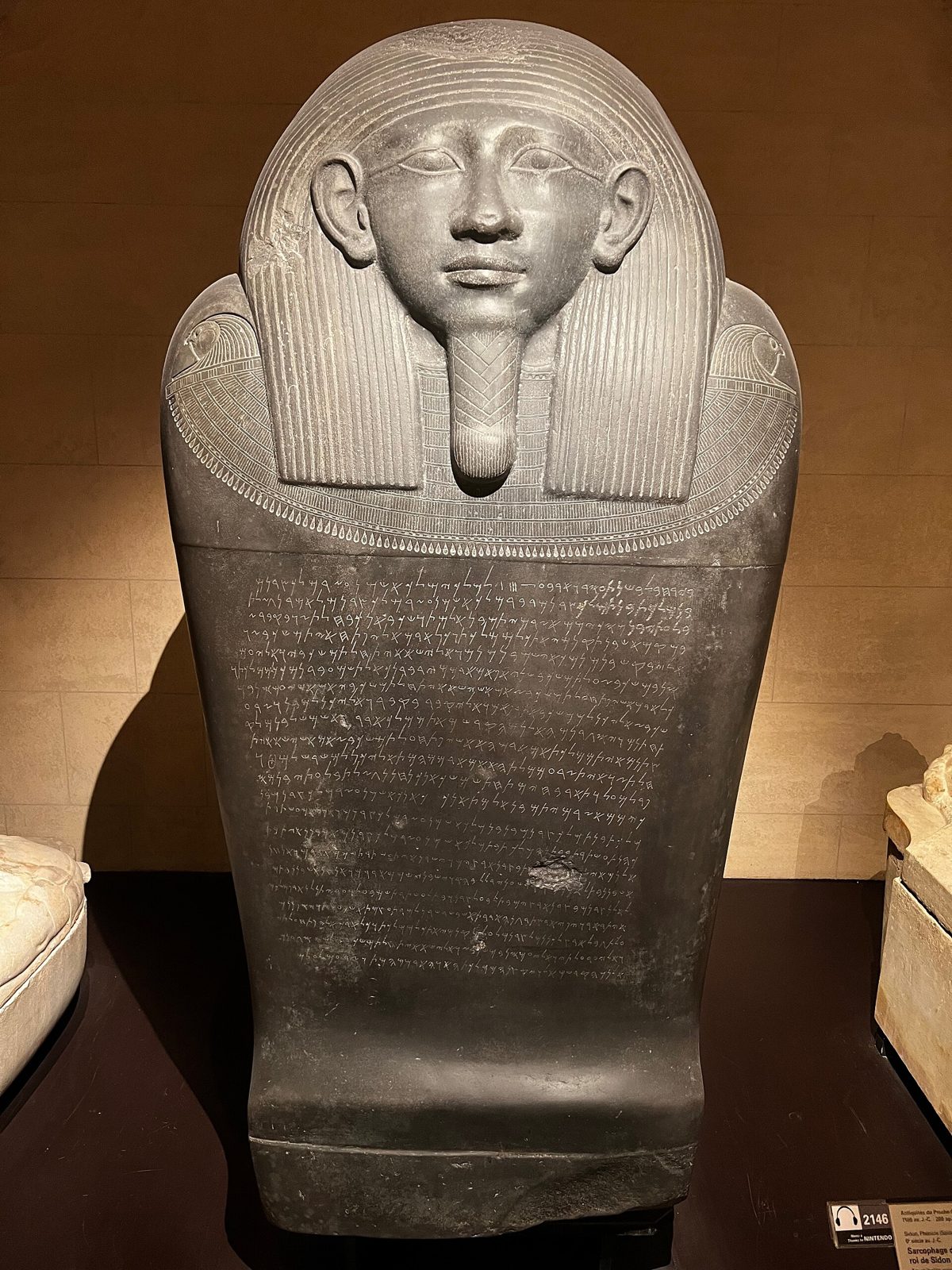
Eshmunazar II sarcophagus
🎧 This work has audio narration — listen in the appTake a moment to really look at the Eshmunazar II sarcophagus before you. Notice the intricate carvings that adorn its surface, especially the inscriptions that wrap around the head.
The inscriptions are significant because they mark one of the earliest and most detailed examples of the Phoenician language, discovered right here in Sidon. This was groundbreaking at the time, revealing not only the identity of Eshmunazar II but also his lineage and the territories he governed, granted to him by the Achaemenid king. Imagine the excitement of scholars in the 19th century as they deciphered these ancient texts, connecting the dots of history that had been lost for centuries.
Eshmunazar II ruled in the 6th century BC, a time when Sidon was a thriving city-state. His sarcophagus, likely carved in Egypt, was a symbol of power and prestige, reflecting the intricate ties between the Phoenicians and their neighbors.
As you stand here, think about the journey this sarcophagus has taken—from the ancient necropolis to the Louvre. What stories do you think it could tell if it could speak?
As you examine the Eshmunazar II sarcophagus, take a closer look at the material it's made from—local amphibolite, a dense and durable stone. The craftsmanship is remarkable; the surface is polished to a smooth finish, allowing the intricate carvings to stand out. Notice how the inscriptions are not just etched but almost seem to dance across the stone, wrapping around the head with a fluidity that suggests a deep reverence for the subject. This was no ordinary burial container; it was a statement of power and artistry, meticulously crafted to honor a king.
The sarcophagus of Eshmunazar II was unearthed in 1855, a significant find that sparked excitement among scholars and archaeologists alike. Discovered in an ancient necropolis near Sidon, it was commissioned for Eshmunazar II, who ruled during the 6th century BC. The excavation was led by Alphonse Durighello, an agent of the French consulate, and the sarcophagus was sold to Honoré de Luynes after a legal dispute. This piece was one of only three Egyptian sarcophagi found outside of Egypt, highlighting the cultural exchanges of the time.
Its inscriptions were groundbreaking; they marked the first significant Phoenician text discovered in Phoenicia itself, igniting a flurry of scholarly interest across Europe and America. This sparked a new wave of archaeological exploration in the region, notably leading to Ernest Renan's pioneering mission in the 1860s. The sarcophagus's discovery and translation helped scholars draw parallels between Phoenician and Hebrew, deepening our understanding of ancient languages and the interconnectedness of cultures. Remember, this isn't just a tomb; it's a key to unlocking the past and reshaping our comprehension of ancient civilizations.
Here's a curious tidbit: when the sarcophagus was discovered, it was found alongside human remains, including a jawbone and a tooth. This suggests that the burial practices of the Phoenicians were quite elaborate, and it raises intriguing questions about the rituals surrounding death and the afterlife in their culture. Imagine the stories that could be told from those remnants, connecting us to a world long gone.
The sarcophagus was unearthed in an ancient necropolis, which was part of a royal burial site for elite Phoenicians, indicating the importance of the area for funerary practices and the status of those buried there.
The excitement generated by the sarcophagus led to increased interest in archaeological exploration, culminating in Ernest Renan's 1860–1861 Mission de Phénicie, which was the first major archaeological mission to Lebanon and Syria.
The excavation was conducted by Alphonse Durighello, who operated under the informal legal framework of Ottoman rule, allowing him to profit from the discovery of artifacts without strict regulations, highlighting the opportunistic nature of archaeological practices at the time.