 Image: Jean-Pol GRANDMONT · Jean-Pol GRANDMONT · Jean-Pol GRANDMONT · Amirhassan
Psyche Revived by Cupid's Kiss
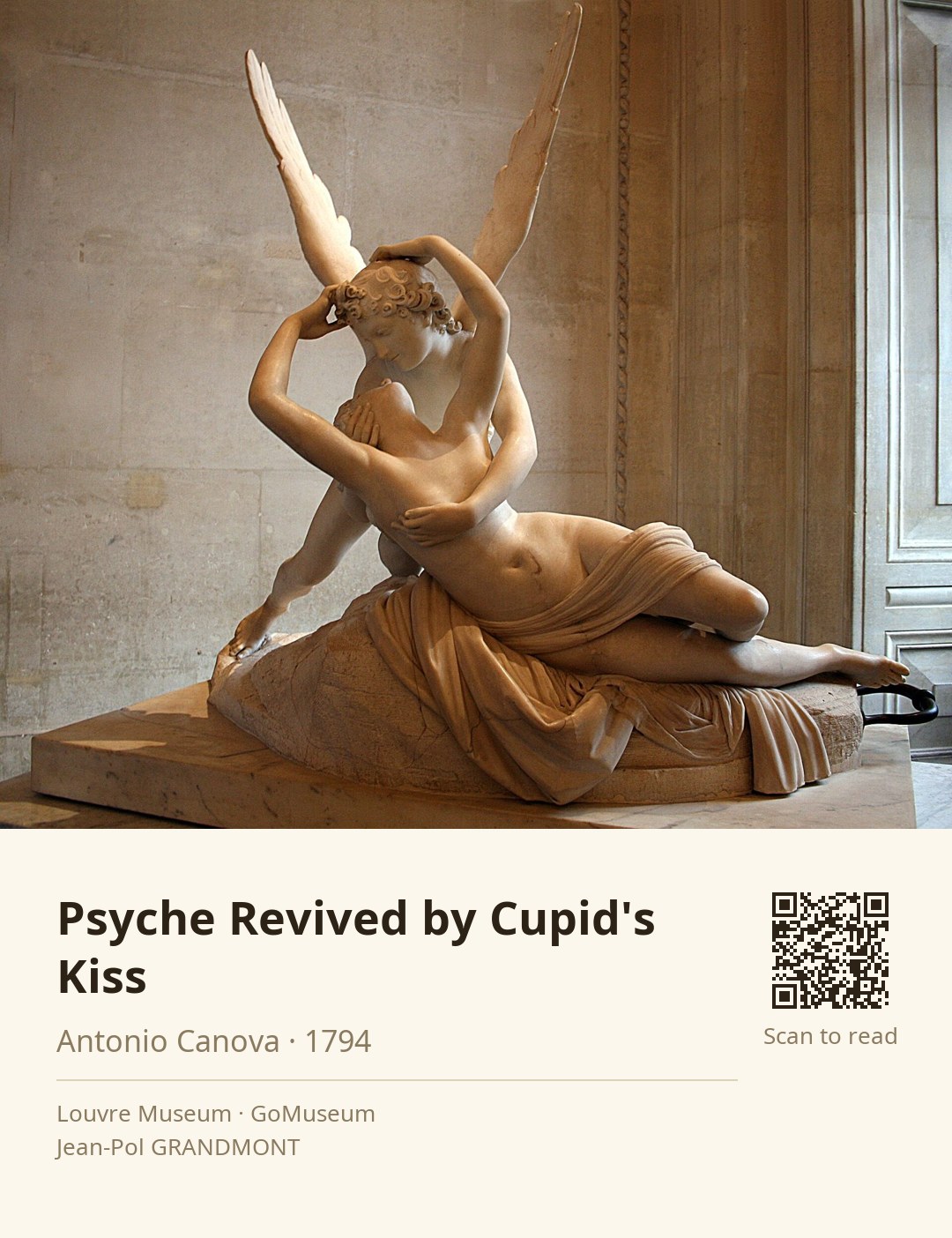
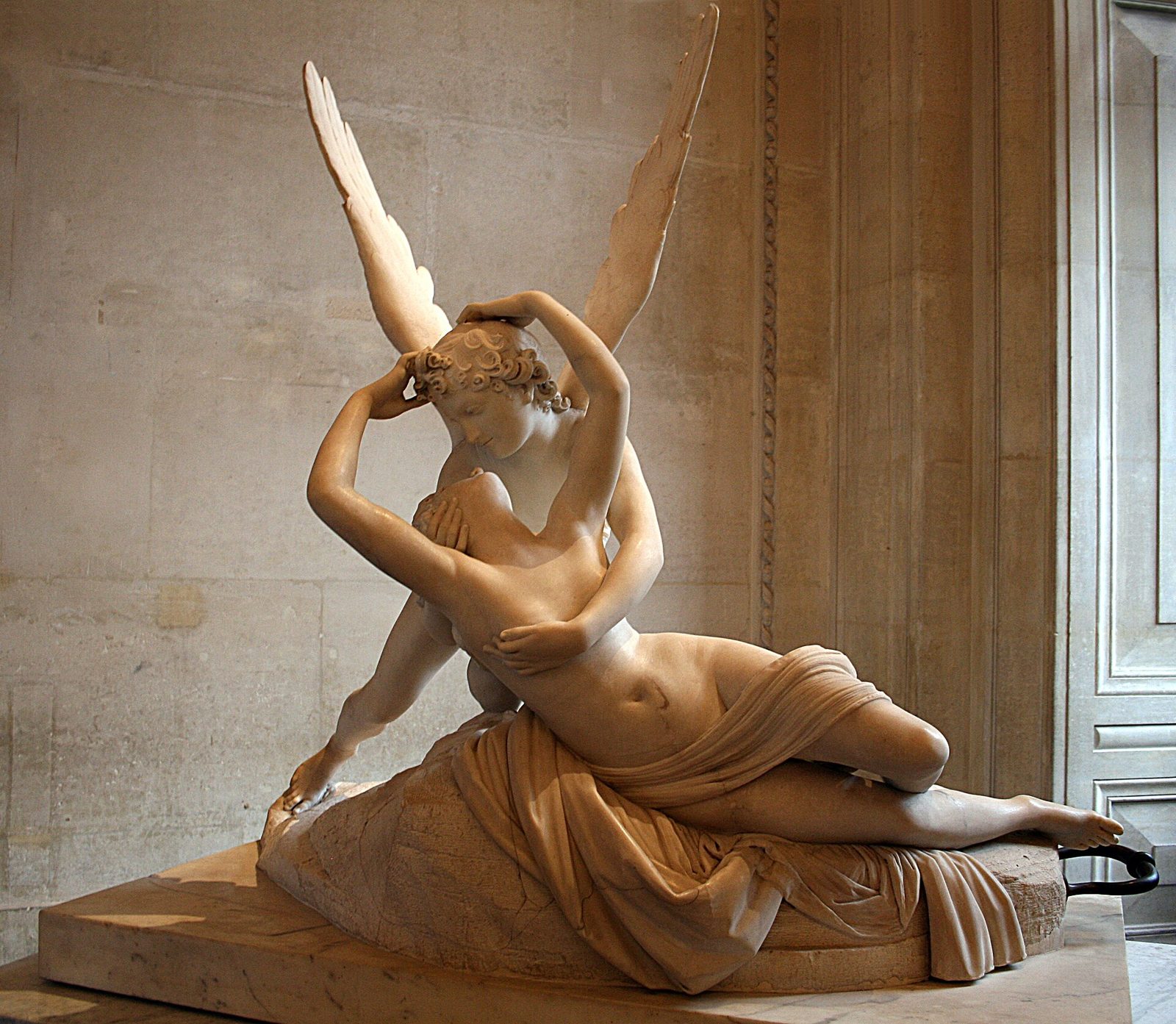
🎧 This work has audio narration — listen in the appTake a moment to really look at "Psyche Revived by Cupid's Kiss." Notice how Psyche's delicate fingers stretch toward Cupid, as if she’s just been brought back to life. Can you see the way Cupid cradles her head, his wings poised in mid-flutter? This intimate moment captures not just a reunion, but a profound tenderness that Canova masterfully carves into marble.
These details matter because they reveal the emotional core of the sculpture. Psyche’s outstretched hand symbolizes hope and longing, while Cupid’s gentle support signifies love’s power to awaken and heal. This isn’t just a mythological scene; it’s a universal expression of love’s triumph over despair.
Canova was commissioned to create this work by Colonel John Campbell, and it quickly became a celebrated masterpiece, showcasing the artist's extraordinary skill in transforming cold marble into warm, lifelike figures.
As you stand here, think about the story behind this moment. What does it mean to be revived by love? How does this sculpture resonate with your own experiences of connection and awakening? Let that question linger as you take in the beauty around you.
Antonio Canova, born on November 1, 1757, in Possagno, Italy, emerged as a leading figure in Neoclassical sculpture. Orphaned early, he was raised by his grandfather, a stonemason, who nurtured his artistic talent. Canova's early works, including marble shrines, showcased his prodigious skill, leading to an apprenticeship with Giuseppe Bernardi and later studies at the Accademia di Belle Arti in Venice. His breakthrough came with commissions for statues like Orpheus and Eurydice, establishing him among the Venetian elite.
In 1780, Canova moved to Rome, where he drew inspiration from classical antiquity and Michelangelo. His works, such as Theseus and the Minotaur and the funerary monuments for Popes Clement XIV and XIII, solidified his reputation as Europe's foremost sculptor. His style, characterized by idealized forms and delicate details, avoided the excesses of Baroque art while embracing classical beauty.
Canova's influence extended beyond Italy; he became a cultural ambassador, negotiating the return of art looted during the Napoleonic Wars. He was known for his generosity, supporting young artists and charitable causes. He passed away on October 13, 1822, leaving behind a legacy that defined Neoclassical sculpture and continues to inspire artists today. His heart rests in a monument he designed in Venice, a testament to his enduring impact on art history.
As you gaze at 'Psyche Revived by Cupid's Kiss,' take a moment to appreciate the exquisite craftsmanship of Antonio Canova. Notice how he masterfully carves the marble, transforming it into lifelike skin that seems almost to breathe. The smoothness of Psyche's arm contrasts beautifully with the rough texture of the rock beneath her, emphasizing her delicate form. Can you see the fine curls of her hair and the intricate details of Cupid's wings? Each feather appears to flutter, capturing a moment of movement. Canova's technique not only showcases his skill but also enhances the emotional depth of this scene, inviting you to feel the warmth of their embrace.
This sculpture, commissioned by Colonel John Campbell in 1787, took several years for Canova to complete, with the final touches made around 1794. After its completion, the piece was acquired by Joachim Murat, a prominent figure in Napoleon's court, and later found its home in the Louvre Museum in 1824. Canova's work was celebrated across Europe, marking a significant moment in the transition from Neoclassicism to Romanticism, as it emphasized emotional expression over rigid formality. The story of Cupid and Psyche, drawn from Apuleius' tale, resonated deeply with audiences, making this sculpture a beloved masterpiece.
Created in 1794, this work captures an intense emotional scene that resonates deeply with viewers, showcasing the power of love and awakening. Canova's masterful technique in marble carving influenced countless artists who followed, pushing them to explore more expressive and emotional themes in their own work. The dynamic poses of Cupid and Psyche invite you to walk around the sculpture, engaging with it from multiple angles, which was a revolutionary idea at the time.
Did you know that Canova designed a special revolving base for this sculpture? This unique feature allows viewers to appreciate the piece from multiple angles, enhancing the experience of its emotional depth. Critics like Carl Ludwig Fernow noted that this design invites you to walk around the sculpture, creating a dynamic interaction that challenges the traditional static viewing of art. Canova's innovative approach not only showcases his artistic vision but also engages the audience in a more immersive experience.
Canova designed a special revolving base for 'Psyche Revived by Cupid's Kiss,' allowing viewers to appreciate the sculpture from multiple angles, which enhances the emotional experience of the piece.
After acquiring the sculpture in 1800, Joachim Murat, a prominent figure in Napoleon's court, helped elevate its status, leading to its eventual placement in the Louvre Museum in 1824, where it became a celebrated masterpiece.
The handle near Psyche's foot was part of the mechanism that allowed the sculpture to be revolved, emphasizing Canova's innovative approach to engaging viewers and challenging traditional static viewing of art.