 Image: Wilfredor
Christ at the Column
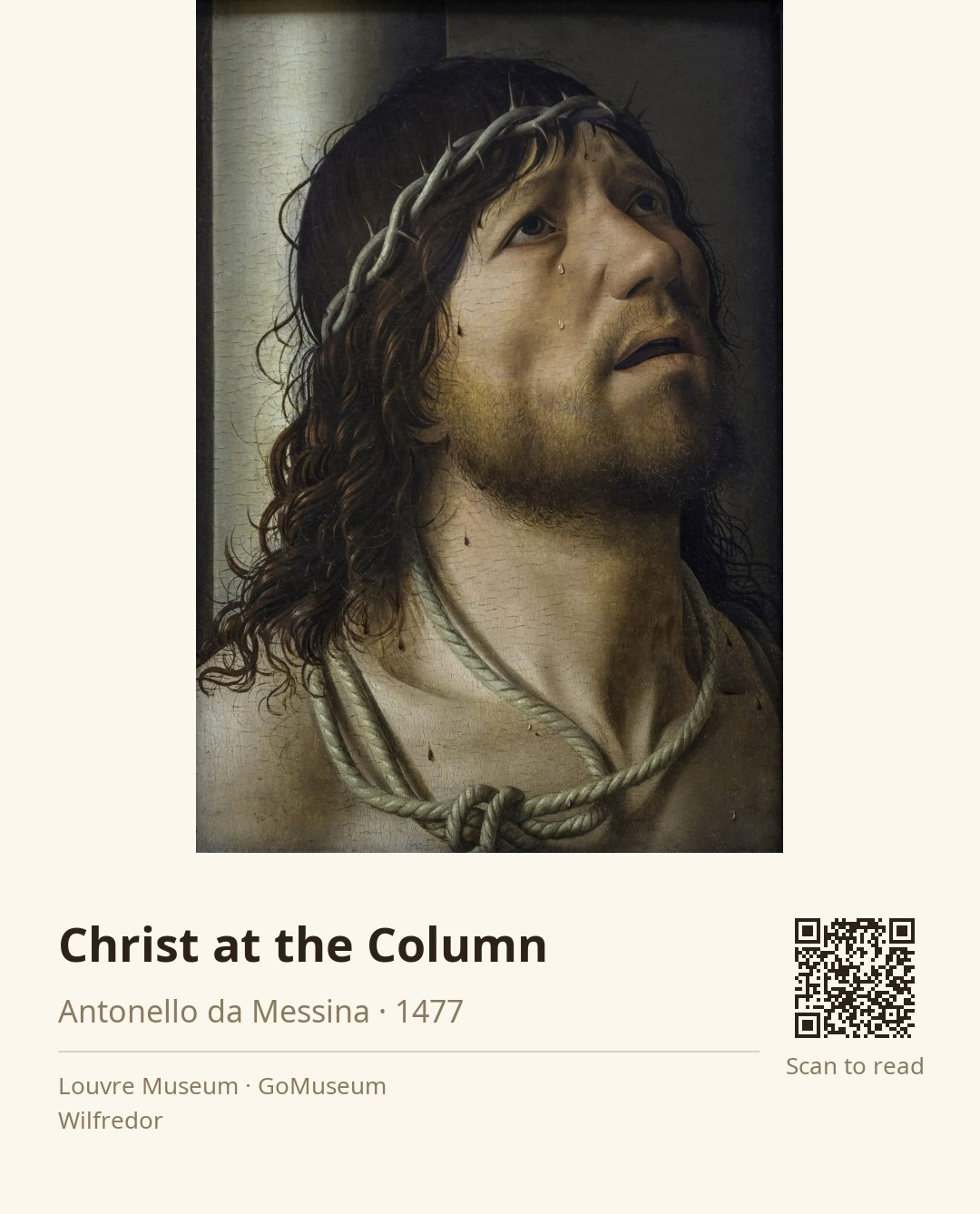
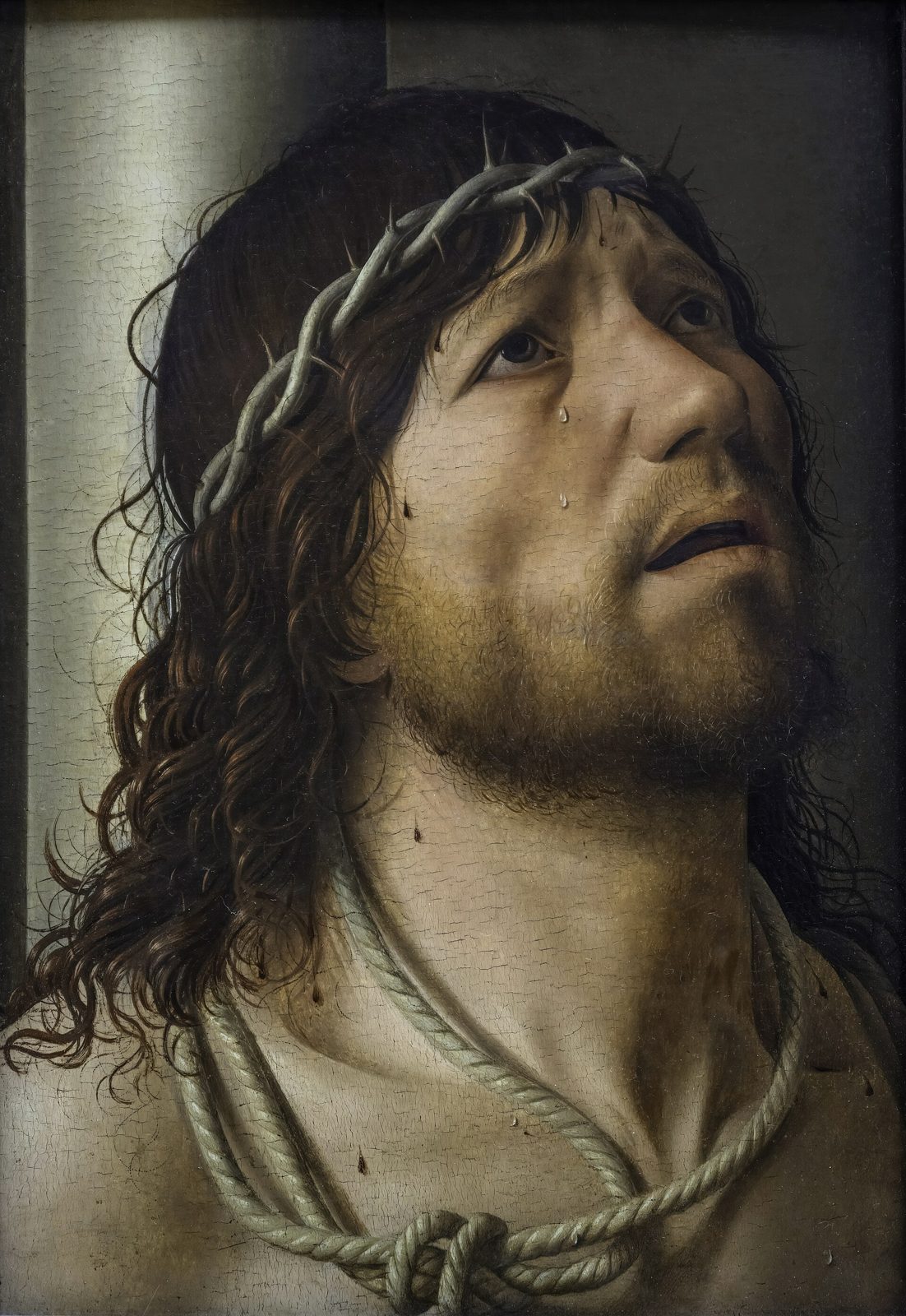
🎧 This work has audio narration — listen in the appTake a moment to really look at "Christ at the Column." Notice how Antonello da Messina captures the raw emotion on Christ’s face. His half-open mouth, revealing teeth and tongue, and the beads of sweat clinging to his hair draw you into this moment of suffering. This isn’t just a depiction of pain; it’s an intimate glimpse into Christ’s humanity, right at the moment before his torment begins.
These details matter because they evoke a visceral response, inviting you to empathize with his plight. Antonello’s meticulous attention to the textures—the glistening sweat, the delicate strands of hair, the first streaks of blood—transforms a historical event into a deeply personal experience. It’s a moment frozen in time, where the viewer can almost feel the weight of the moment pressing down.
His work is often seen as a bridge between the detailed realism of Northern European art and the more expressive styles of the Italian Renaissance.
As you stand here, consider: what emotions does this image stir in you? How does it change your perception of suffering and compassion? Let that linger as you move on.
Antonello da Messina, born around 1430 in Sicily, was a pivotal figure in the Early Renaissance, known for his masterful integration of Flemish techniques into Italian painting. Trained by his sculptor father and later influenced by the Netherlandish painter Niccolò Colantonio in Naples, Antonello developed a unique style that combined meticulous detail and atmospheric depth with the monumental qualities of Italian art. His portraits, characterized by psychological depth and vitality, marked a departure from the traditional profile poses of his contemporaries, establishing him as a pioneer in portraiture.
Active primarily in Messina, Antonello's works, such as the Salting Madonna and the Sibiu Crucifixion, reflect a sophisticated understanding of light and space, drawing from both Flemish and Italian traditions. Despite never leaving Italy, his influence extended to northern Italy, particularly Venice, where he revolutionized local painting practices. His legacy is evident in the works of later masters, and he is credited with laying the groundwork for the tonal painting style that would define Venetian art. Antonello's innovative approach and ability to synthesize diverse artistic influences solidified his place in art history as a transformative figure of the Renaissance.
This piece was executed during the artist's final years, showcasing his unique blend of Northern European and Venetian influences. Initially, its small size and intimate portrayal led some scholars to speculate that it had been cut down; however, this theory has since been disproven. Antonello's portrayal of Christ, caught in a moment of suffering, was a departure from the more stoic representations of the time, allowing viewers to connect with the humanity of the figure. This emotional resonance sparked discussions among critics and patrons alike, marking it as a significant work in Antonello's oeuvre.
As you gaze at 'Christ at the Column,' pay attention to the brushwork and the way Antonello handles light and color. The artist employs oil paint to achieve a remarkable level of detail; notice how each strand of hair glistens with sweat, and how the light reflects off Christ's skin, enhancing the realism. The composition is tightly focused, drawing your eye directly to Christ’s face, which is filled with raw emotion. The half-open mouth, revealing teeth and tongue, adds a visceral quality that pulls you into the moment. Antonello's technique captures the tension of the scene, with the subtle gradations of color creating a sense of depth and volume. This meticulous attention to detail not only showcases his skill but also amplifies the emotional impact of the work, making it feel alive and immediate.
This painting, executed in his later years, captures a raw moment of suffering, pushing the boundaries of religious art by portraying Christ not just as a divine figure, but as a deeply human one, caught in the throes of pain. This emotive portrayal influenced generations of artists, particularly in Venice, where his techniques helped shape the development of a more expressive, human-centered approach to religious subjects. Antonello's meticulous attention to detail, from the sweat on Christ's brow to the blood beginning to mark his face, set a new standard for realism in painting, making this work a cornerstone in the evolution of Western art.
One intriguing aspect of 'Christ at the Column' is its size. This small painting, often mistaken for a fragment of a larger work, was actually intended to be this way. Scholars once believed it had been cut down, but further research revealed that Antonello da Messina designed it as a close-up, intimate portrayal of Christ's suffering. This choice invites viewers to confront the raw emotion of the moment, making it a powerful piece of devotional art.
For a long time, scholars believed that 'Christ at the Column' had been cut down and originally extended lower, with a parapet separating Christ from the observers; however, this theory has since been disproven.
Antonello's early training in Sicily and later experiences in Naples exposed him to both Early Netherlandish and Venetian influences, which he skillfully blended to create a unique style that emphasized detail and emotional depth.
Antonello's father, Giovanni, was a sculptor who likely influenced his early artistic development, and he later married Giovanna Cuminella, with whom he had a son, Jacobello, suggesting that his family life was intertwined with his artistic journey.