 Image: Sailko · Francesco Bini
Bust of Pope Paul V (Galleria Borghese)
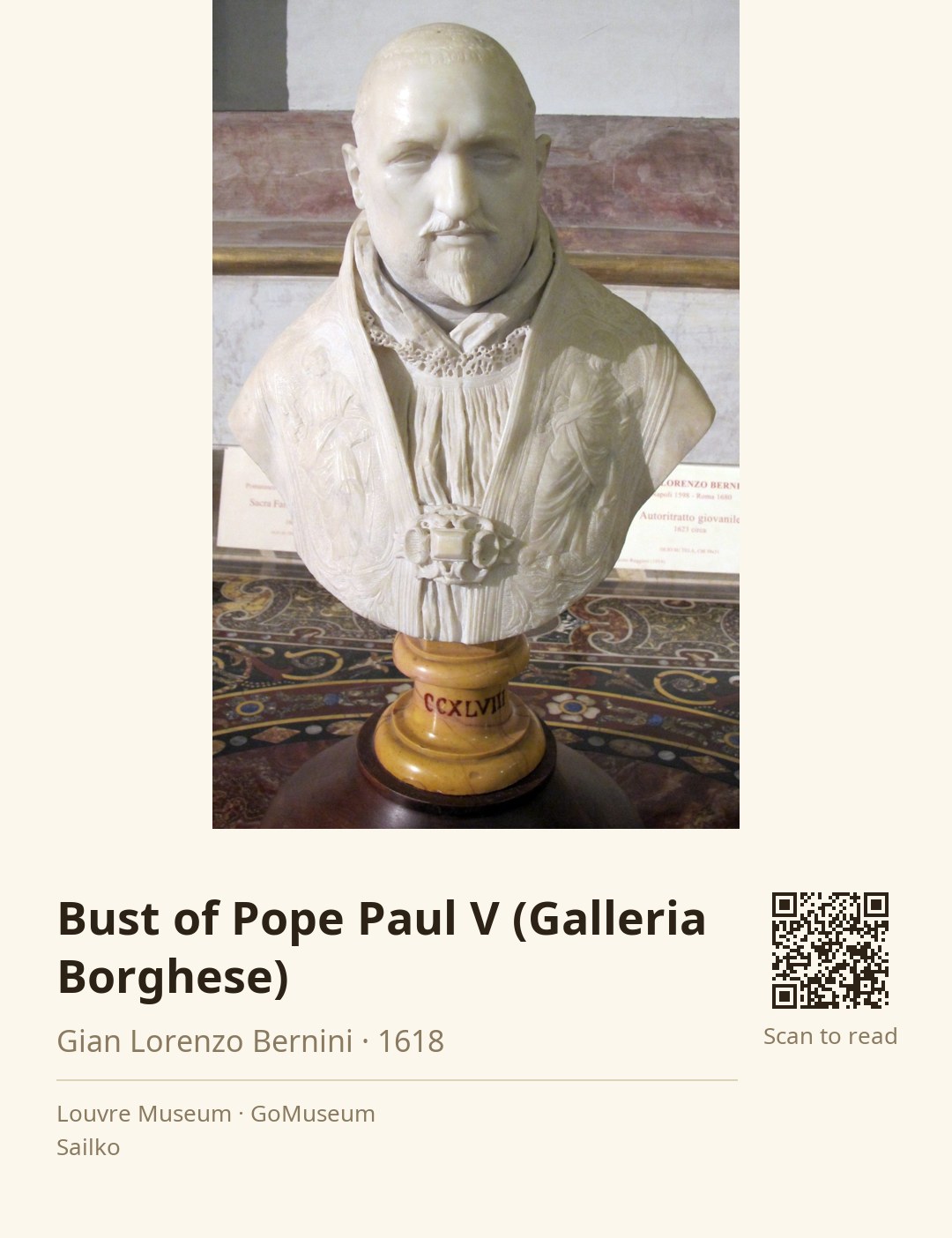
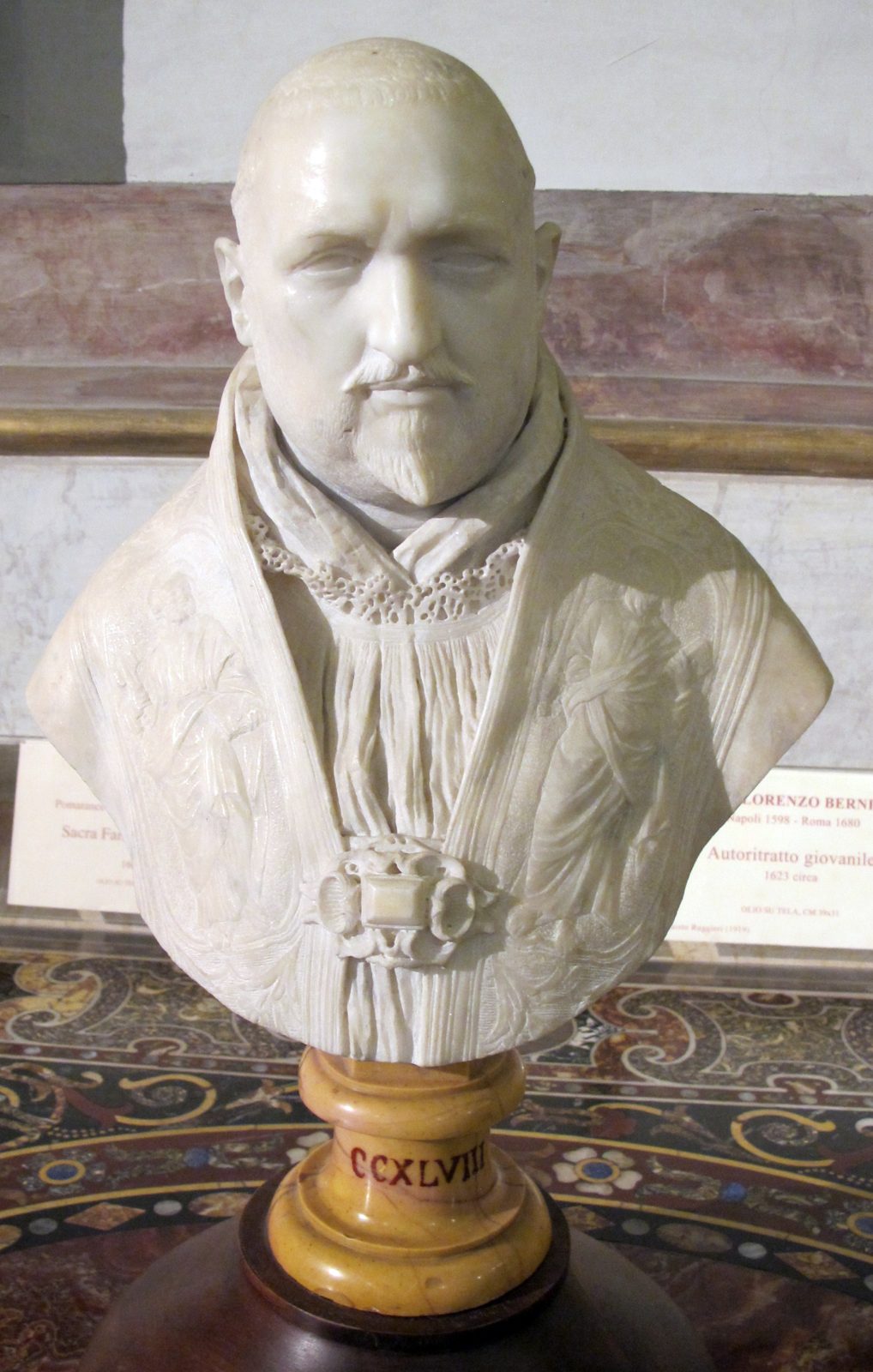
🎧 This work has audio narration — listen in the appTake a moment to really look at the Bust of Pope Paul V by Gian Lorenzo Bernini. Notice how the pope’s gaze seems to follow you, his eyes deep and penetrating, almost alive. The intricate details of his robes, carved with such precision, give a sense of weight and authority, don’t they?
These details matter because they reflect Bernini's mastery of marble, transforming a cold stone into a warm, lifelike presence. The way the fabric appears to drape and flow suggests movement, a hallmark of Bernini’s Baroque style, which sought to evoke emotion and drama. This isn’t just a statue; it’s a powerful representation of the pope, a man who wielded immense influence during the Counter-Reformation.
Created in 1618, this bust was commissioned by the pope himself, showcasing Bernini’s early rise as a favored artist of the papacy.
As you stand here, think about the legacy of this piece. What do you think Bernini wanted to convey about Pope Paul V? How does this sculpture speak to the power dynamics of its time?
Gian Lorenzo Bernini, born on December 7, 1598, in Naples, was a preeminent Italian sculptor, architect, and painter, celebrated as a defining figure of Baroque art. Recognized as a prodigy from a young age, his talent was nurtured by his father, a Mannerist sculptor, and quickly garnered the attention of influential patrons, including Pope Paul V, who famously predicted Bernini would be the "Michelangelo of his age."
Bernini's work is characterized by dynamic movement, intricate forms, and a theatrical quality that set the standard for Baroque sculpture. His masterpieces, such as the Ecstasy of Saint Teresa and the Fountain of the Four Rivers, exemplify his ability to blend sculpture with architecture, creating cohesive visual narratives. His architectural contributions include the design of St. Peter's Basilica's grand colonnade, which remains a hallmark of Roman urban planning.
Throughout his life, Bernini was deeply engaged with the Counter-Reformation, using his art to convey the Catholic Church's power and spirituality. His versatility extended to painting and theatrical productions, where he showcased his multifaceted creativity. Bernini's legacy as a transformative artist solidified his place in art history, influencing generations and earning him the title of the first pan-European sculptor. He passed away on November 28, 1680, in Rome, leaving behind a monumental body of work that continues to inspire awe.
Take a closer look at the marble itself. Bernini had a unique way of working with this stone, almost as if he were breathing life into it. Notice the delicate texture of the pope's robes; they seem to ripple and flow, capturing the very essence of fabric. The intricate details, from the folds to the way light dances across the surface, reveal Bernini's extraordinary skill. He didn’t just carve; he sculpted emotions, making the stone feel almost soft and pliable. This is the hallmark of Baroque sculpture, where every detail is intentional, designed to evoke a visceral response from the viewer.
The Bust of Pope Paul V, crafted by the renowned Gian Lorenzo Bernini in 1618, is a significant piece of Baroque sculpture housed in the Galleria Borghese in Rome. However, in 1893, it was sold at auction, mistakenly attributed to another artist, Alessandro Algardi. For much of the 20th century, it was presumed lost until it resurfaced in 2014 at an auction in Slovakia, where it was bought by a local resident, Clément Guenebeaud, who later sold it to the J. Paul Getty Museum. This rediscovery after over a century adds a layer of intrigue to its history, highlighting the twists and turns of art provenance.
Did you know that Bernini created two busts of Pope Paul V? The first, which you see here, was made in 1618. The second, crafted in 1621 after the pope's death, was commissioned by his nephew and remained lost for over a century before its dramatic rediscovery in Slovakia. This second bust, like a long-lost sibling, adds another layer to Bernini's exploration of the pope's likeness, showcasing his evolving style and the enduring fascination with this powerful figure.
The second bust was presumed lost for most of the twentieth century after being sold by the Borghese family in 1893. It resurfaced in 2014 at an auction in Slovakia, where it had been in a private collection, unrecognized as an original Bernini.