 Image: Gian Lorenzo Bernini · Charles Grignion the Younger / After Richard Dalton · Gian Lorenzo Bernini · FASTILY · Unknown artistUnknown artist
Sleeping Hermaphrodite
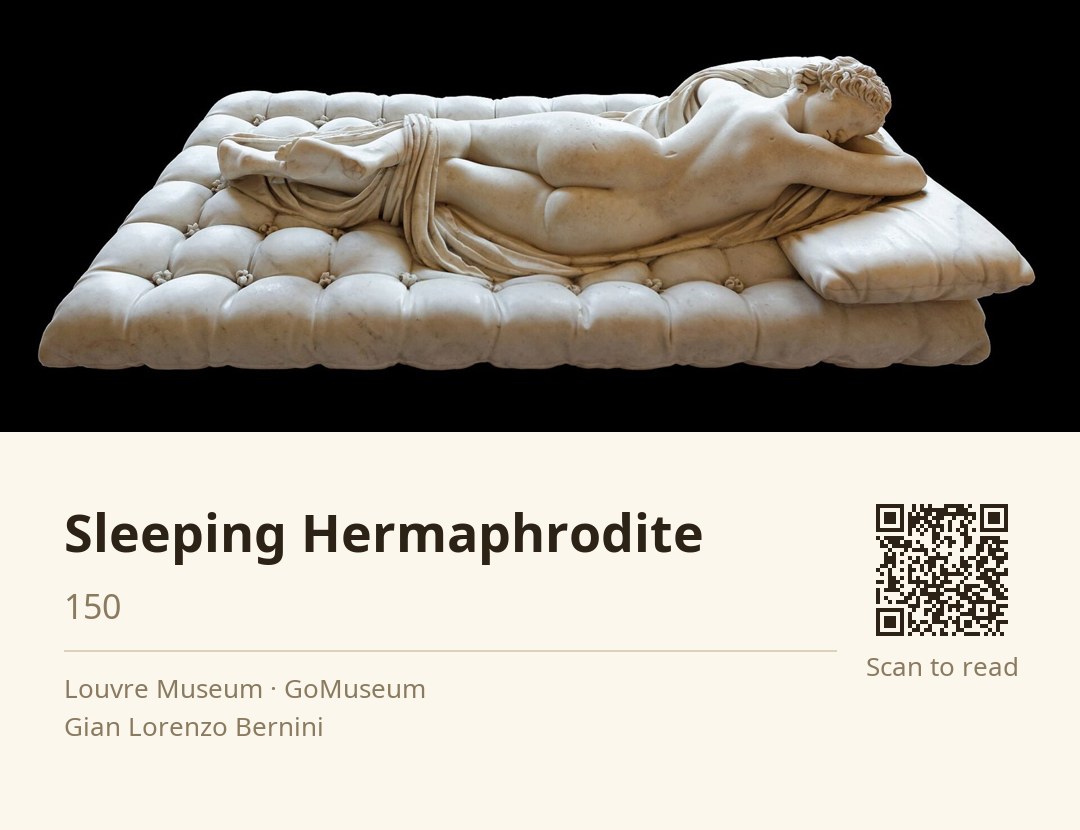
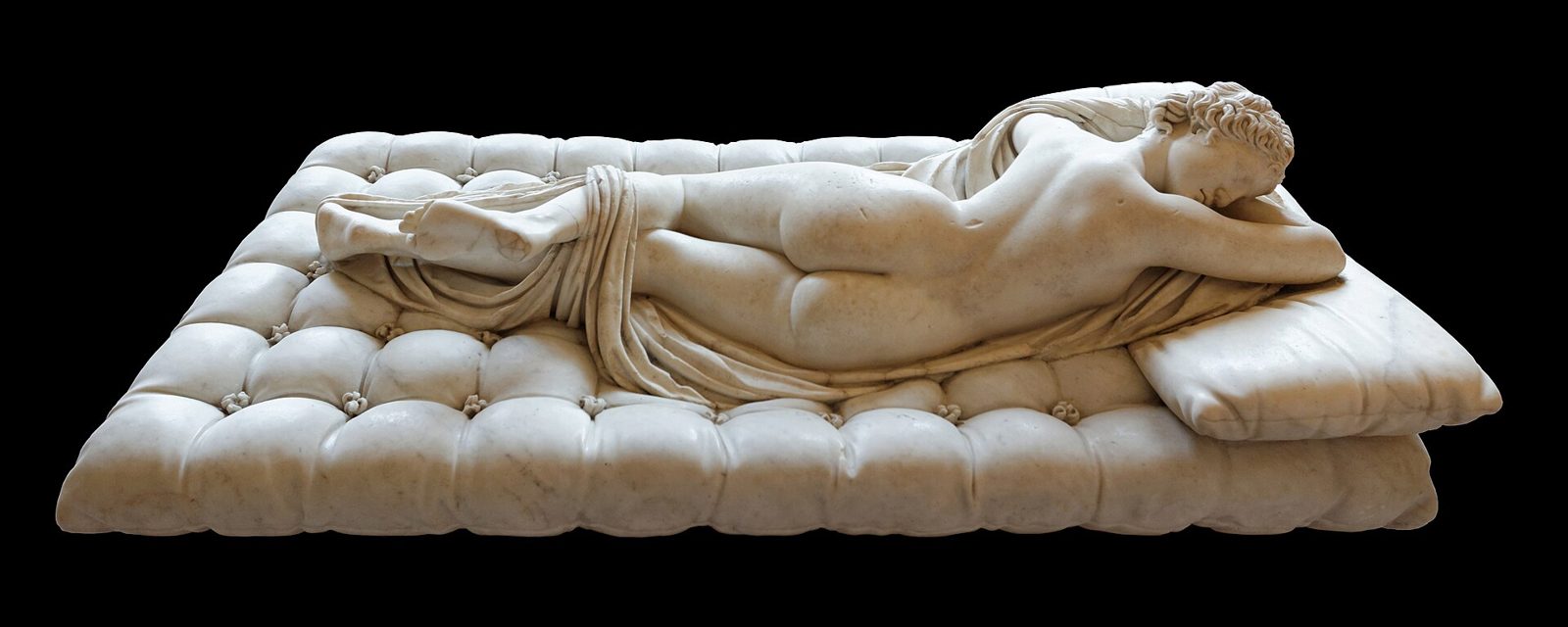
🎧 This work has audio narration — listen in the appTake a moment to really look at the Sleeping Hermaphrodite. Notice how the figure is draped across that beautifully crafted marble mattress, almost as if it’s inviting you to join in its dream. The way the body is positioned, with one leg gently raised, creates a sense of both relaxation and allure.
Now, focus on the details of the face and the soft curves of the body. The serene expression and delicate features are reminiscent of ancient depictions of Venus, yet there’s something distinctly androgynous about this figure. This duality is key; it embodies the merging of masculine and feminine, challenging the viewer to reconsider traditional notions of gender.
It was unearthed in 1618 and quickly became a prized piece in the Borghese Collection, where Bernini himself crafted that exquisite mattress to enhance its beauty.
As you stand here, think about the conversations this piece has sparked throughout history. How does it make you feel about the fluidity of identity? What stories do you think it could tell if it could speak?
Take a closer look at the marble of the Sleeping Hermaphrodite. The smoothness of the surface is not just for aesthetics; it’s a testament to the skill of the sculptor. Notice how the figure seems to flow into the marble mattress, which was crafted by Gian Lorenzo Bernini. His technique of carving marble to mimic the softness of fabric is nothing short of extraordinary. The folds of the mattress look almost inviting, as if you could sink into them. This interplay between the figure and its base creates a seamless experience, drawing you into the dreamlike quality of the piece.
The Sleeping Hermaphrodite was discovered in 1618 at Santa Maria della Vittoria in Rome, during the excavation for the church's foundation. Cardinal Scipione Borghese, a major art collector of his time, quickly acquired it for his collection. He commissioned Bernini to create the exquisite mattress on which the figure rests, paying sixty scudi for this work. This piece was not just a sculpture; it became a centerpiece in a dedicated room of the Villa Borghese. In 1807, it was sold to France during the Napoleonic era and eventually found its home in the Louvre, where it continues to captivate audiences.
Its influence rippled through time, inspiring artists like Diego Velázquez, who crafted a bronze version for Philip IV of Spain, and even poets like Algernon Swinburne, who penned verses reflecting on its beauty. This sculpture's unique portrayal of androgyny challenged conventional notions of gender in art, inviting viewers to reconsider the boundaries of identity. Its legacy is not just in its form but in how it opened the door for future explorations of the human figure, making it a cornerstone in the dialogue of art history. Remember, this is more than just a statue; it's a conversation starter about the complexities of identity and beauty.
Did you know that the Sleeping Hermaphrodite was discovered quite by accident? In 1618, while workers were digging the foundations for the church of Santa Maria della Vittoria in Rome, they unearthed this stunning sculpture. It was a moment of serendipity that changed the course of art history, as Cardinal Scipione Borghese quickly acquired it for his collection. Imagine the thrill of uncovering such a masterpiece, hidden for centuries beneath the earth!
The sculpture inspired various artists, notably influencing Diego Velázquez's painting of the Rokeby Venus, which echoes its themes of beauty and androgyny, showcasing its lasting impact on art history.
Bernini had to master the illusion of softness in marble, a challenging feat that required exceptional skill to make the stone appear inviting and lifelike, enhancing the overall dreamlike quality of the sculpture.