 Image: Jastrow · Gary Todd from Xinzheng, China · Gary Todd from Xinzheng, China · Rama · Rama
Statue of Ebih-Il
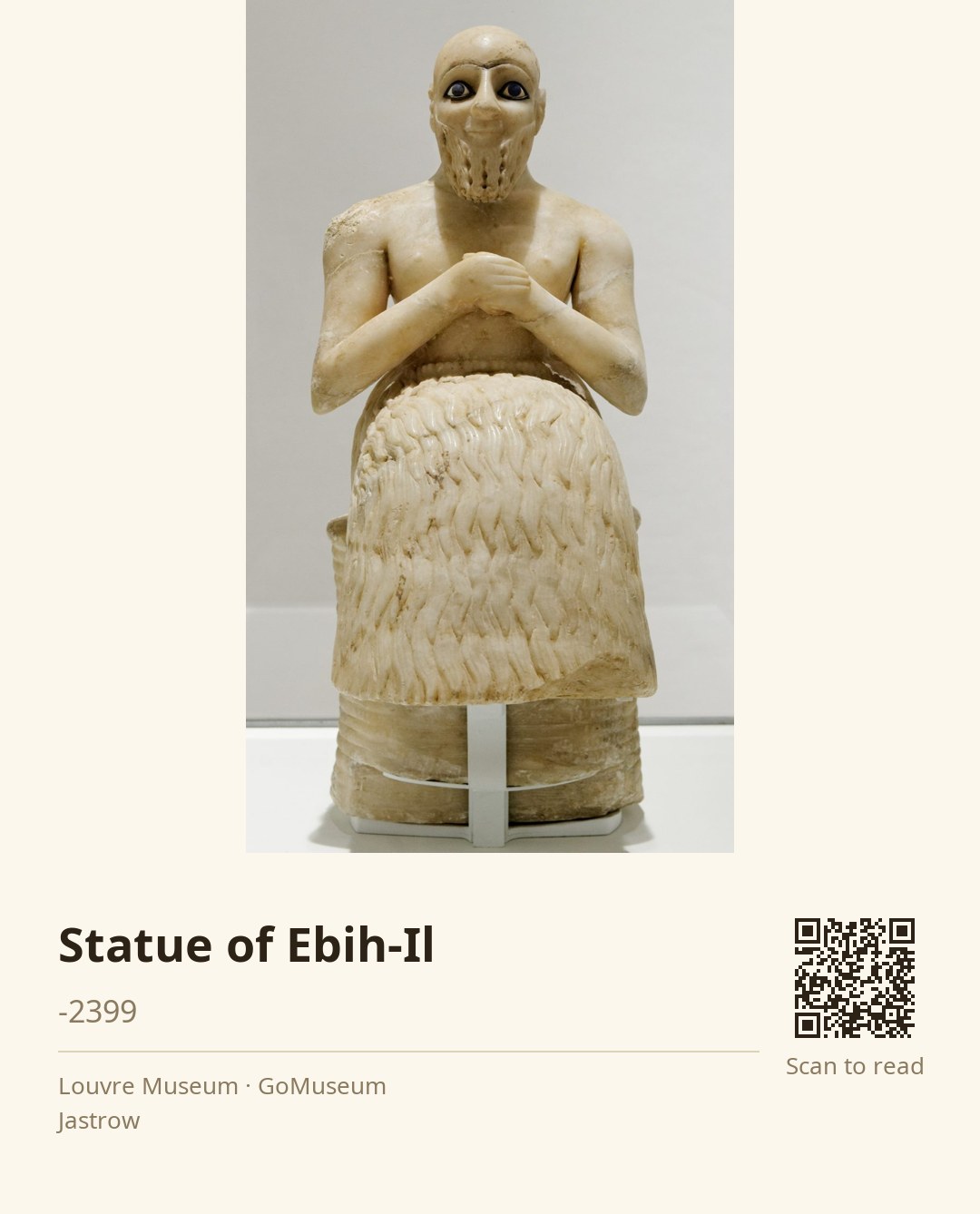
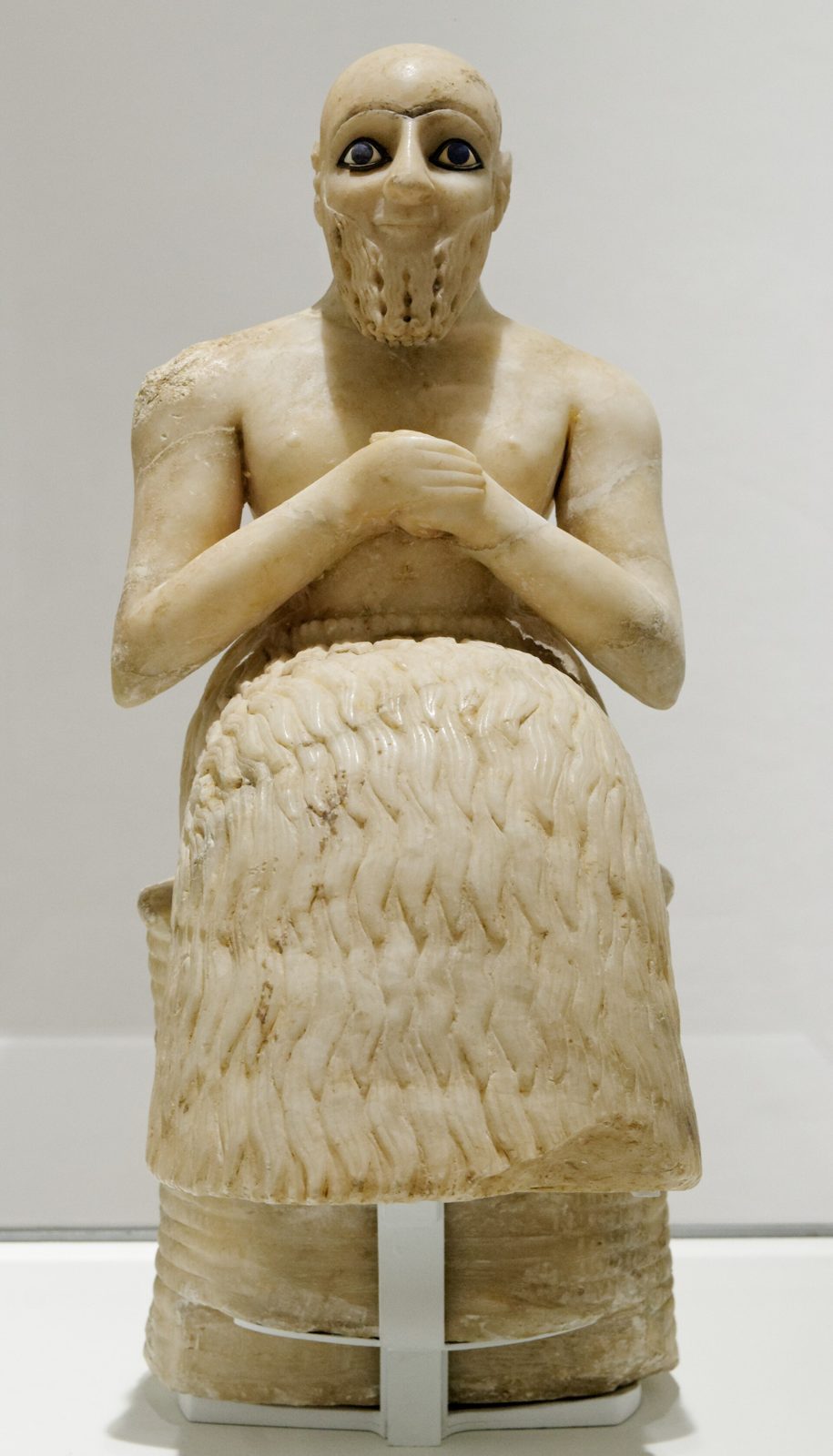
🎧 This work has audio narration — listen in the appTake a moment to really look at the Statue of Ebih-Il. Notice how the figure’s eyes seem to follow you, glimmering with a striking blue that draws you in.
Now, let’s talk about the details of his expression. The half-smile on his finely sculpted lips and the way his hands are clasped against his chest convey a profound sense of devotion. This isn’t just a statue; it’s a window into the spiritual life of ancient Mari, a city-state that thrived over 4,000 years ago.
Discovered in the Temple of Ishtar, this statue was a votive offering, a physical manifestation of prayer and reverence. It’s made from alabaster, a material that gives it a soft, almost ethereal quality, enhancing its sacred aura.
Ebih-Il himself is a figure shrouded in mystery, known only through this statue. His title suggests he held a significant role, possibly as a military leader or overseer, reflecting the complexities of power and spirituality in ancient societies.
As you stand here, consider what this statue represents: a moment frozen in time, a connection to a world long gone. What thoughts or feelings does it evoke in you about faith and devotion?
As you gaze at the Statue of Ebih-Il, take a moment to appreciate the craftsmanship that went into its creation. The statue is carved from alabaster, a material known for its smooth, translucent quality. This gives the figure a soft, almost glowing appearance. Notice the intricate details: the eyes are not just painted but inlaid with schist and lapis lazuli, creating a striking contrast that draws you in. The lapis lazuli, imported from as far away as Afghanistan, adds a sense of luxury and divine connection. The figure's beard, composed of vertical curls, showcases the artist's skill in rendering texture, while the ceremonial kaunakes skirt, likely made from sheepskin or goatskin, adds a tactile element that speaks to the material culture of ancient Mari. Each detail, from the finely sculpted lips to the missing feet, tells a story of devotion and artistry.
The Statue of Ebih-Il was unearthed in 1934 during excavations led by the French archaeologist André Parrot at the Temple of Ishtar in Mari, a city-state in modern-day Syria. This discovery was significant, marking the beginning of major archaeological findings at the site. The statue was found in two parts: the head on January 22 and the body the following day, alongside another statue of King Lamgi-Mari. Both statues were dedicated to Ishtar, reflecting the religious practices of the time. The statue's provenance is fascinating; after its discovery, it was chosen to be part of the collection at the Louvre, a decision made amidst the complexities of archaeological laws and the political climate of the French mandate in Syria. It officially entered the Louvre's collection on December 3, 1934, and has since been celebrated as a masterpiece of Mesopotamian art.
Crafted around 2399 BC, this statue showcases the intricate craftsmanship and aesthetic values of its time, influencing generations of artists who followed. Its detailed inlays of lapis lazuli and shells highlight the importance of trade and cultural exchange in ancient societies. The expressive style and lifelike features set a standard for realism in sculpture, paving the way for future artistic endeavors in the region.
Did you know that the Statue of Ebih-Il was discovered in two parts? The head was found on January 22, 1934, just lying there on the pavement of the Temple of Ishtar, while the body was unearthed the very next day, a few meters away. The statue, which represents a high-ranking official, was so significant that it was the first major find during the Mari excavations, led by André Parrot.
The eyes of the statue were crafted using schist and lapis lazuli, with the lapis lazuli being imported from as far away as Afghanistan, highlighting the trade networks of the time.