Adoration of the Magi
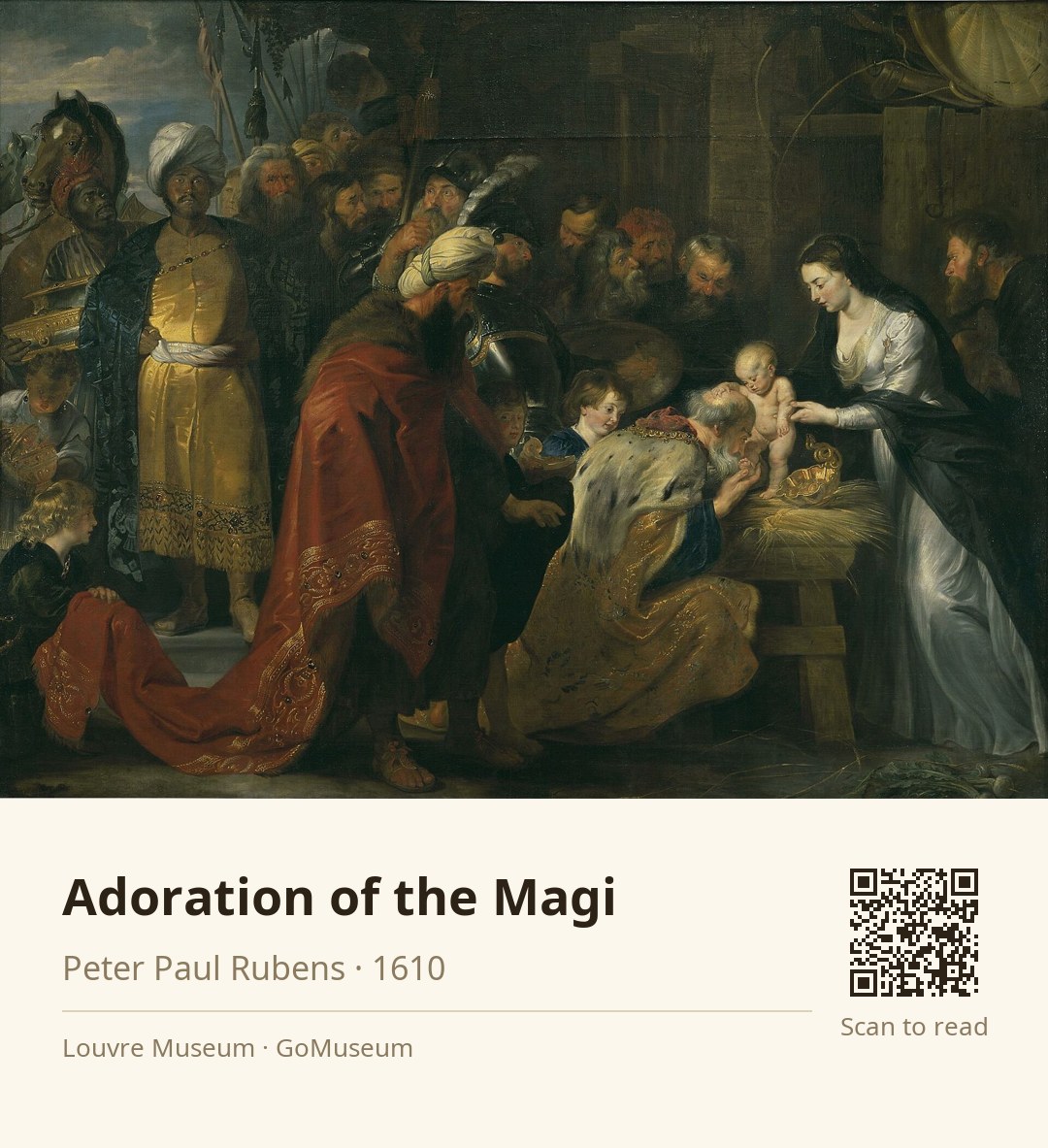
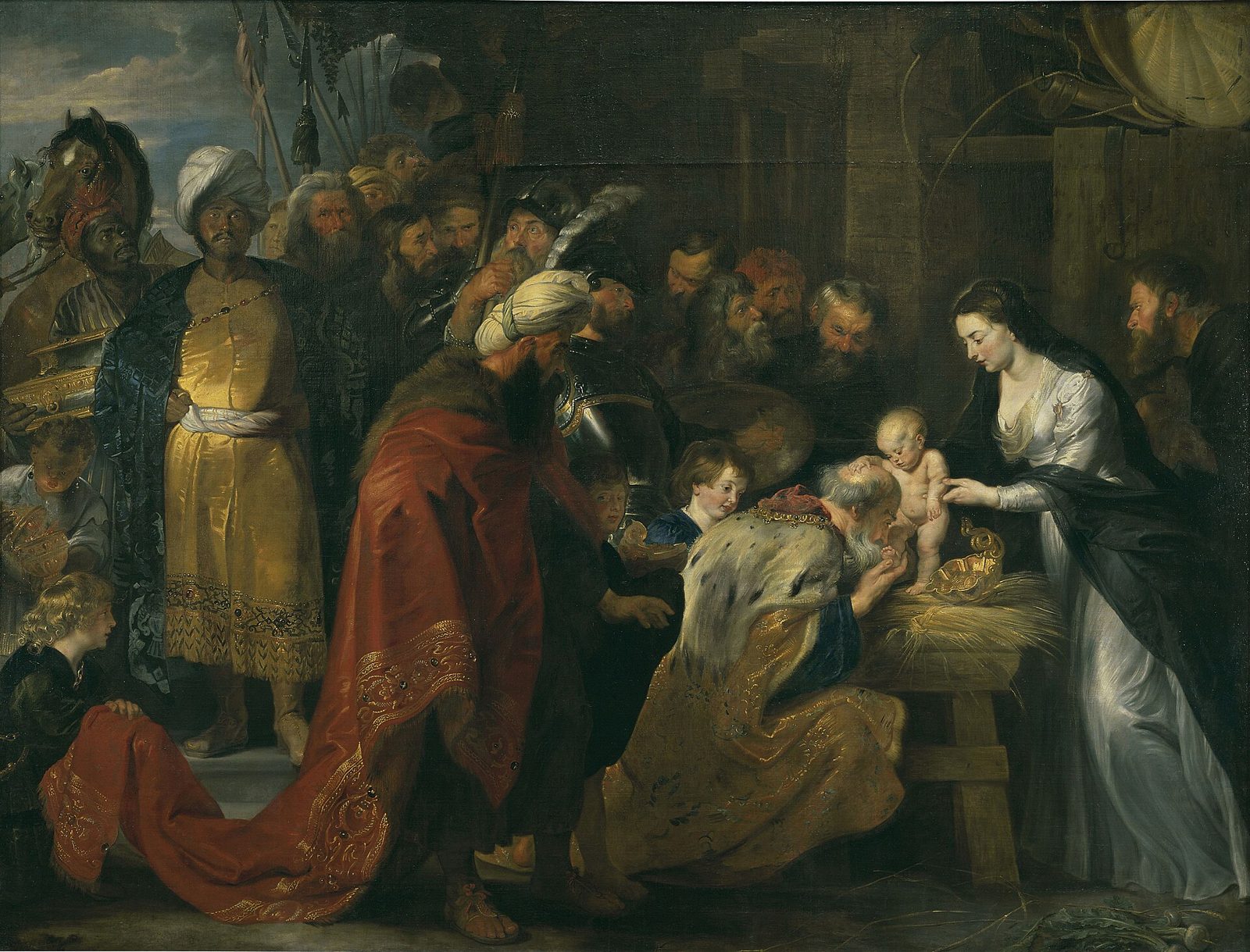
🎧 This work has audio narration — listen in the appTake a moment to really soak in the scene before you in Rubens' "Adoration of the Magi." Notice how the oldest Magus, kneeling, tenderly kisses the foot of the Christ Child, who stands on a straw-strewn table, reaching out to bless him. This intimate gesture isn’t just a show of reverence; it’s a powerful moment that captures the essence of humility and devotion.
Now, look at the vibrant colors of the Magi’s robes, swirling like arabesques, contrasting against the dimly lit stable. This choice of color and movement not only draws your eye but also reflects the Baroque style’s emphasis on emotion and drama. Rubens was a master at creating dynamic compositions that evoke a sense of life and energy, making the viewer feel part of the scene.
As you stand here, consider what this moment of adoration means to you. How do you express reverence in your own life?
Sir Peter Paul Rubens was a Flemish artist and diplomat born on June 28, 1577, in Siegen, Germany. He is celebrated as a leading figure of the Flemish Baroque tradition, renowned for his dynamic compositions that intertwine classical and Christian themes. Rubens's work is characterized by vibrant color, movement, and sensuality, aligning with the dramatic style of the Counter-Reformation. His prolific output includes altarpieces, portraits, landscapes, and history paintings, with a catalog of over 1,400 works.
Raised in Antwerp after fleeing religious persecution, Rubens was a well-educated humanist and skilled diplomat, knighted by both Philip IV of Spain and Charles I of England. He managed a large workshop that produced art for European nobility and collectors, and he was also an influential art dealer. Rubens's designs extended beyond painting; he created tapestries, prints, and even contributed to architectural projects.
His legacy endures in the art world, where he is recognized for his mastery of color and form, and his ability to convey emotion and drama. Rubens's impact on Baroque art is profound, making him a pivotal figure in the evolution of Western art history. He passed away on May 30, 1640, leaving behind a rich artistic heritage that continues to inspire.
This painting was part of a larger group of works purchased by Maximilian II Emanuel, Prince-Elector of Bavaria, in 1698. It remained lesser-known until Jacques Fouquart revived its reputation in the late 20th century, showcasing it in the exhibition 'Le siècle de Rubens' in Paris from 1977 to 1978. The painting's journey reflects a fascinating history of art appreciation and changing tastes, highlighting how works can be lost and then rediscovered, gaining new significance over time.
Notice the dynamic brushwork that creates a sense of movement—figures are arranged across the canvas, almost like a frieze, drawing your eye along the scene. The vibrant colors of the Magi’s robes contrast sharply with the dimly lit stable, enhancing the emotional weight of the moment. Light streams in from the left, illuminating the Christ Child and creating a focal point that draws you into the intimate act of devotion. The scale of the figures, combined with the depth of the background crowd, immerses you in the scene, making you feel as if you’re witnessing this sacred moment unfold.
By opting for a horizontal format, Rubens deviated from traditional vertical altarpieces, suggesting a more intimate, possibly secular context. This choice influenced countless artists, encouraging them to explore new compositions and settings for biblical narratives. The painting's vibrant colors and dynamic figures not only captivated contemporary audiences but also set a standard for Baroque art, emphasizing movement and emotion.
This particular piece, housed in Lyon, is horizontal, which is quite unusual for such a religious subject. It suggests that it was likely commissioned for a private collection rather than an altarpiece. This painting's horizontal format connects it to another of Rubens' works for the Statenkamer in Antwerp, hinting at a fascinating interplay between sacred and secular art during this period.
Rubens often depicted the Virgin Mary using the features of his wife, which adds a personal touch and intimacy to the portrayal of this sacred figure in his works.