Madonna of the Rabbit
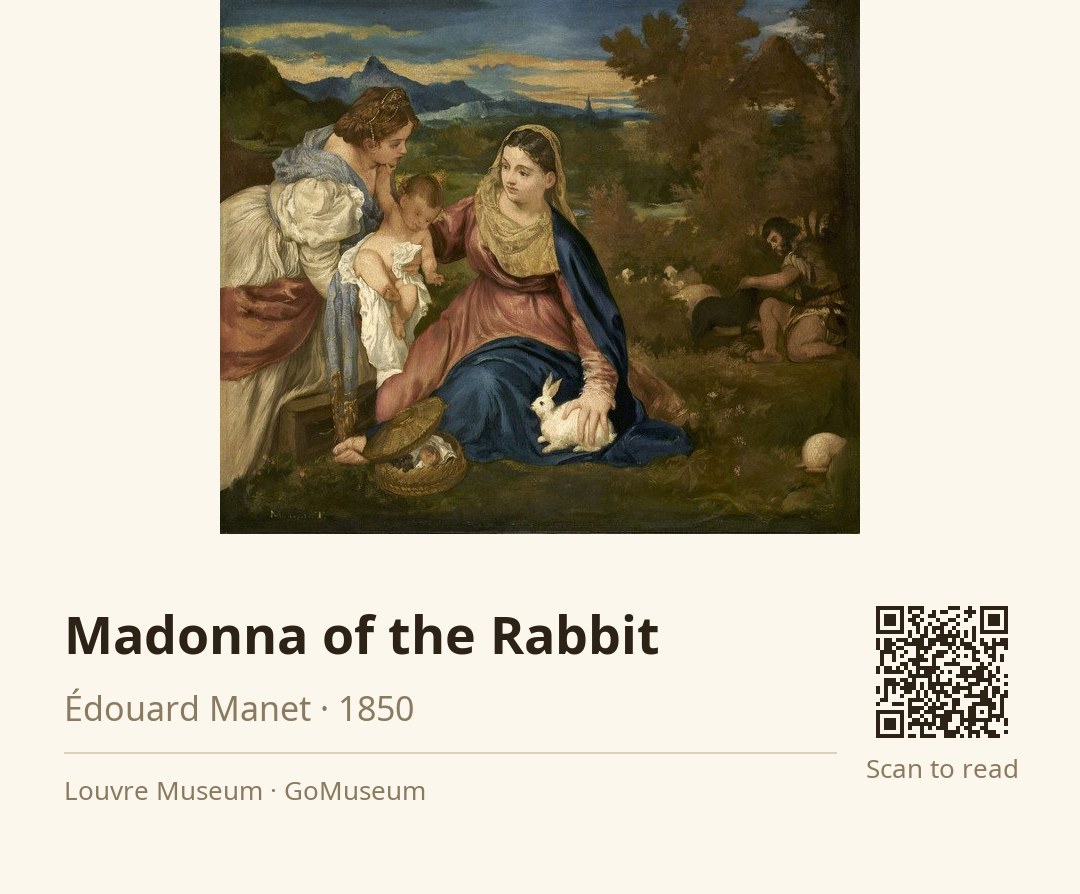
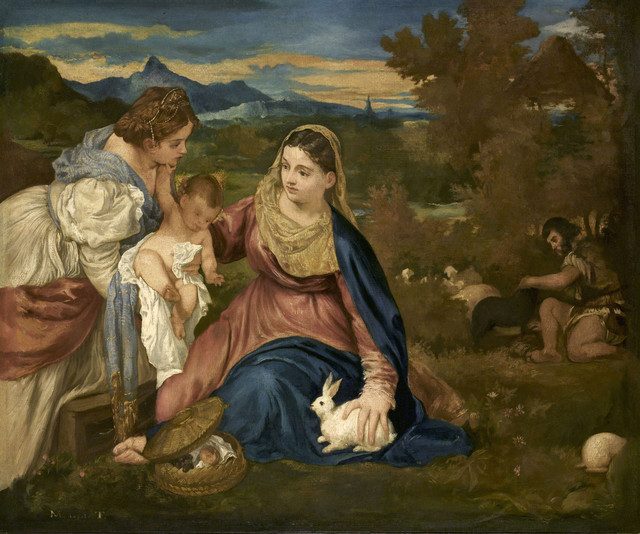
🎧 This work has audio narration — listen in the appThe white rabbit cradled in the lap of the seated woman in red draws your eye immediately. Her blue cloak contrasts beautifully with the earthy tones of the landscape, while the child beside her reaches out, eager to connect with both the rabbit and the serene scene unfolding. This intimate moment encapsulates a blend of innocence and domesticity, inviting you to ponder the relationships between the figures.
Manet's choice of a tranquil outdoor setting, with rolling hills and a man tending sheep in the background, emphasizes a pastoral ideal, reflecting a simpler, more harmonious life. The smooth brushwork captures not just the visual details but also the gentle interactions among the figures, suggesting a narrative of care and community. The vibrant reds and blues in the clothing contrast with the soft greens of the landscape, creating a vivid tableau that feels both alive and timeless.
Created in 1850, "Madonna of the Rabbit" marks an early exploration of domestic themes in Manet's work, before he became known for his more controversial subjects. This painting showcases his ability to blend realism with a touch of idealism, setting the stage for his later, more provocative pieces. Manet's early career was characterized by a focus on contemporary life, paving the way for his influential role in the transition to modern art.
Édouard Manet, born on January 23, 1832, in Paris, emerged as a pivotal figure in 19th-century art, bridging Realism and Impressionism. From an affluent family, he initially faced pressure to pursue a naval career but instead dedicated himself to painting, influenced by his uncle and the Old Masters. His early works, including "The Luncheon on the Grass" and "Olympia," sparked controversy and challenged traditional artistic norms, marking him as a revolutionary force.
Manet's style, characterized by loose brushwork and a focus on contemporary life, diverged from the meticulous techniques of his predecessors. He often depicted modern Parisian scenes, capturing the essence of leisure and social dynamics. Despite initial rejection from the art establishment, he gained recognition among progressive artists and became a mentor to the Impressionists.
Throughout his life, Manet formed connections with influential figures like Baudelaire and Zola, who defended him against critics. His later works, such as "A Bar at the Folies-Bergère," showcased his evolving style and mastery of color. Manet's contributions to art history are profound; he is celebrated not only for his innovative techniques but also for elevating still life and modern subjects to the forefront of artistic expression. He passed away on April 30, 1883, leaving behind a legacy that continues to inspire artists today.
Manet's technique in 'Madonna of the Rabbit' showcases his smooth brushwork, which creates a sense of immediacy and intimacy. The way he layers paint allows for a rich texture that brings the figures to life. The vibrant reds and blues of the clothing contrast sharply with the soft greens of the landscape, enhancing the emotional warmth of the scene. Manet's choice of a serene outdoor setting, with rolling hills and a shepherd in the background, not only emphasizes the tranquility of the moment but also reflects his interest in the interplay between figures and their environment. The composition draws the viewer's eye towards the central figures, creating a narrative of connection and care that feels both personal and universal.
The composition features three main figures, including a seated woman holding a rabbit and another woman with a child, creating a narrative of connection and care.
The shepherd in the background enhances the pastoral theme of the painting, emphasizing a tranquil and harmonious rural life.
Manet's early influences included his studies under Thomas Couture, who encouraged painting contemporary life, and his admiration for Old Masters like Velázquez and Titian.