The broken pitcher
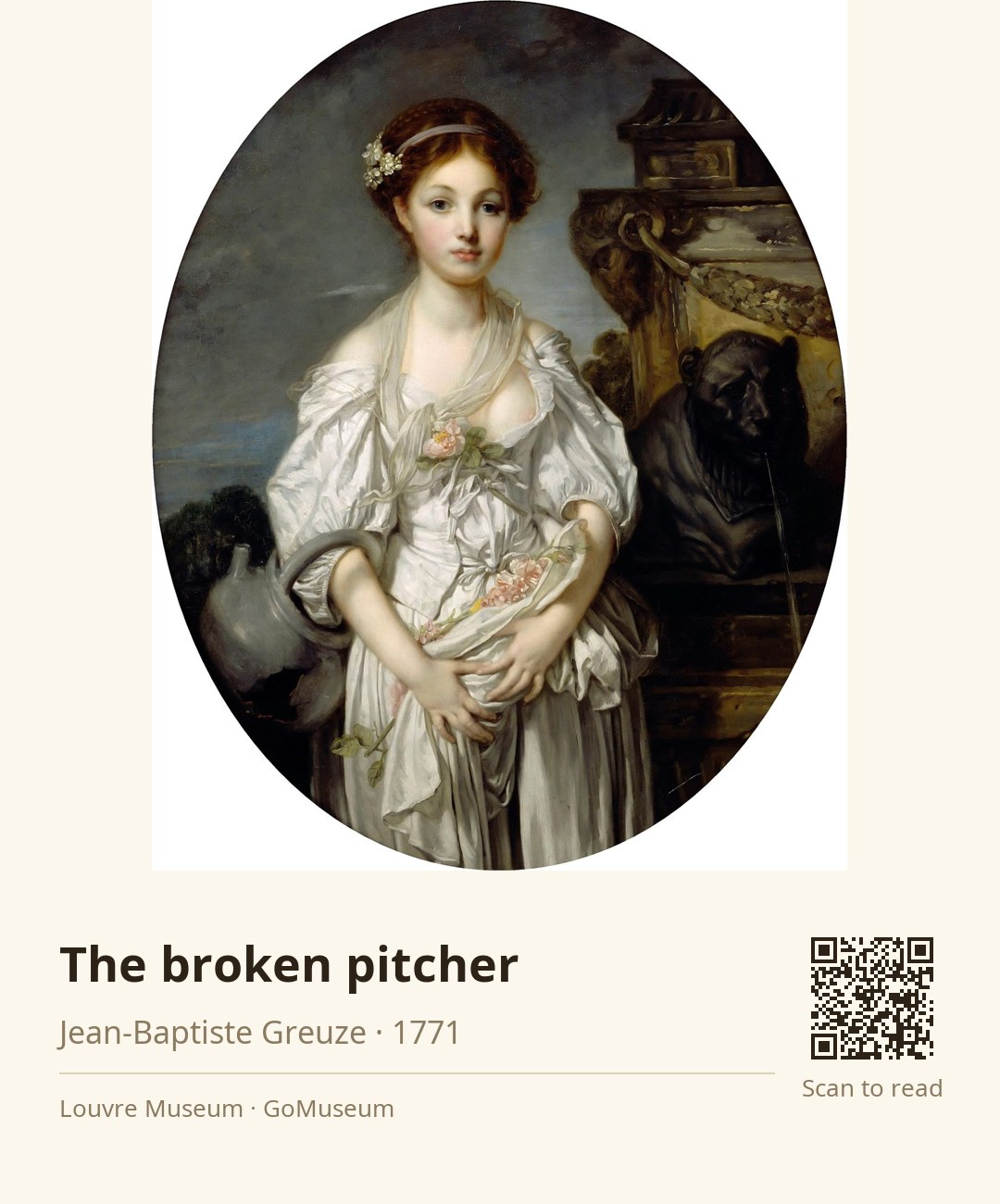
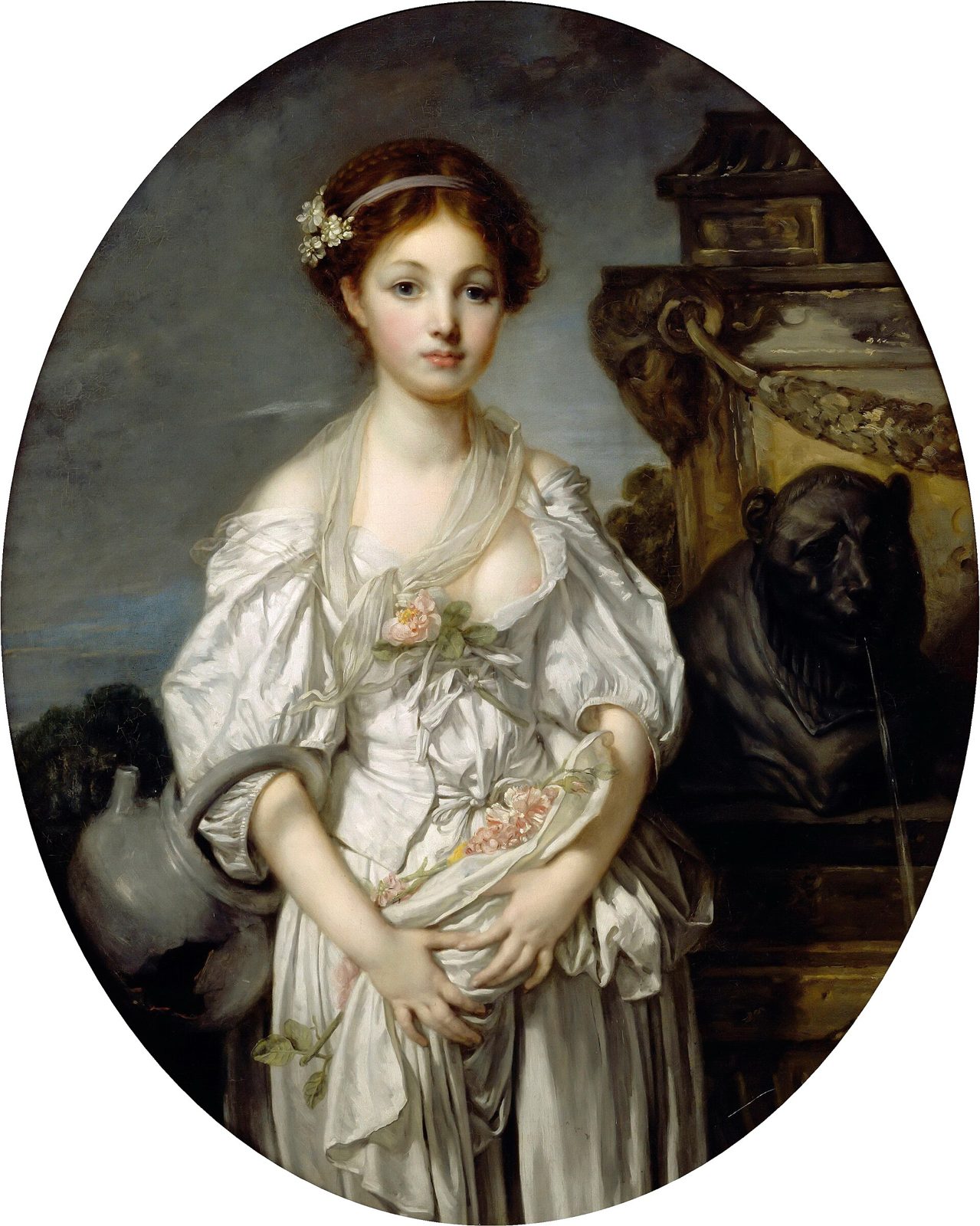
🎧 This work has audio narration — listen in the appTake a moment to really look at "The Broken Pitcher" by Jean-Baptiste Greuze. Notice the young girl at the center, her white dress and the roses she clutches. But look closer—see how her gaze is uncertain, her scarf slightly askew, almost revealing more than it should.
These details matter because they tell a deeper story. The broken pitcher she carries isn't just a vessel; it symbolizes lost innocence, perhaps a hint at a painful experience. The fountain beside her, shaped like a lion's head, adds an unsettling layer, suggesting a complex relationship with masculinity. Greuze was a master at weaving moral narratives into his art, and here, he captures the tension between youth and the harsh realities of life.
Created in 1771, this painting reflects the societal norms and expectations of women during that era, where innocence was prized yet often compromised. Greuze’s work invites us to ponder: what does it mean to lose one's innocence? As you stand here, consider the emotions this girl might be feeling. What stories do you think she could tell?
Jean-Baptiste Greuze was a French painter born on August 21, 1725, in Tournus, Burgundy. He showed artistic talent from a young age, despite his father's wishes for him to pursue commerce. Encouraged by the portrait painter Charles Grandon, Greuze moved to Lyon and later to Paris, where he studied at the Royal Academy. His early works, particularly "Le Père de famille expliquant la Bible à ses enfants," garnered attention, leading to his acceptance into the Academy in 1755.
Greuze's career flourished in the 1760s, characterized by genre scenes that combined moral themes with vivid expressions and dramatic gestures. His works, such as "La Jeune Fille qui pleure son oiseau mort" and "Le Mauvais fils puni," showcased his ability to evoke emotion and convey moral lessons. However, his ambition to be recognized as a historical painter led to conflicts with the Academy, resulting in a temporary withdrawal from exhibitions.
Despite achieving fame, Greuze faced financial ruin later in life, exacerbated by personal misfortunes, including a troubled marriage. He died in poverty on March 4, 1805, in the Louvre. His legacy endures, marked by a reputation for capturing virtue and emotion, influencing the genre of moralistic painting in the 18th century.
Created around 1771, this painting was not just a personal endeavor for Greuze; it was a reflection of the societal expectations of women during that time. After the revolution, the painting was seized in 1794 from the Château de Madame du Barry, marking a significant shift in its ownership and context. It found its way to the Louvre, where it remains today, a testament to its enduring relevance. The painting's journey didn't end there; a copy was stolen during World War II, adding another layer to its complex history. Imagine the conversations this piece has sparked over the centuries, from its creation to its revolutionary seizure and eventual preservation in one of the world's most renowned museums.
As you gaze at 'The Broken Pitcher,' pay attention to Greuze's masterful brushwork. The delicate strokes create a sense of softness around the girl's features, contrasting sharply with the jagged edges of the broken pitcher she carries. Notice how the light plays across her white dress, enhancing its purity while simultaneously hinting at her vulnerability. The vertical oval shape of the canvas draws your eye directly to her, emphasizing her isolation. Greuze's choice of colors—soft pastels mixed with deeper hues—evokes a sense of emotional tension. The roses she clutches, slightly wilted, mirror her own fragility. The composition, with the fountain's lion head looming beside her, adds an unsettling dynamic, suggesting a lurking danger in her seemingly innocent world. This painting is not just a visual feast; it's a carefully constructed narrative that invites you to explore the complexities of youth and innocence.
This painting was meant to grace her Château de Louveciennes, but after the revolution, it was seized and ended up in the Louvre, forever changing its fate. Imagine the whispers of scandal and intrigue that surrounded its creation and the life of the artist, Jean-Baptiste Greuze, who navigated the tumultuous waters of 18th-century France!
Yes, Greuze explored similar themes of lost innocence and moral lessons in other paintings, such as 'Broken Eggs' and 'Young Girl Weeping over Her Dead Bird', indicating a recurring interest in the fragility of youth.
A copy of the painting was stolen by the Germans during World War II and has since been entrusted to the Louvre Museum, where it awaits possible restitution, highlighting the painting's tumultuous history.