The 1821 Derby at Epsom
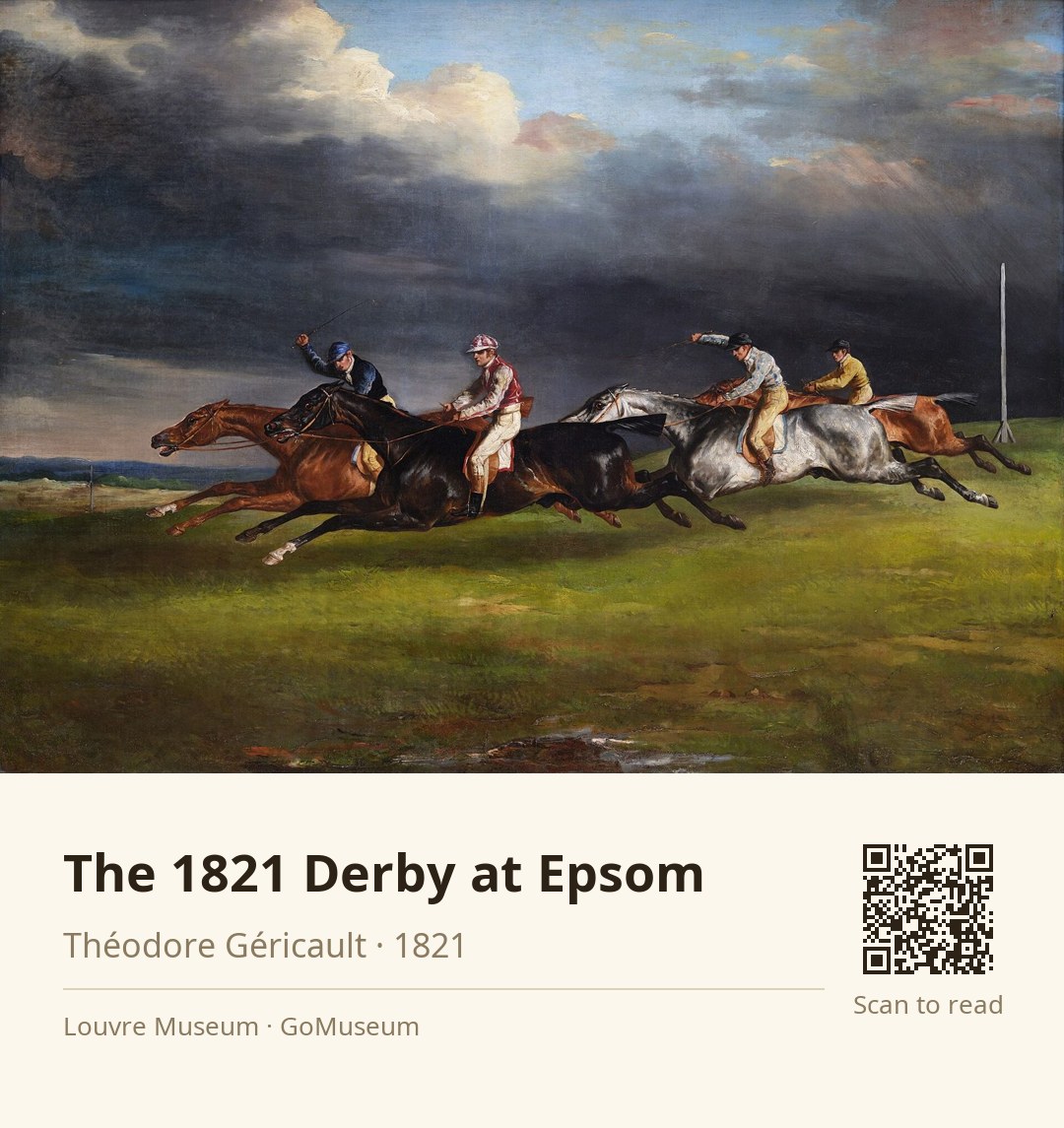
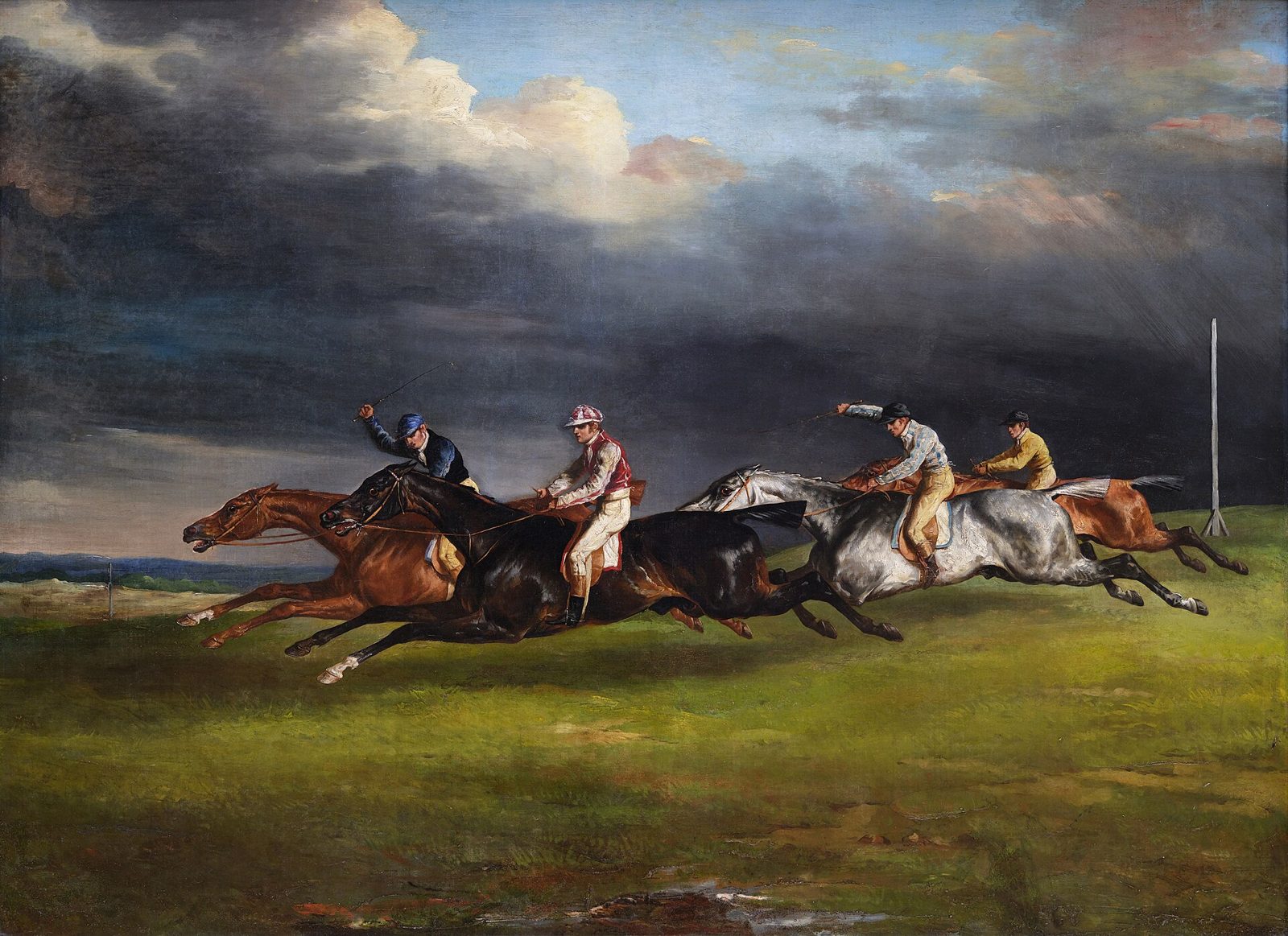
🎧 This work has audio narration — listen in the appTake a moment to really absorb the energy of "The 1821 Derby at Epsom." Look closely at the horses — can you see how their legs seem to stretch out impossibly in mid-air? It’s a striking detail that pulls you into the action, but here’s the twist: this pose is actually unrealistic. Géricault captured a moment that defies the natural movement of galloping horses, which we now know from photography never have all four legs extended like that.
It reveals Géricault's fascination with the dynamism of horses, a theme he explored throughout his career. This painting, created during his time in England, was meant to celebrate the excitement of horse racing, yet it also highlights the artist's struggle with accurately depicting motion.
Géricault was known for his intense studies of horses, having spent time at the imperial stables in Versailles. This work is a rare example from his English period, painted for a horse dealer.
As you stand here, think about the thrill of the race captured in this moment.
Jean-Louis André Théodore Géricault was a French painter and lithographer born on September 26, 1791, in Rouen. He moved to Paris as a child, where his artistic talent was nurtured by family connections in the art world. Géricault's life was marked by a passionate pursuit of art, characterized by a fascination with the human condition and dramatic themes. His early works, influenced by the classical tradition, evolved into a distinctive style that bridged Neoclassicism and Romanticism.
Géricault's most renowned painting, The Raft of the Medusa, created between 1818 and 1819, reflects his deep engagement with contemporary issues, depicting the aftermath of a tragic shipwreck that became a national scandal. This monumental work showcased his ability to convey intense emotion and the struggle against nature, establishing him as a pioneer of the Romantic movement. Despite his brief life—he died at just 32—Géricault's innovative approach and exploration of human suffering left a lasting impact on the art world, influencing future generations of artists. His legacy endures, celebrated for its emotional depth and dramatic intensity.
In 1821, Théodore Géricault painted 'The 1821 Derby at Epsom' during a pivotal time in his career. Commissioned by the English horse dealer Adam Elmore, this work emerged from Géricault's fascination with horses, honed during his time at the imperial stables in Versailles. The painting was meant to capture the thrill of the Derby, which that year was won by the grey horse Gustavus, marking a historic moment in racing. After its completion, the painting found its way to the Musée du Louvre in 1866, where it remains today. Géricault's work was met with mixed reactions; while some appreciated his dynamic portrayal of motion, others noted the unrealistic depiction of the horses' legs, a detail that would later be scientifically debunked by Eadweard Muybridge's photography in 1878.
As you gaze at 'The 1821 Derby at Epsom,' pay attention to Géricault's bold brushwork and the way he handles color. The horses appear to float in mid-air, their legs extended in a way that defies the natural rhythm of galloping. This choice creates a sense of drama and excitement, drawing you into the action of the race. The composition is carefully structured, with a dynamic diagonal that leads your eye across the canvas, enhancing the feeling of speed. Géricault's use of light adds depth, illuminating the horses' muscular forms and emphasizing their power. The scale of the painting is impressive, allowing you to feel the grandeur of the event. Each stroke seems to pulse with energy, reflecting Géricault's intense study of equine anatomy and movement, which he meticulously observed during his time at the stables.
Théodore Géricault's 'The 1821 Derby at Epsom' is a pivotal work that showcases the artist's fascination with horses and the dynamism of motion. Painted during his time in England, it reflects a shift in artistic focus towards capturing everyday life and sports, influenced by local culture. This painting not only marks a rare example of Géricault's work in oil during a period he favored lithography, but it also contributed to the evolution of Romanticism in art. The way Géricault portrayed the horses, despite their unrealistic positions, sparked discussions about motion that would resonate with later artists and scientists, paving the way for innovations in how movement was depicted in art.
One surprising detail about Géricault's 'The 1821 Derby at Epsom' is that the way the horses are depicted in the painting—legs extended outward while airborne—doesn't actually occur in real life. This artistic choice creates a dramatic, almost surreal moment that captures the excitement of the race, but it wasn't until Eadweard Muybridge's high-speed photography in 1878 that we learned horses never actually gallop like this. Géricault's work, therefore, stands as a fascinating blend of artistic interpretation and a moment frozen in time, long before science revealed the truth of equine movement.
During his stay in England, Géricault was exposed to local influences, including picturesque representations of daily life and the sporting art style, which can be seen in the dynamic composition of 'The 1821 Derby at Epsom.' This period marked a shift in his work, as he began to incorporate elements that would later influence French art.
Géricault's deep connection to horses stemmed from his childhood experiences in Mortain, where he spent time observing and studying them. This early exposure, combined with his later studies at the imperial stables in Versailles, fueled his lifelong passion for capturing their movement and anatomy in his art.
Gustavus, the grey horse that won the 1821 Derby, holds historical significance as the first grey horse to achieve this victory, making it a notable event in horse racing history. Géricault's painting not only commemorates this moment but also reflects the cultural importance of horse racing in 19th-century England.