Tobias and the Angel
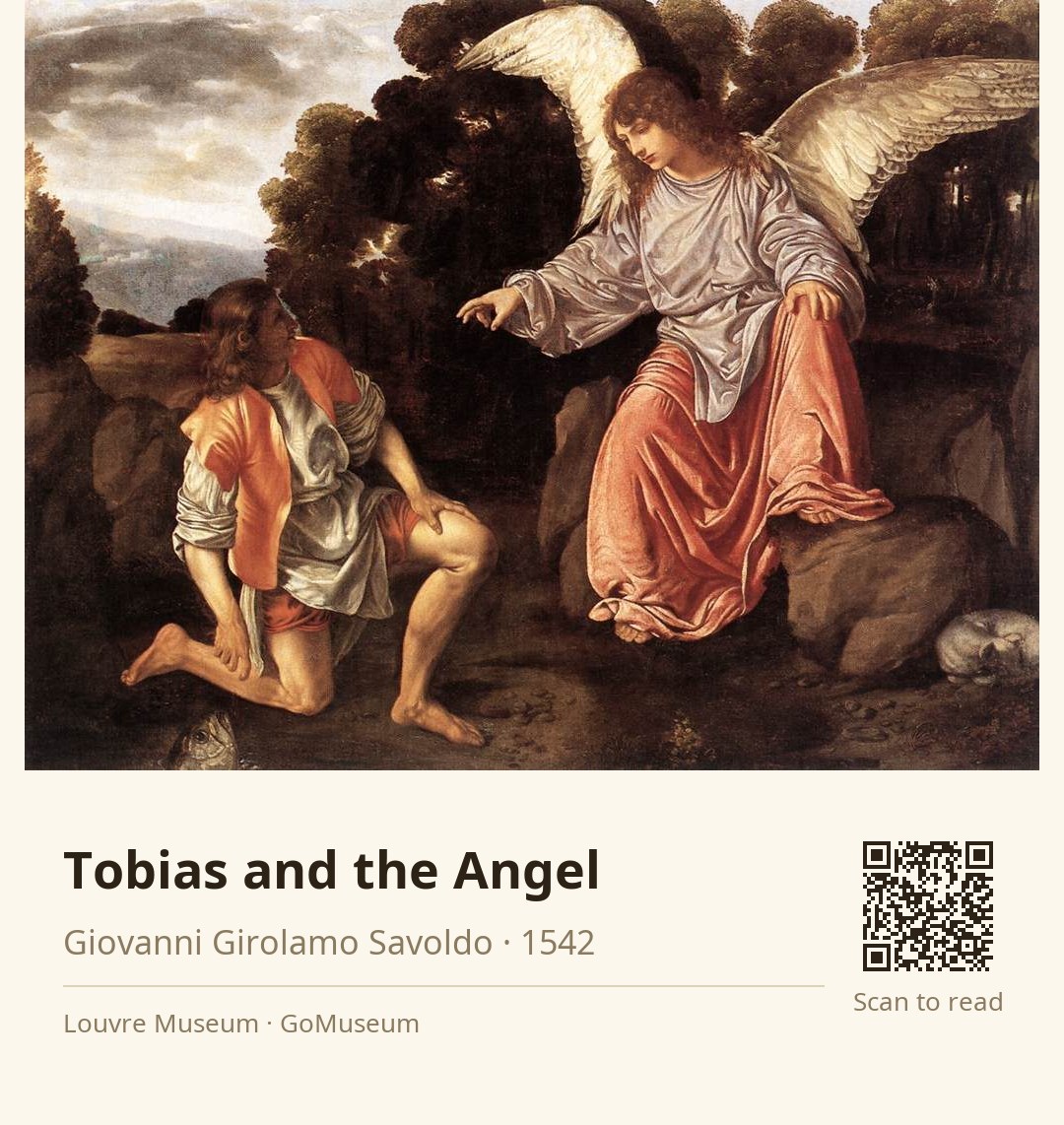
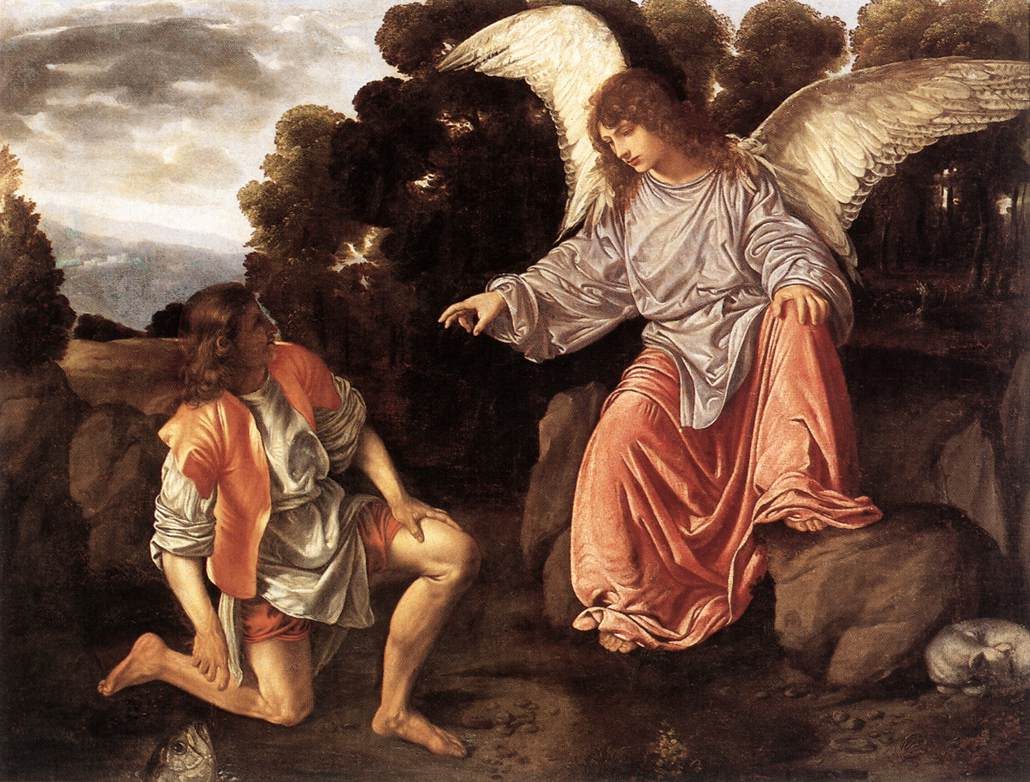
🎧 This work has audio narration — listen in the appTake a moment to really look at "Tobias and the Angel" by Giovanni Girolamo Savoldo. Notice how the angel's robe seems to shimmer with silvery light, almost as if it's wet.
Now, shift your gaze to Tobias, kneeling with a natural pose that captures his youthful energy. Unlike the typical depictions of Tobias as a mere boy, here he’s portrayed as a young man, full of vitality and determination. This choice adds a layer of depth to the story, emphasizing the moment of decision and courage he faces.
As you stand here, consider the relationship between Tobias and the angel. What do you think this moment signifies about guidance and the challenges we face? Let that question linger as you take in the beauty of this captivating work.
Giovanni Girolamo Savoldo, active from the early 1500s until after 1548, was an Italian painter of the High Renaissance, primarily associated with Venice but originally from Brescia. Known for his masterful use of color and chiaroscuro, Savoldo's works often depict religious themes with a focus on sober realism. His portraits are particularly notable for their narrative depth, often enhanced by rich accessories and settings.
Savoldo's artistic journey began in Parma and Florence, where he was influenced by the emerging modern style of the time, drawing inspiration from the likes of Titian and Flemish painters. His notable works include the "Temptation of Saint Anthony" and "Mary Magdalene," which showcase his ability to create evocative nocturnal scenes, prefiguring the later innovations of Caravaggio.
Despite being highly regarded during his lifetime, Savoldo's legacy faded after his death, with many of his works misattributed to more famous contemporaries. It wasn't until the 19th century that interest in his oeuvre revived, leading to a reevaluation of his contributions to the art world. Today, Savoldo is recognized as a significant figure in the transition from the Renaissance to the Baroque, celebrated for his unique blend of Venetian and Lombard influences.
It found its home in the Galleria Borghese in Rome in 1910, after the director, Giulio Cantalamessa, discovered it in a private residence in Tivoli. Initially misattributed to Titian, this work was reassigned to Savoldo, a member of the Brescia Renaissance. The painting depicts a pivotal moment from the biblical story of Tobias, where the archangel Raphael guides the young man on his quest. The scene is unique; instead of the typical portrayal of Tobias in motion, Savoldo captures a moment of pause, emphasizing the energy of the young man.
As you gaze at "Tobias and the Angel," pay close attention to Savoldo's masterful brushwork and the way he handles light and color. The shimmering effect of the angel's robe, achieved through a technique known as "panneggio bagnato," creates a lifelike quality that almost makes the fabric appear wet. This attention to detail draws you into the scene, enhancing the emotional weight of the moment. The composition is carefully structured, with Tobias kneeling in a natural pose that exudes youthful energy and determination. Notice how the light filters through the foliage, casting delicate shadows and illuminating the figures, which adds depth to the landscape. The atmospheric clouds in the background contribute to a sense of serenity, contrasting with the tension of the moment. Savoldo's ability to blend realism with a poetic touch makes this painting a remarkable example of the Brescia Renaissance.
One surprising aspect of Savoldo's career is that despite his significant contributions to the Renaissance, he fell into obscurity after his death, with many of his works being misattributed to more famous artists like Giorgione. It wasn't until the 19th century that art historians began to rediscover his oeuvre, highlighting the importance of his unique style and techniques that had been overlooked for centuries.
The little dog accompanying Tobias is curled up at the bottom right of the scene, adding a touch of domesticity and companionship to the otherwise dramatic moment, which is often overlooked in discussions of the painting.