The Marriage of the Virgin
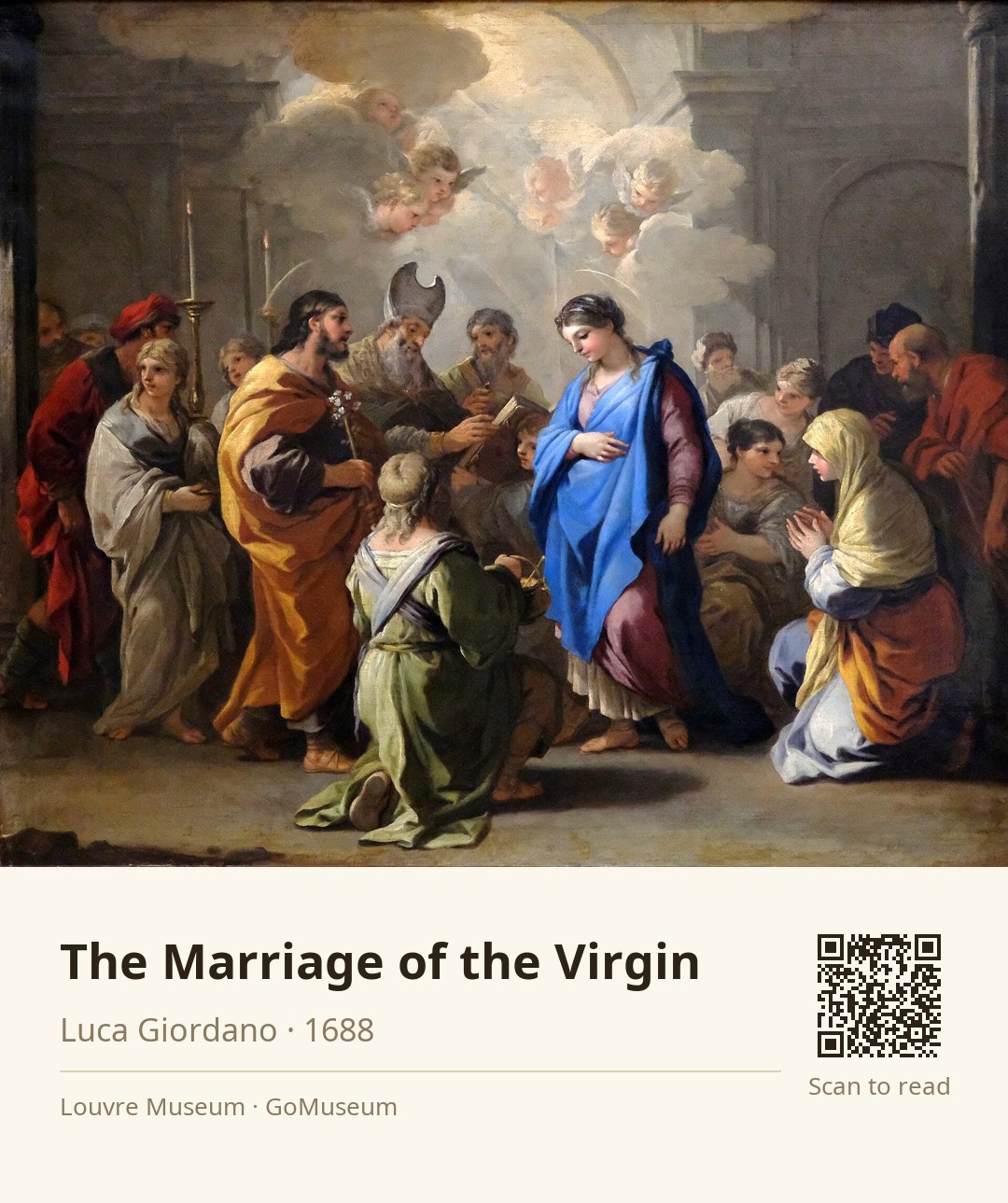
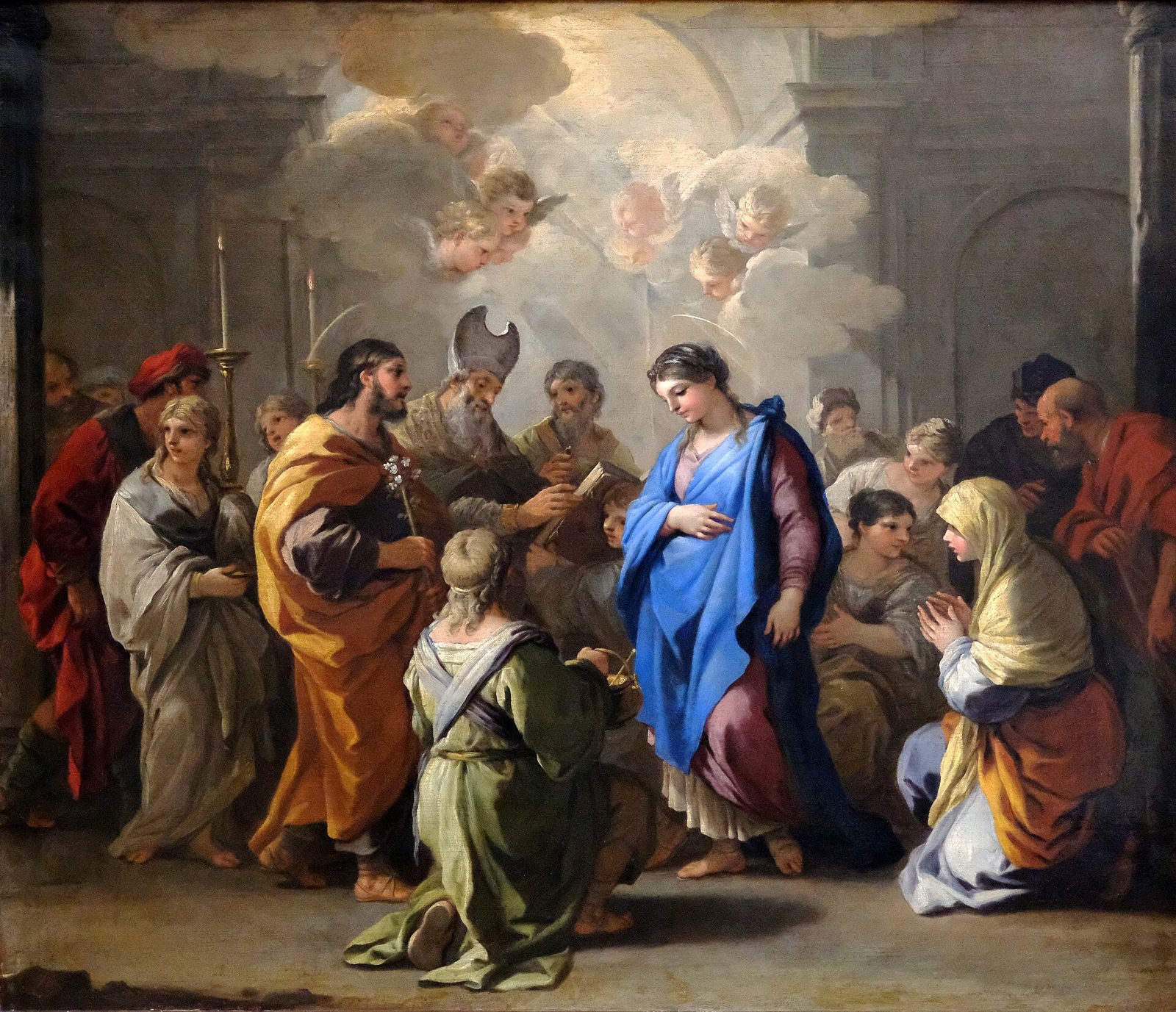
🎧 This work has audio narration — listen in the appTake a moment to really soak in the scene before you in "The Marriage of the Virgin" by Luca Giordano. Notice how the figures are arranged in a circular composition, drawing your eye into the heart of the ceremony. Look closely at the vibrant colors—especially the deep reds and soft blues—that Giordano uses to create a sense of warmth and celebration.
These details matter because they reflect the emotional weight of this moment—the union of Mary and Joseph, a pivotal event in Christian tradition. Giordano's choice of color and composition not only highlights the significance of the marriage but also invites you to feel the joy and sanctity of the occasion.
Painted in 1688, this work is part of a larger series depicting the life of the Virgin, created for the Palacio Real. Giordano, known for his rapid brushwork and vibrant style, was a key figure in the Neapolitan Baroque movement, blending influences from various artists to create his own dynamic approach.
As you stand here, think about the stories that this painting tells—what emotions do you feel as you witness this sacred moment? How does it resonate with your own experiences of love and commitment?
Luca Giordano, born on October 18, 1634, in Naples, was a prominent Italian late-Baroque painter and printmaker. He emerged as a leading figure in Neapolitan Baroque art, known for his dynamic compositions and vibrant use of color. Giordano's early training under José de Ribera profoundly influenced his style, which initially echoed the tenebrist techniques of Caravaggio. However, he soon evolved, incorporating the luminosity of Venetian masters and the grandeur of Pietro da Cortona, ultimately developing a distinctive, exuberant Baroque style.
Giordano's prolific output included altarpieces, mythological scenes, and elaborate frescoes, showcasing his versatility and rapid execution, earning him the nickname "Luca fa presto" or "Luca paints quickly." His works, characterized by dramatic movement and emotional intensity, reflect the influence of artists like Rubens and Veronese. Giordano traveled extensively, working in major Italian cities and spending a decade in Spain, where he further solidified his international reputation.
Throughout his career, Giordano produced over a thousand works, making him one of the most prolific artists in history. His legacy is marked by a seamless blend of influences, positioning him as a precursor to the Rococo style that would flourish in the 18th century. He passed away on January 3, 1705, leaving behind a rich artistic heritage that continues to inspire.
Luca Giordano's 'The Marriage of the Virgin' was painted around 1688, likely commissioned as part of a series illustrating the life of the Virgin Mary for the Palacio Real. This series also includes the 'Adoration of the Shepherds,' which shares a home with this work today at the Louvre in Paris. The painting was bequeathed to the museum by Louis La Caze in 1869, marking its journey from Giordano's studio to one of the world's most prestigious art collections.
As you gaze at 'The Marriage of the Virgin,' pay attention to Giordano's brushwork—it's a flurry of energy that brings the scene to life. The artist employs a technique known as 'alla prima,' allowing him to layer colors wet-on-wet, which results in those strikingly vivid hues. Notice how the reds and blues interact; they create a warmth that envelops the figures, drawing you into the emotional core of the ceremony. The circular composition is not just a structural choice; it invites your eye to dance around the canvas, mimicking the movement of the participants. Giordano's use of light is equally compelling; it bathes the figures in a soft glow, enhancing the sense of sanctity and joy. This dynamic interplay of color, light, and movement is what makes the painting resonate so deeply, capturing a moment that feels both sacred and celebratory.
One intriguing tidbit about Giordano is his nickname, 'Luca fa presto,' which means 'Luca paints quickly.' This reputation for speed was not just a boast; it reflected his remarkable ability to produce a vast number of works in a relatively short time. His quick brushwork and versatility allowed him to imitate various styles, making him a sought-after artist across Europe.
Growing up as the son of a painter, Giordano was exposed to art from a young age and began his formal training under the influential artist José de Ribera, which significantly shaped his early style and technique.
Giordano drew inspiration from a variety of artists, including the Venetian masters like Titian and Paolo Veronese, as well as the Baroque styles of Pietro da Cortona and Rubens, which he blended into his own dynamic approach to painting.