Holy Family with St. John the Baptist
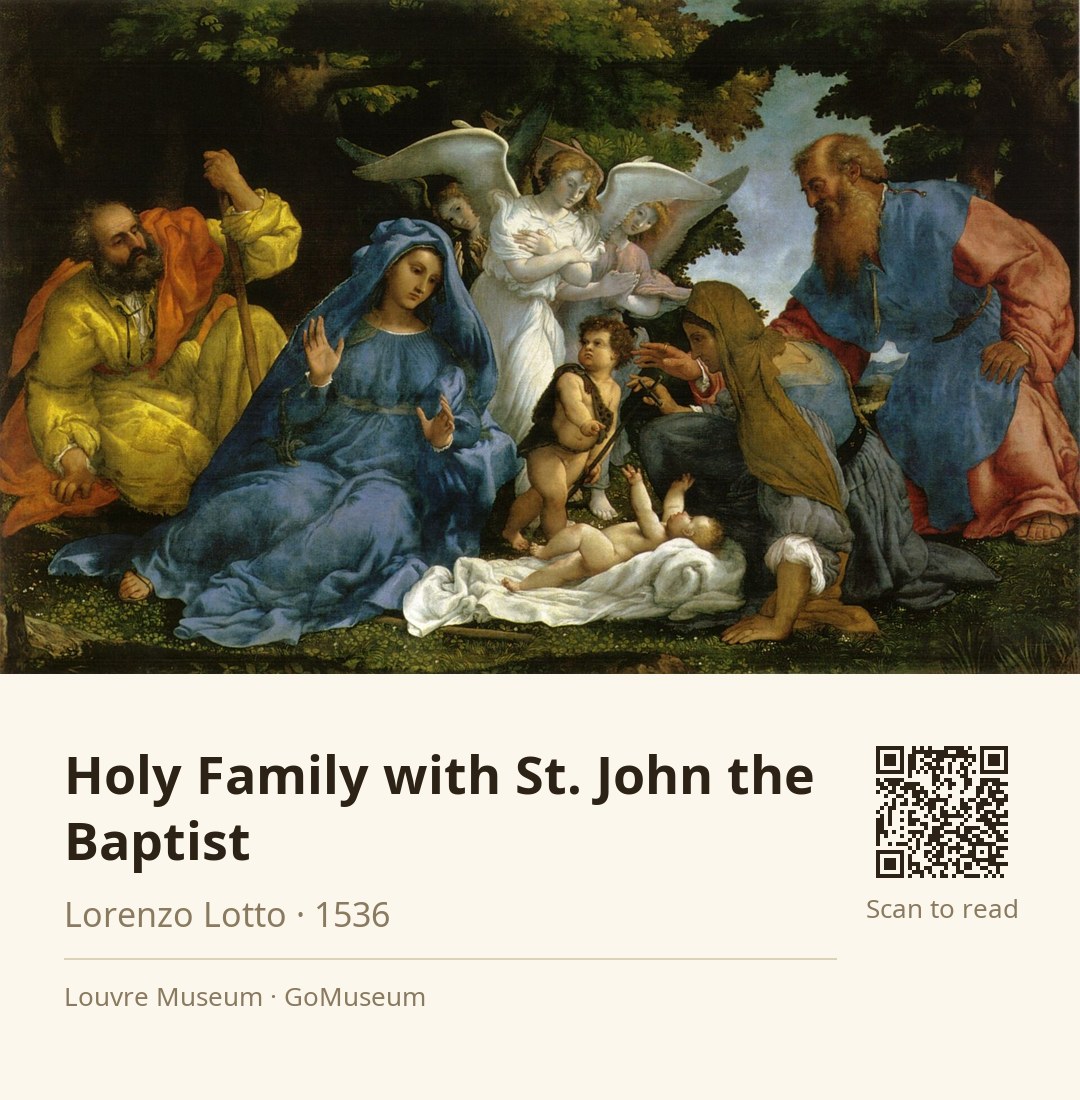
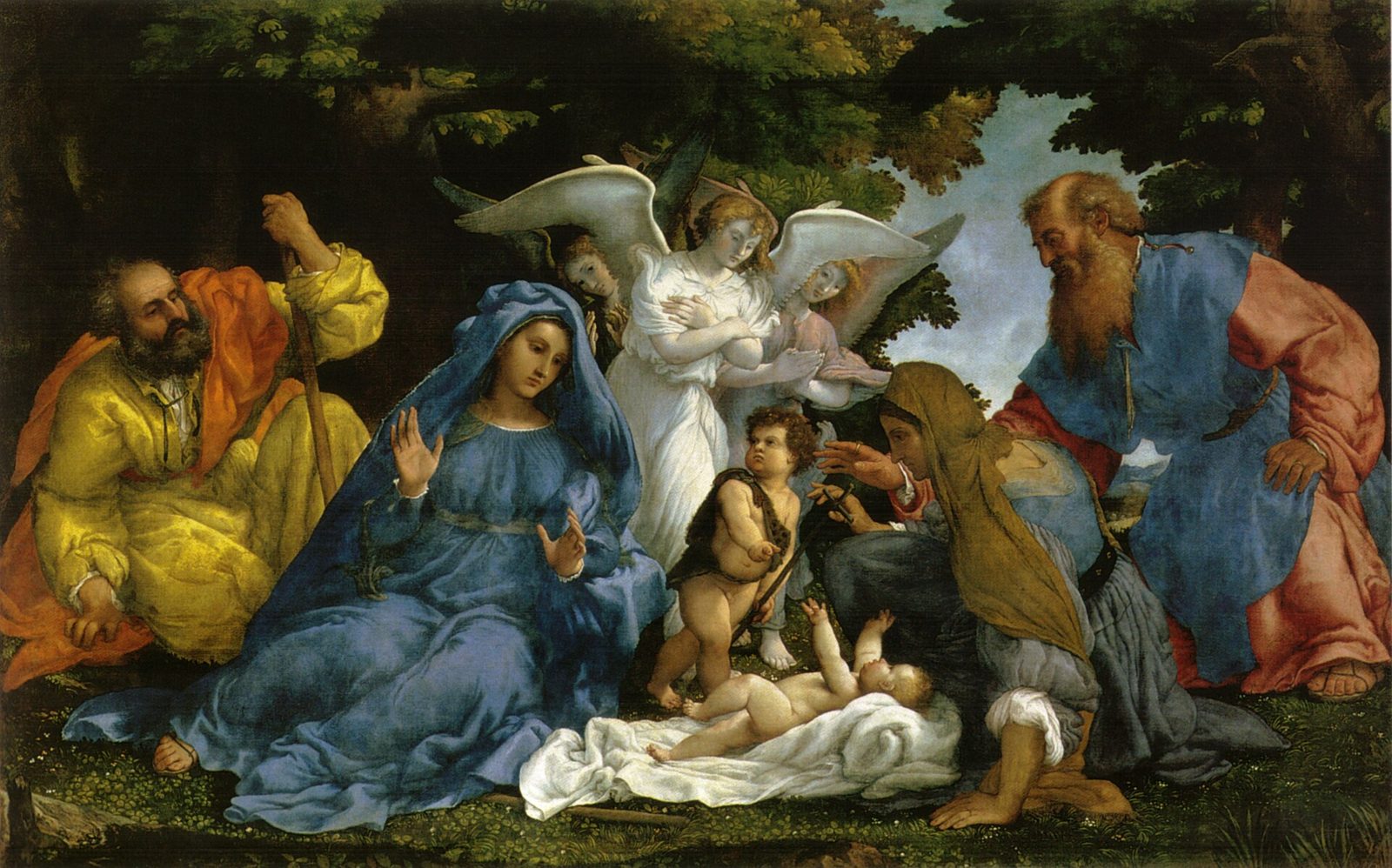
🎧 This work has audio narration — listen in the appAs you stand before "Holy Family with St. John the Baptist," let your eyes wander to the tender embrace of Mary and Joseph around the Christ child. Notice how Lotto captures the moment with a gentle realism—look closely at the way the light dances on their faces, illuminating their expressions of love and devotion.
These details matter because they draw you into a deeply personal moment, inviting you to feel the warmth of familial bonds. In an era when religious art often felt distant and grand, Lotto's intimate portrayal makes the divine relatable, almost tangible.
Created in 1536, this piece reflects Lotto's unique style, which blends the Venetian tradition with a more humanistic approach. Unlike many of his contemporaries, he focused on the emotional depth of his subjects rather than just their grandeur.
So, as you take in this masterpiece, think about the connections it evokes. How does this image of family resonate with your own experiences? What feelings does it stir within you?
Lorenzo Lotto, born around 1480 in Venice and passing away in 1556, was a notable Italian Renaissance painter whose career spanned various northern Italian cities. Although often associated with the Venetian school, his unique style and independent approach set him apart from contemporaries like Titian and Giorgione. Lotto's work primarily encompassed altarpieces, religious themes, and portraits, reflecting a distinctive blend of High Renaissance ideals with a personal touch that hinted at the emerging Mannerist style.
His artistic journey began in Treviso, where he gained recognition under the patronage of Bishop Bernardo de' Rossi. Lotto's early works, such as "Allegory of Virtue and Vice," showcased his ability to convey psychological depth through intricate symbolism. His time in Rome was marked by an invitation from Pope Julius II to decorate the papal apartments, although this opportunity did not yield lasting results.
Lotto's most fruitful period occurred in Bergamo, where he produced some of his finest works, characterized by rich color and dramatic compositions. Despite his initial acclaim, Lotto's reputation waned after his death, leading to a gradual obscurity. Today, he is celebrated for his idiosyncratic style and contributions to the transition between Renaissance and Mannerism, earning him a unique place in art history.
Lorenzo Lotto's 'Holy Family with St. John the Baptist' was created around 1536, likely as a private commission for a Venetian patron. Interestingly, despite its intended purpose, the painting remained with Lotto for quite some time. He even attempted to sell it through his friend Jacopo Sansovino before departing for the Marche region in 1549, as noted in his commonplace books. Unfortunately, Sansovino was unable to sell the piece, leading Lotto to try again in 1550 at a public auction in Ancona, but once more, it went unsold. The original painting eventually left Lotto's possession, possibly through the Oblates of the Holy House, a religious community he joined. It resurfaced in 1662 in an inventory of the French royal collections, having been misattributed to another artist, Dosso Dossi, before being acquired by Louis XIV.
When you look closely at Lotto's brushwork in 'Holy Family with St. John the Baptist,' you can feel the emotional weight of the moment. The way he handles light is particularly striking; it seems to caress the figures, highlighting their expressions and creating a sense of intimacy. Notice how the colors blend seamlessly, with soft transitions that evoke warmth and tenderness. The composition is carefully structured, with Mary and Joseph forming a protective embrace around the Christ child, drawing your eye inward. This focus on the familial bond is enhanced by the figures' positioning, creating a triangular formation that suggests stability and unity. The scale of the painting, while not monumental, feels significant in its personal narrative, inviting you to step into this sacred family moment.
Lorenzo Lotto's 'Holy Family with St. John the Baptist' is a pivotal piece that reflects the artist's unique approach to religious themes during the Renaissance. Unlike many of his contemporaries, Lotto infused his works with a deeply personal touch, emphasizing emotional connections over grand narratives. This painting, created in 1536, showcases his ability to blend traditional iconography with a more intimate portrayal of familial bonds. Lotto's influence can be seen in later artists who sought to capture the human experience within sacred contexts, making his work a bridge between High Renaissance ideals and the emerging Mannerist style. Remember, it's not just about the figures depicted; it's about the warmth and humanity Lotto brings to the divine.
John the Baptist' is that Lotto created a copy of this original work for the Palazzo Apostolico in Loreto after it was likely taken out of his hands. This practice of making copies was not uncommon among artists of the time, as it allowed them to reach a wider audience and ensure their works were preserved, even if the originals remained unsold or lost.
Lotto relied on his friend Jacopo Sansovino to help sell 'Holy Family with St. John the Baptist,' but Sansovino was unable to find a buyer for it or any of Lotto's works, ultimately returning them to the artist.