 Image: Daderot · Unknown authorUnknown author · Luistxo · Colosseo, Foro Romano e Palatino · Daderot
Gladiator Mosaic
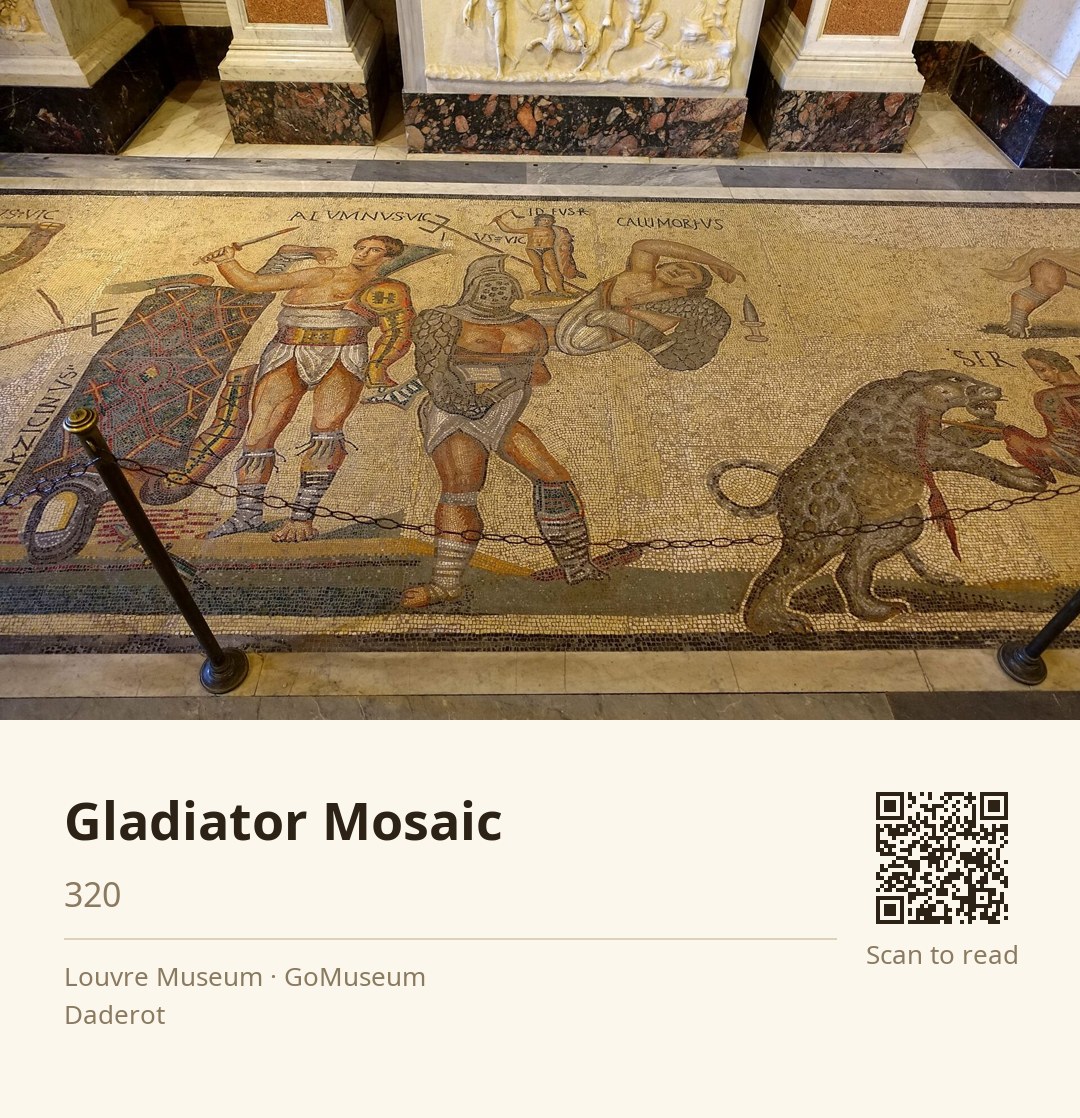
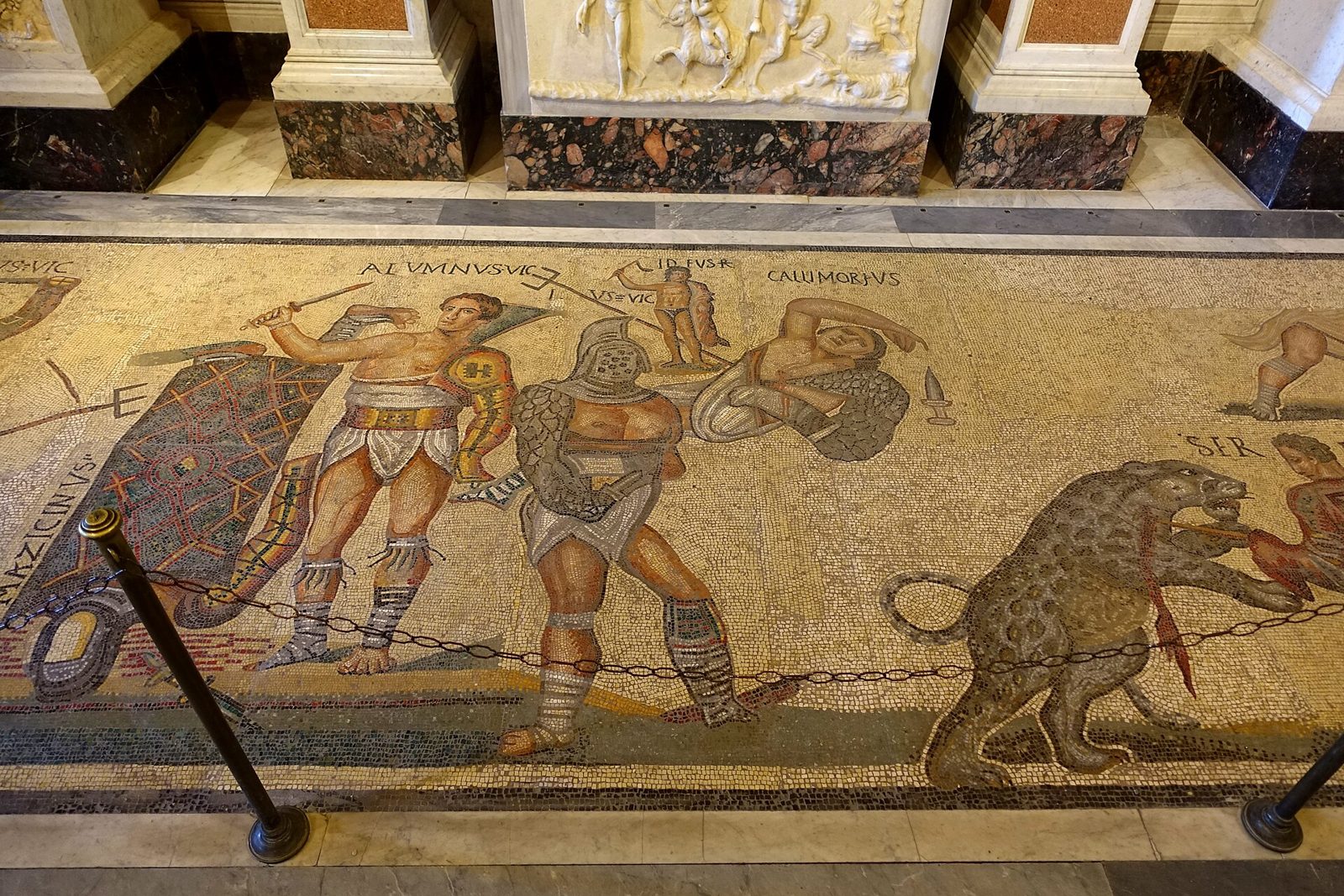
🎧 This work has audio narration — listen in the appTake a moment to really look at the Gladiator Mosaic before you. Notice how the figures seem to leap off the surface, each one caught in a dramatic moment of battle. Look closely at the vibrant colors and intricate details of their armor—especially the way the tesserae shimmer, creating a sense of movement and life.
These details matter because they reveal not just the artistry of the mosaic but also the cultural significance of gladiatorial games in ancient Rome. This was more than just entertainment; it was a display of power and prestige for the wealthy elite who hosted these events in their grand homes. The inscriptions next to the gladiators, marking their fates with symbols of victory or death, remind us of the high stakes involved—life and death played out in front of an audience.
Created around 320 AD, this mosaic was found on the Borghese estate and restored in the 19th century, breathing new life into a collection that had suffered losses during Napoleon's reign. It served as a powerful reminder of the glory and brutality of Roman society.
As you stand here, think about the stories these gladiators might tell if they could speak. What do you imagine their lives were like, fighting for survival in the arena?
Take a closer look at the tesserae, those tiny pieces of colored stone or glass that make up the mosaic. You can see how they were meticulously arranged to create depth and movement. Notice the way the colors blend and contrast, especially in the gladiators' tunics, where the artisans used shades of gray to depict the flow of fabric. The shimmering effect you see is a result of the careful selection of materials, reflecting the light in a way that brings the scene to life, almost as if the figures are ready to leap from the surface.
It was found on the Borghese estate during excavations that Prince Francesco Borghese Aldobrandini had commissioned. Imagine the excitement of the workers as they unearthed these stunning mosaics, which had been buried for centuries! This discovery not only enriched the Borghese Collection but also sparked a renewed interest in Roman decorative arts, showcasing the lavish events that wealthy Romans would host in their grand homes.
The Greek letter Θ, an abbreviation for θάνατος meaning 'death,' indicates that those gladiators marked with it were killed in combat, adding a layer of narrative and drama to the mosaic's depiction of gladiatorial battles.