The Mystic Marriage of Saint Catherine of Siena
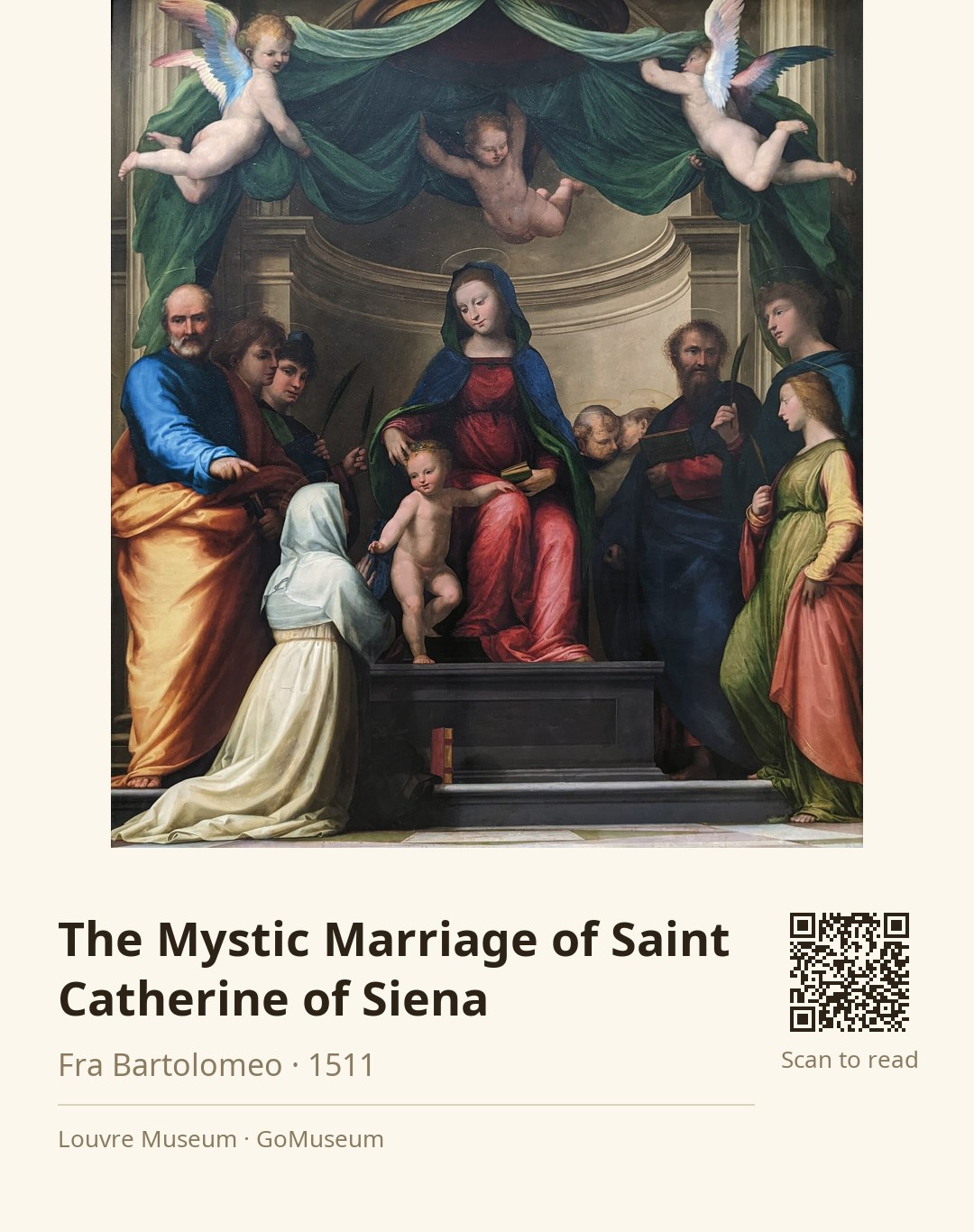
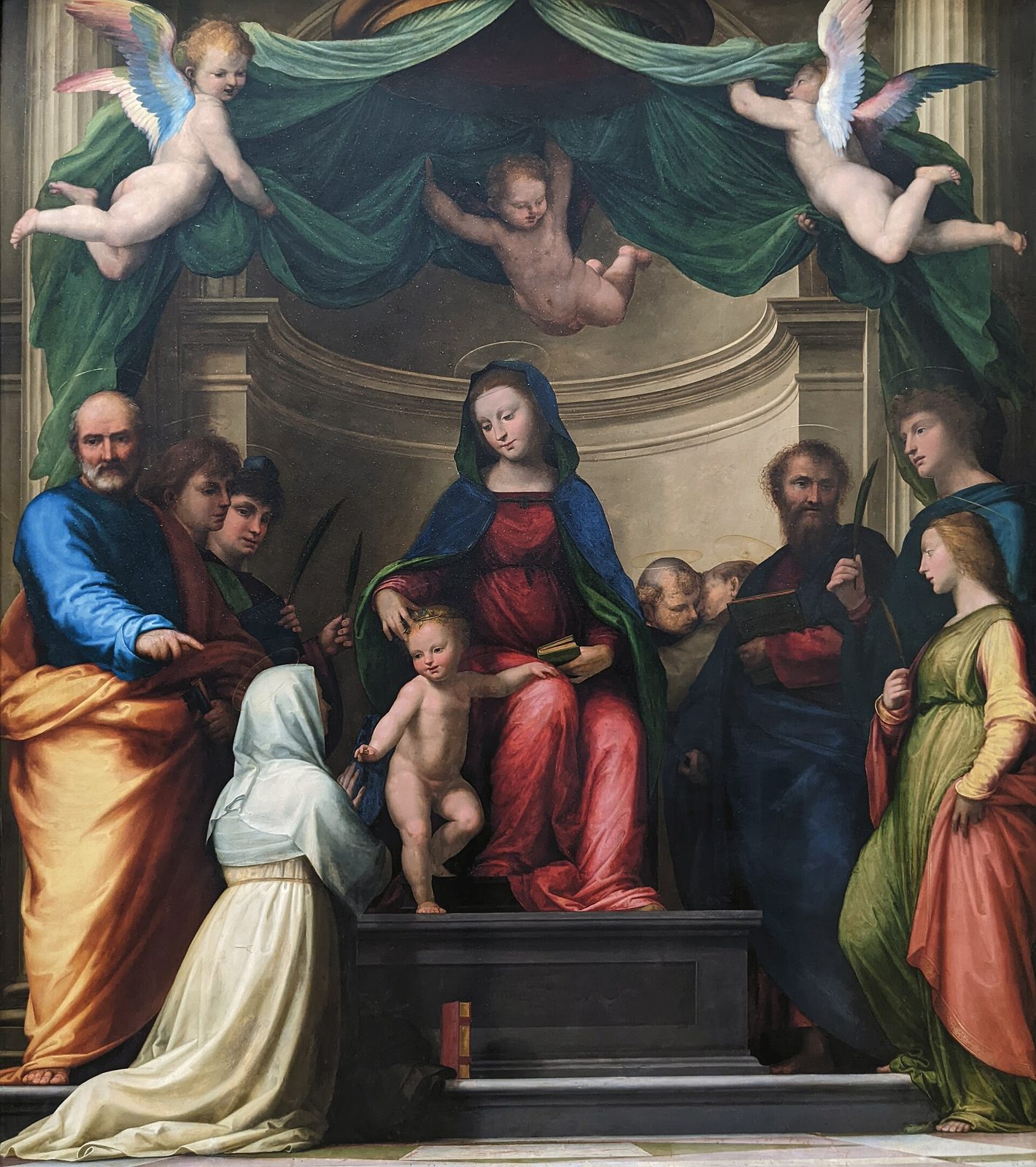
🎧 This work has audio narration — listen in the appThe central figure of Saint Catherine of Siena sits gracefully, draped in a rich blue and red garment, holding a small book that symbolizes her wisdom and devotion. Beside her, the Christ Child reaches out toward a kneeling figure in white, while vibrant saints surround them, each clutching a palm branch, a symbol of martyrdom. The smooth brushwork captures the intricate textures of their clothing, creating a vivid tapestry of color that draws you into this sacred moment.
This scene, painted by Fra Bartolomeo in 1511, embodies the ideals of the High Renaissance, merging spiritual significance with a masterful representation of figures. The symmetrical arrangement of the saints around the seated Catherine emphasizes her importance, while the architectural elements in the background provide a sense of stability and grandeur. The rich palette of deep reds, blues, and greens not only enhances the visual appeal but also reflects the emotional depth of the moment being depicted.
Fra Bartolomeo, born Baccio della Porta in 1472 in Tuscany, was a prominent Italian Renaissance painter known for his religious works. His artistic journey began in the workshop of Cosimo Rosselli, where he developed a style influenced by contemporaries like Domenico Ghirlandaio. A pivotal moment in his life came when he became a Dominican friar in 1500, inspired by the teachings of Savonarola, which led him to renounce secular art for several years.
After resuming painting in 1504, Bartolomeo's style evolved into an idealized High Renaissance approach, characterized by serene compositions and a focus on religious themes. His notable works include the Vision of St. Bernard and the portrait of Savonarola, which remains the most recognized image of the reformer. His friendship with Raphael significantly impacted his technique, enhancing his use of color and drapery.
Bartolomeo's contributions to art history are marked by his ability to blend the classical ideals of the Renaissance with a deep religious fervor, paving the way for future developments in religious painting. He died in 1517, leaving behind a legacy that influenced both his contemporaries and the generations that followed.
The Mystic Marriage of Saint Catherine of Siena was painted by Fra Bartolomeo in 1511. Commissioned by Bishop Jacques Hurault of Autun, it was gifted to the Cathedral of Saint-Lazare in Autun after being received from Florence in 1512. The painting remained there until the upheaval of the French Revolution. In 1789, the decree for the secularization of ecclesiastical property led to the removal of artworks from churches. By 1800, the painting was taken to Paris as part of a larger collection for the Musée central des arts, now known as the Louvre. This transition was met with protests from the local community, who lamented the loss of their treasured artwork. The painting's journey reflects the turbulent history of art during this period, as it moved from a place of worship to a national museum.
Fra Bartolomeo's technique in this painting showcases his mastery of oil on wood. The smooth brushwork creates a tactile quality, allowing the rich textures of the garments to come alive. The vibrant colors—deep reds, blues, and greens—are not just visually striking; they evoke a profound emotional resonance. The symmetrical arrangement of figures around Saint Catherine emphasizes her central role, while the architectural elements in the background lend a sense of stability. The careful layering of paint contributes to the depth of the scene, drawing the viewer into this sacred moment. The use of chiaroscuro subtly highlights the figures, enhancing their three-dimensionality and creating a sense of movement within the composition.
Originally housed in the Cathedral of Saint-Lazare in Autun, the painting was moved to Paris in 1800 as part of a larger collection for the Musée central des arts, now known as the Louvre.
Savonarola's teachings influenced him to renounce painting for several years and focus on religious subjects.