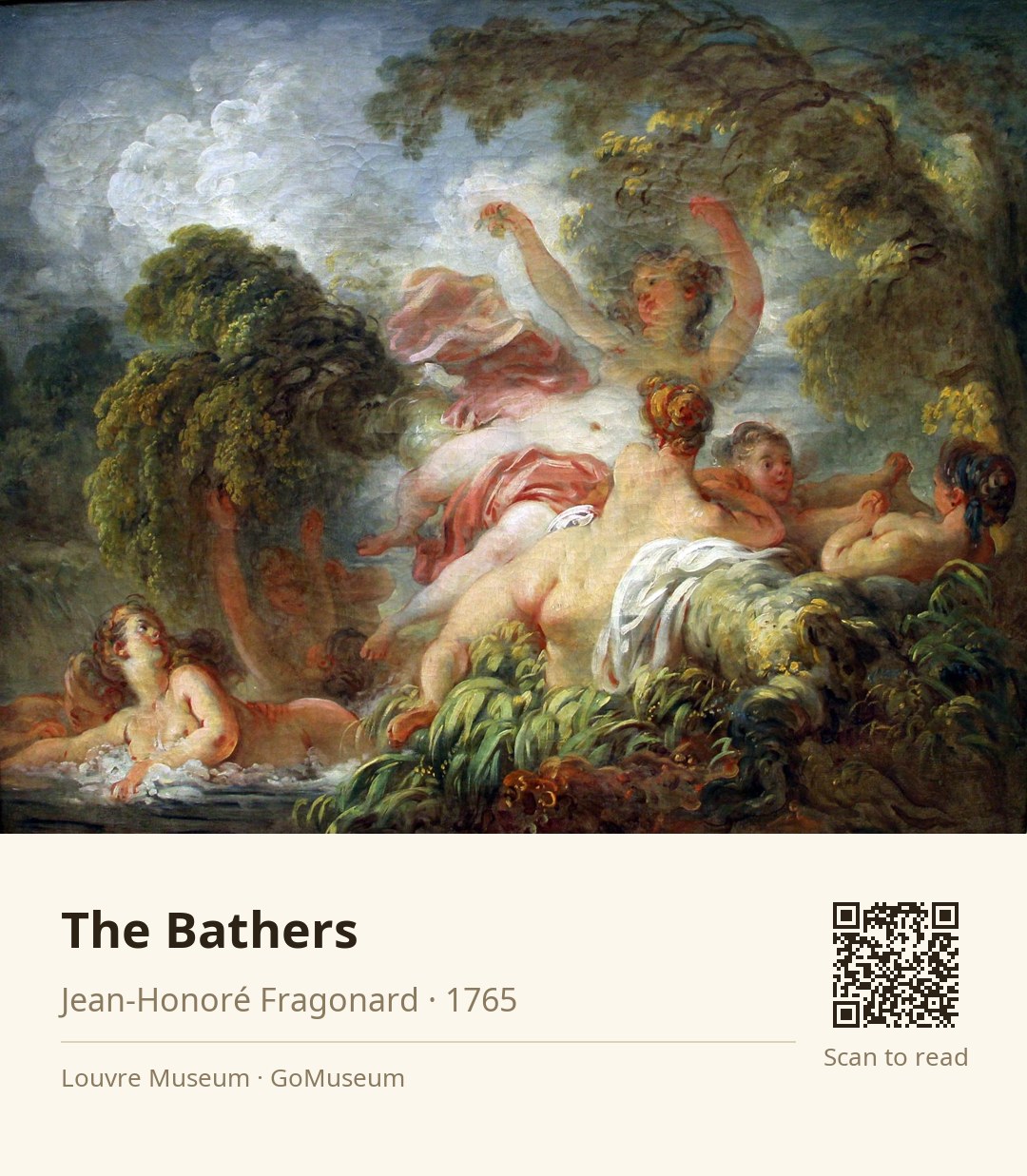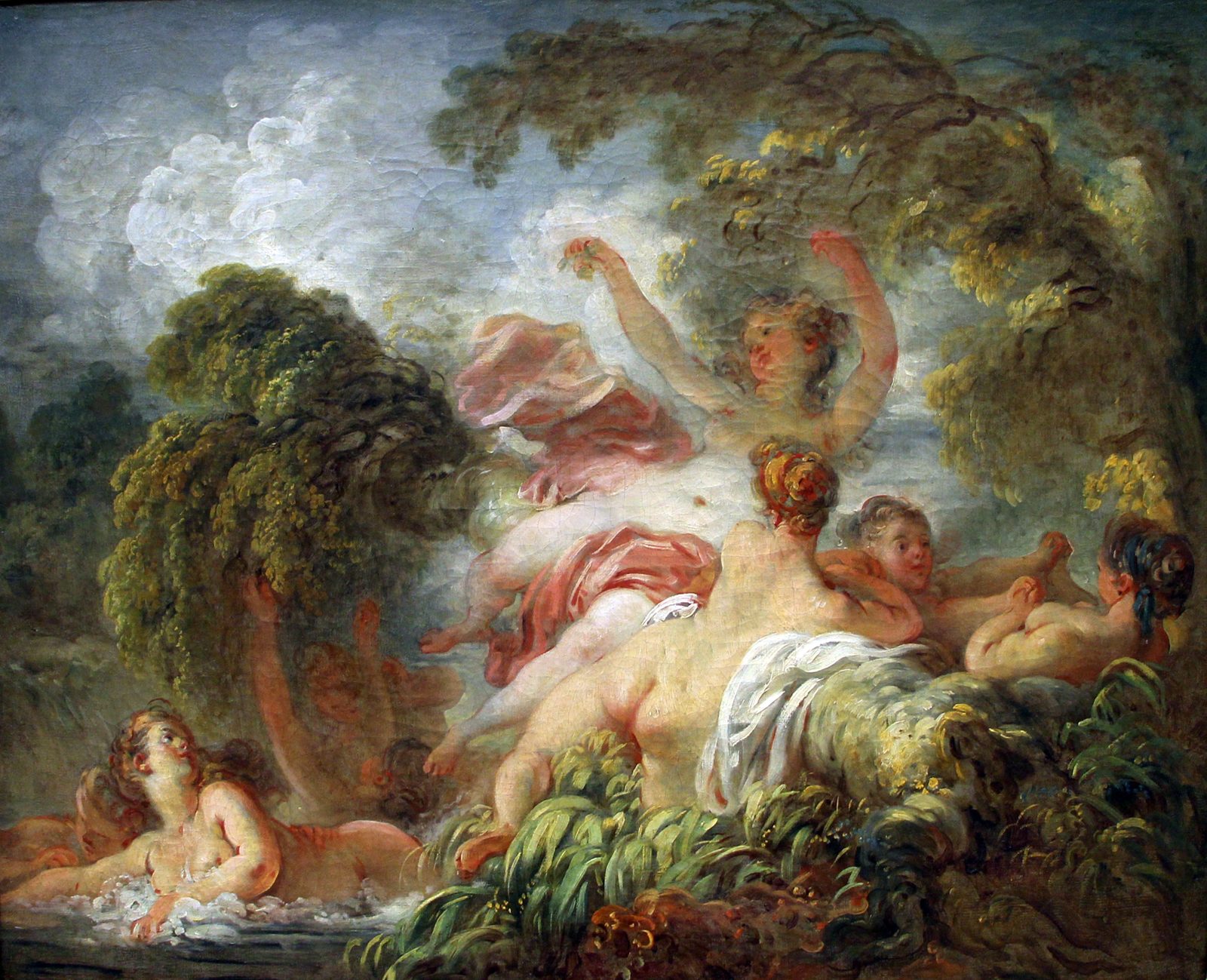
Take a moment to really soak in the scene in front of you. Jean-Honoré Fragonard’s "The Bathers" isn’t just a painting; it’s a vibrant invitation to a world of leisure and intimacy. Notice how the figures are intertwined, their bodies almost merging with the lush greenery around them. The way the sunlight dances on their skin creates a warm glow that feels almost alive.
These details matter because they capture the essence of Rococo art, which celebrates pleasure and beauty. Fragonard’s brushwork is so fluid, it feels like you could step right into this idyllic moment. The lush colors and soft forms evoke a sense of carefree joy, transporting you to a time when life was about indulgence and romance.
Created in 1765, this piece reflects the spirit of the French aristocracy, who sought refuge in nature and leisure away from the rigidities of court life. Fragonard, a master of this style, was known for his ability to convey intimacy and a sense of playful eroticism, making his works immensely popular.
As you stand here, think about what it would be like to escape into this scene. What stories do you imagine these bathers might share? What secrets does this moment hold? Let your imagination wander as you take in the beauty of this exquisite work.
Jean-Honoré Fragonard, born on April 5, 1732, in Grasse, France, was a prominent French painter and printmaker known for his exuberant Rococo style. The only child of a glover, he moved to Paris at six, where his artistic talent was nurtured under the guidance of François Boucher. Fragonard won the prestigious Prix de Rome in 1752, allowing him to study in Italy, where he developed a love for romantic landscapes and the works of masters like Tiepolo.
His career flourished in the 1760s, creating intimate and often erotic genre paintings that captivated the court of Louis XV. Notable works include "The Swing" and "The Bolt," characterized by vibrant colors and fluid brushwork. Despite his success, Fragonard struggled with official commissions, preferring the freedom of private patronage. He married Marie-Anne Gérard in 1769, and their family included several artists.
The French Revolution disrupted his career, leading him to retreat to Grasse, where he continued to paint. Although largely forgotten after his death on August 22, 1806, Fragonard's influence resurfaced in the 19th century, particularly impacting Impressionists like Renoir and Morisot. Today, he is celebrated as a master of French painting, embodying the spirit of the Rococo era.
Jean-Honoré Fragonard's 'The Bathers' was created in 1765, a time when the Rococo style was at its peak in France. This painting was likely commissioned by a private patron, reflecting the tastes of the French aristocracy who sought art that celebrated leisure and intimacy. Fragonard, who had already established himself as a leading figure in the Rococo movement, was known for his ability to convey a sense of playful eroticism. However, despite its initial popularity, the painting's reception was mixed, as Fragonard struggled to secure official commissions, leading him to focus on private works.
As you gaze at 'The Bathers', take a moment to appreciate Fragonard's masterful brushwork. The fluidity of his strokes creates a sense of movement, almost as if the figures could step out of the canvas. Notice how he employs a soft palette, with lush greens and warm skin tones that blend harmoniously, inviting you into this idyllic scene. The composition is structured yet playful, with the intertwining bodies of the bathers echoing the natural forms around them. Fragonard's use of light is particularly striking; the sunlight dapples through the foliage, casting a warm glow that enhances the intimacy of the moment. This technique not only highlights the figures but also creates a sense of depth, drawing your eye into the lush background. The overall effect is one of serene joy, capturing a fleeting moment of leisure that feels almost tangible.
Fragonard's 'The Bathers' is a vivid embodiment of the Rococo style, a movement that celebrated sensuality and the pleasures of life. This painting, with its playful depiction of nude figures amidst water and clouds, not only reflects the hedonistic spirit of 18th-century France but also set a precedent for future artists exploring themes of eroticism and intimacy. His fluid brushwork and vibrant colors influenced the Impressionists, particularly Berthe Morisot and Renoir, who admired his ability to capture fleeting moments of beauty. Fragonard's work reminds us that art can be a celebration of life’s joys, making it a significant touchstone in the evolution of modern art.
One intriguing aspect of 'The Bathers' is that it was painted during a period when Fragonard was experimenting with different styles. While he is best known for his Rococo works, he later faced a lukewarm reception for his ambitious pieces, which led him to abandon the Rococo style in favor of Neoclassicism. This painting thus captures a moment of transition in his career, showcasing his mastery of the Rococo while hinting at the stylistic shifts that would follow.
During his stay in Italy, Fragonard was deeply inspired by the romantic gardens and the works of masters like Tiepolo, which influenced his later depictions of lush landscapes and intimate scenes, as seen in 'The Bathers'.
Fragonard's marriage to Marie-Anne Gérard, a painter herself, likely fostered an environment of creativity and collaboration, influencing his shift towards more intimate and personal themes in his artwork.