Feasting and dancing peasants
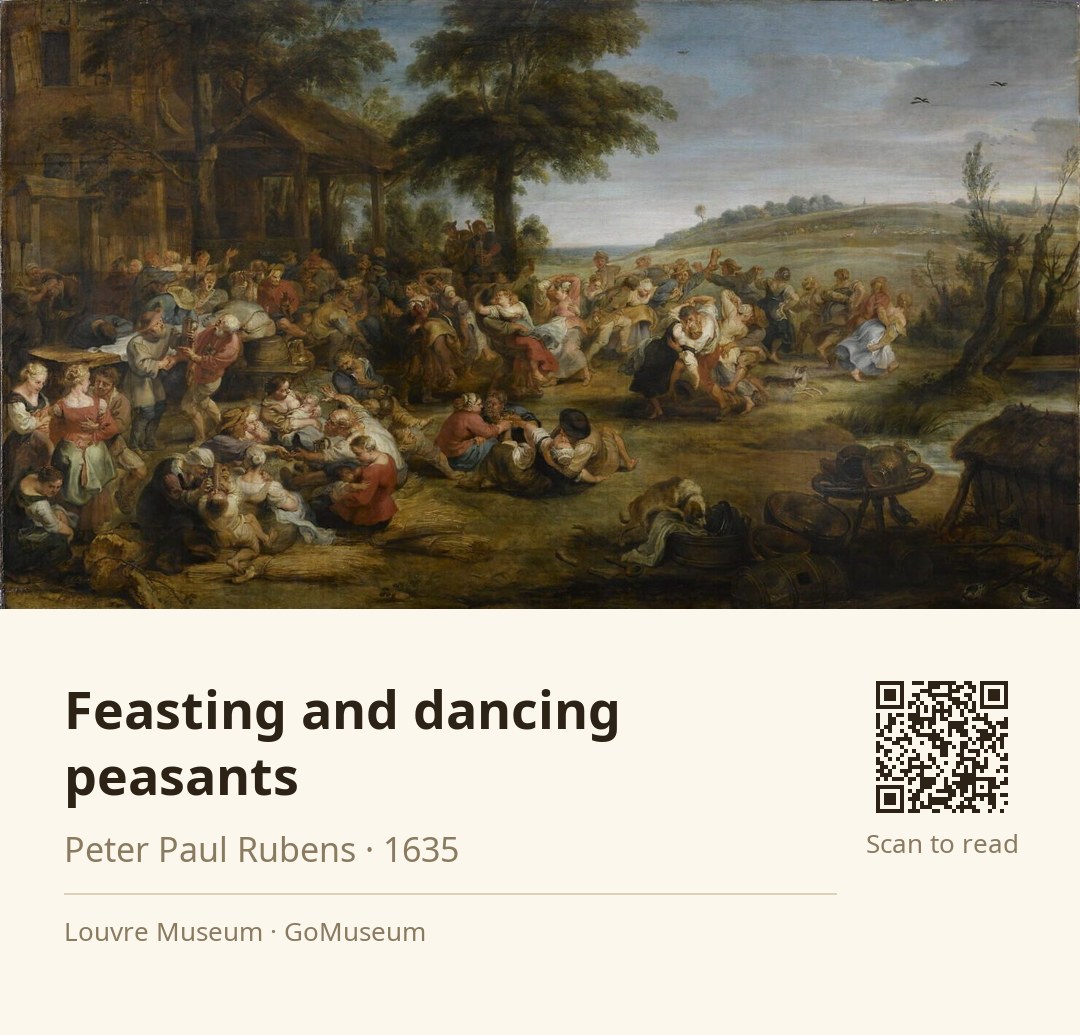
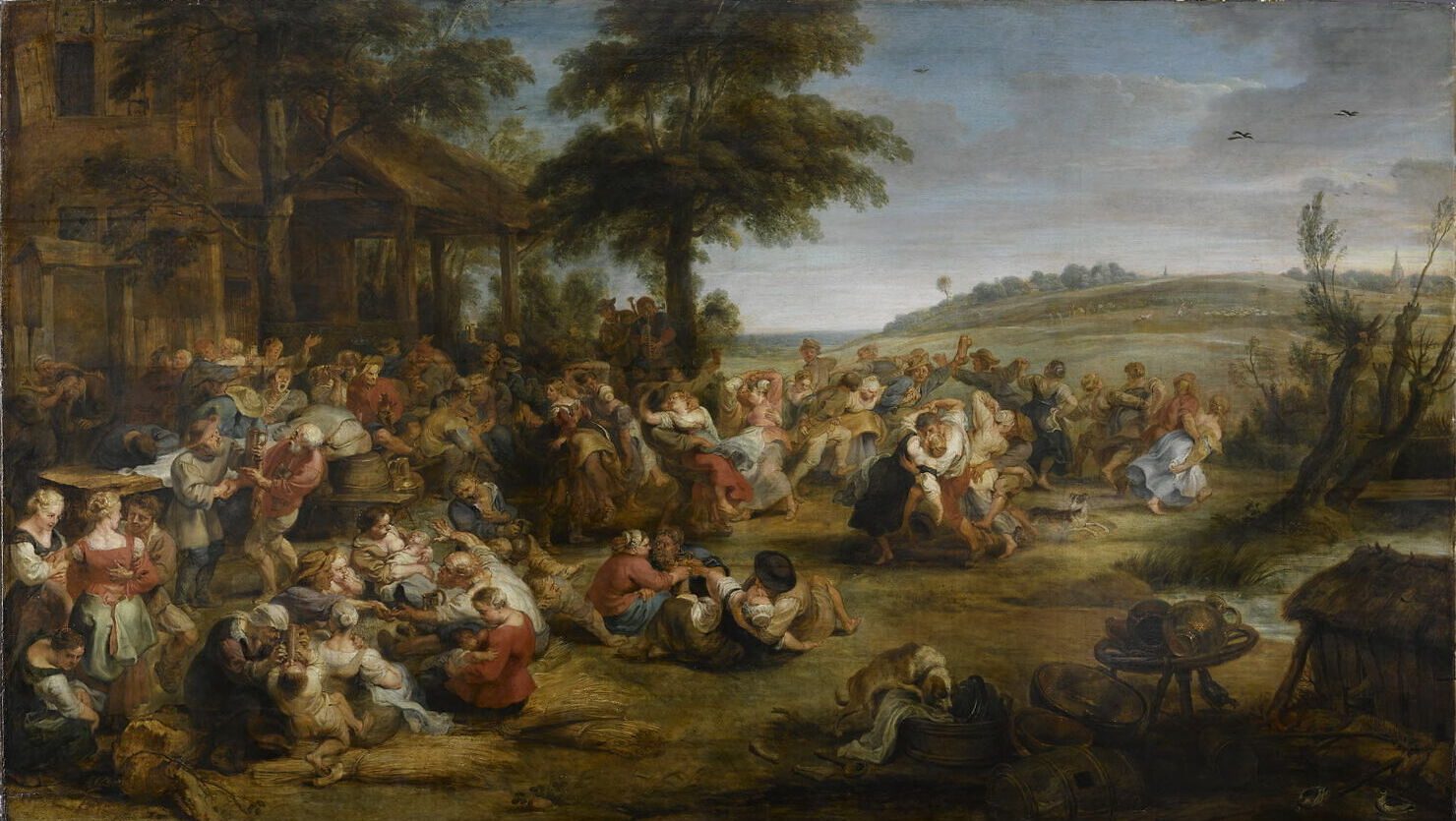
🎧 This work has audio narration — listen in the appTake a moment to soak in the lively scene before you in Peter Paul Rubens' "Feasting and Dancing Peasants." Notice how the figures are bursting with energy, their faces alight with joy and mischief. Look closely at the way the dancers’ arms stretch out, almost as if they’re inviting you to join the celebration.
These details matter because they capture the essence of a village festivity, or "kermesse," a time when the everyday struggles of peasant life are momentarily forgotten in favor of merriment and community. Rubens masterfully conveys this exuberance, using vibrant colors and dynamic compositions that draw you into the scene, making you feel like a participant rather than just an observer.
Created in 1635, this painting reflects Rubens' deep understanding of human emotion and social life, showcasing not just the joy of the moment but also the cultural significance of such gatherings in 17th-century Flanders.
As you stand here, think about the stories these peasants might tell if they could speak. What do you think they would share about their lives beyond this festive moment?
Sir Peter Paul Rubens was a Flemish artist and diplomat born on June 28, 1577, in Siegen, Germany. He is celebrated as a leading figure of the Flemish Baroque tradition, renowned for his dynamic compositions that intertwine classical and Christian themes. Rubens's work is characterized by vibrant color, movement, and sensuality, aligning with the dramatic style of the Counter-Reformation. His prolific output includes altarpieces, portraits, landscapes, and history paintings, with a catalog of over 1,400 works.
Raised in Antwerp after fleeing religious persecution, Rubens was a well-educated humanist and skilled diplomat, knighted by both Philip IV of Spain and Charles I of England. He managed a large workshop that produced art for European nobility and collectors, and he was also an influential art dealer. Rubens's designs extended beyond painting; he created tapestries, prints, and even contributed to architectural projects.
His legacy endures in the art world, where he is recognized for his mastery of color and form, and his ability to convey emotion and drama. Rubens's impact on Baroque art is profound, making him a pivotal figure in the evolution of Western art history. He passed away on May 30, 1640, leaving behind a rich artistic heritage that continues to inspire.
The reception of this piece was quite lively; it drew attention not just for its artistic merit but also for its depiction of merriment and revelry, resonating with audiences of the time. The painting's journey through history reflects the evolving tastes and values of society, highlighting how art can serve as a mirror to cultural shifts. Its provenance is a testament to its significance, having transitioned from noble patronage to royal collection, thus embedding it deeply within the fabric of art history.
As you gaze at 'Feasting and Dancing Peasants,' notice the way Rubens employs dynamic brushwork that seems to pulse with life. The figures are not just painted; they are animated, their movements captured in a way that almost invites you to join their festivities. The use of vibrant colors creates a sense of warmth and joy, while the composition is expertly structured to guide your eye through the scene. The foreground is bustling with activity, drawing you in, while the background recedes softly, creating depth. Rubens' choice of scale enhances the intimacy of the gathering, making you feel as if you could step right into the celebration. The interplay of light and shadow adds a layer of realism, making the scene feel almost tangible, as if the laughter and music could spill out of the canvas.
One surprising anecdote about 'Feasting and Dancing Peasants' is its mention in Émile Zola's novel 'L'Assommoir.' In a memorable scene, characters escape the rain after a wedding and find themselves at the Louvre, where they react with both shock and amusement to the painting's lively details, showcasing how Rubens' work not only captivated art lovers but also found its way into popular culture, influencing literature and public perception of art.
Rubens employed dynamic brushwork that captures the fluidity of the dancers' movements, making the figures appear almost animated and inviting viewers to feel the energy of the celebration.
In Émile Zola's novel 'L'Assommoir,' characters react to the painting with shock and amusement, illustrating how Rubens' work permeated literature and reflected societal attitudes towards art and revelry.