Portrait of Helena Fourment with Two of Her Children
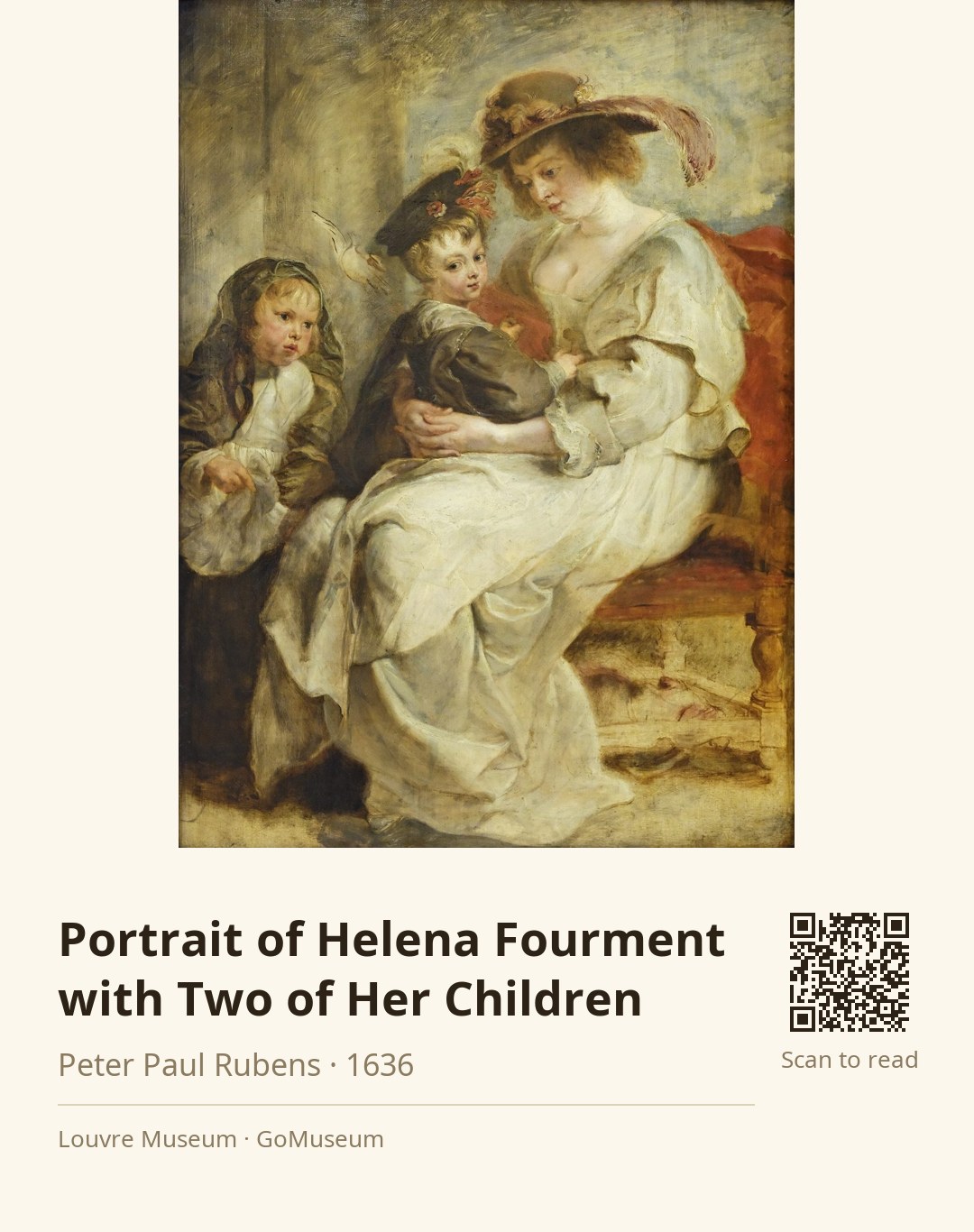
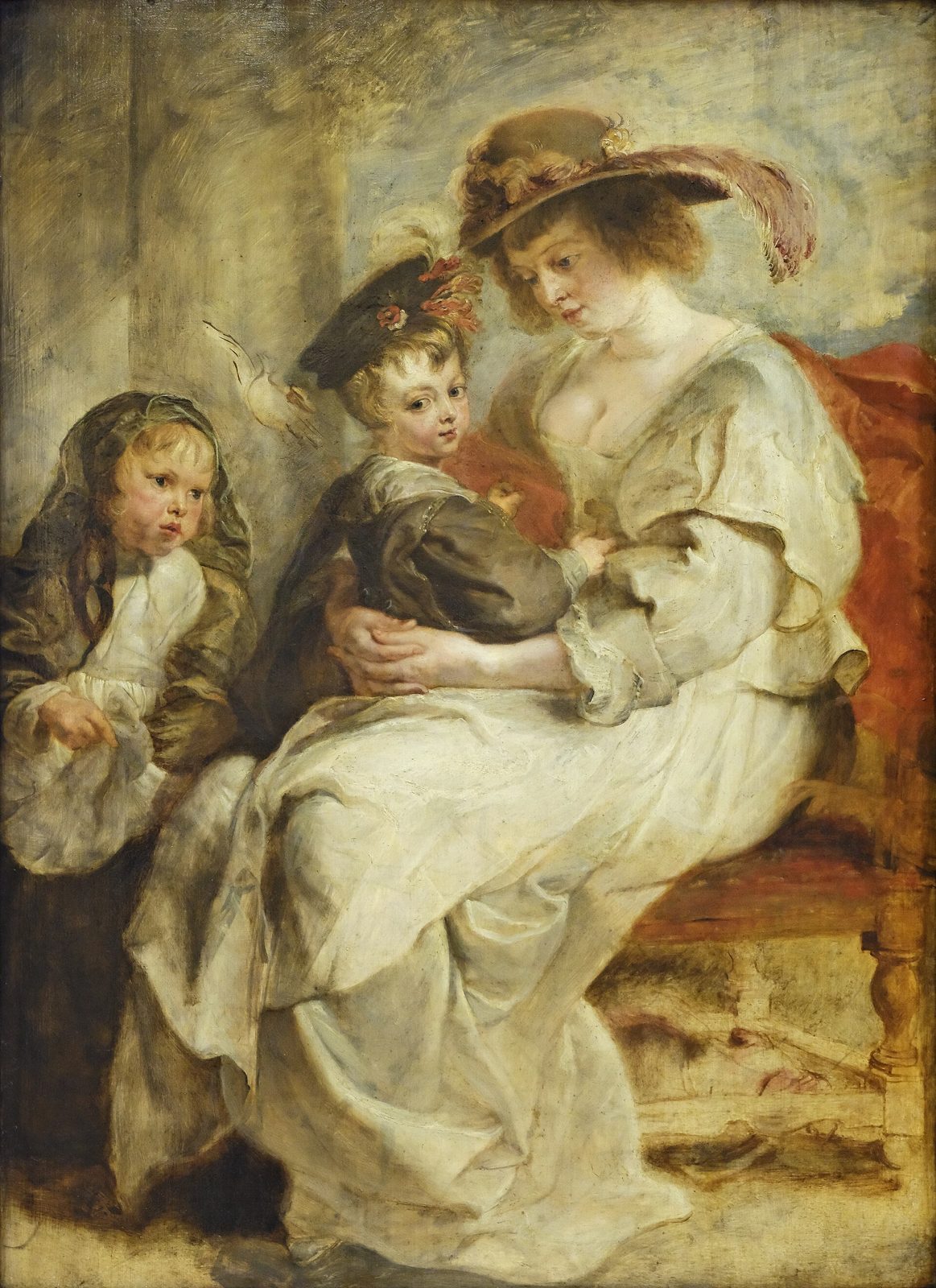
🎧 This work has audio narration — listen in the appTake a moment to really look at this painting, "Portrait of Helena Fourment with Two of Her Children" by Peter Paul Rubens. Notice how Helena cradles her son Frans, while her daughter Clara-Johanna stands beside them, gazing up at her mother. The warmth of their connection is palpable, isn’t it?
Now, focus on the simplicity of Helena’s white dress. It’s striking against the rich, dark background, drawing your eye to her and her children.
Rubens painted this in 1636, during a time when family portraits were becoming increasingly popular among the elite. Helena, his second wife, was only 16 when they married, and this piece captures a tender moment in their life together, showcasing not just her beauty but also her role as a nurturing mother.
As you stand here, think about the subtle pentimento—a ghostly outline of a third child, Isabelle, who was born later. It’s a reminder that this painting is a snapshot of a moment, yet it hints at the complexities of family life that Rubens experienced firsthand.
So, what feelings does this scene evoke in you? Can you see the love and warmth that transcends time, connecting us to a family from centuries ago?
Sir Peter Paul Rubens was a Flemish artist and diplomat born on June 28, 1577, in Siegen, Germany. He is celebrated as a leading figure of the Flemish Baroque tradition, renowned for his dynamic compositions that intertwine classical and Christian themes. Rubens's work is characterized by vibrant color, movement, and sensuality, aligning with the dramatic style of the Counter-Reformation. His prolific output includes altarpieces, portraits, landscapes, and history paintings, with a catalog of over 1,400 works.
Raised in Antwerp after fleeing religious persecution, Rubens was a well-educated humanist and skilled diplomat, knighted by both Philip IV of Spain and Charles I of England. He managed a large workshop that produced art for European nobility and collectors, and he was also an influential art dealer. Rubens's designs extended beyond painting; he created tapestries, prints, and even contributed to architectural projects.
His legacy endures in the art world, where he is recognized for his mastery of color and form, and his ability to convey emotion and drama. Rubens's impact on Baroque art is profound, making him a pivotal figure in the evolution of Western art history. He passed away on May 30, 1640, leaving behind a rich artistic heritage that continues to inspire.
This painting, 'Portrait of Helena Fourment with Two of Her Children,' was created by Peter Paul Rubens around 1636. It was commissioned during a period when family portraits were gaining popularity among the elite, reflecting the social dynamics of the time. Rubens, who was 53 years old and a widower when he married his second wife Helena, captured a tender moment in their life together. The work was later acquired by Louis XVI of France in 1784, a testament to its value and appeal. Today, it resides in the Louvre Museum in Paris, where it continues to draw viewers into the intimate world of the Rubens family, showcasing not just the beauty of Helena but also the warmth of maternal love. The painting's provenance highlights its journey through history, from Rubens's studio to royal collection, emphasizing its enduring significance in the art world.
As you gaze at this painting, notice the masterful brushwork that Rubens employs. The oil on canvas technique allows for a rich texture, with soft, flowing strokes that create a sense of warmth and intimacy. The light falls gently on Helena's white dress, contrasting beautifully with the dark background, which serves to elevate her and her children as the focal point. The composition is structured with Helena at the center, cradling her son Frans, while Clara-Johanna stands to the left, her gaze directed toward her mother. This arrangement not only draws your eye but also conveys a sense of familial unity. The subtle pentimento, revealing the outline of a third child, adds depth to the narrative, suggesting the complexities of family life that Rubens experienced. The unfinished areas, like the blue in the corner, invite you to ponder the artist's process, leaving a lingering sense of mystery.
Did you know that Rubens was not only a painter but also a diplomat? His connections and social standing allowed him to mingle with the elite of Europe, which undoubtedly influenced his work.
Rubens employed a technique called 'pentimento,' where earlier versions of the painting can be seen beneath the surface, revealing the outline of a third child, Isabelle, suggesting the artist's evolving vision during the work's creation.
The unfinished blue area hints at Rubens's working process and invites viewers to contemplate the artist's intentions, leaving a sense of mystery about the painting's completion and the choices he made during its creation.