 Image: Shonagon · Geffroy, Gustave, 1855-1926
The Seated Scribe
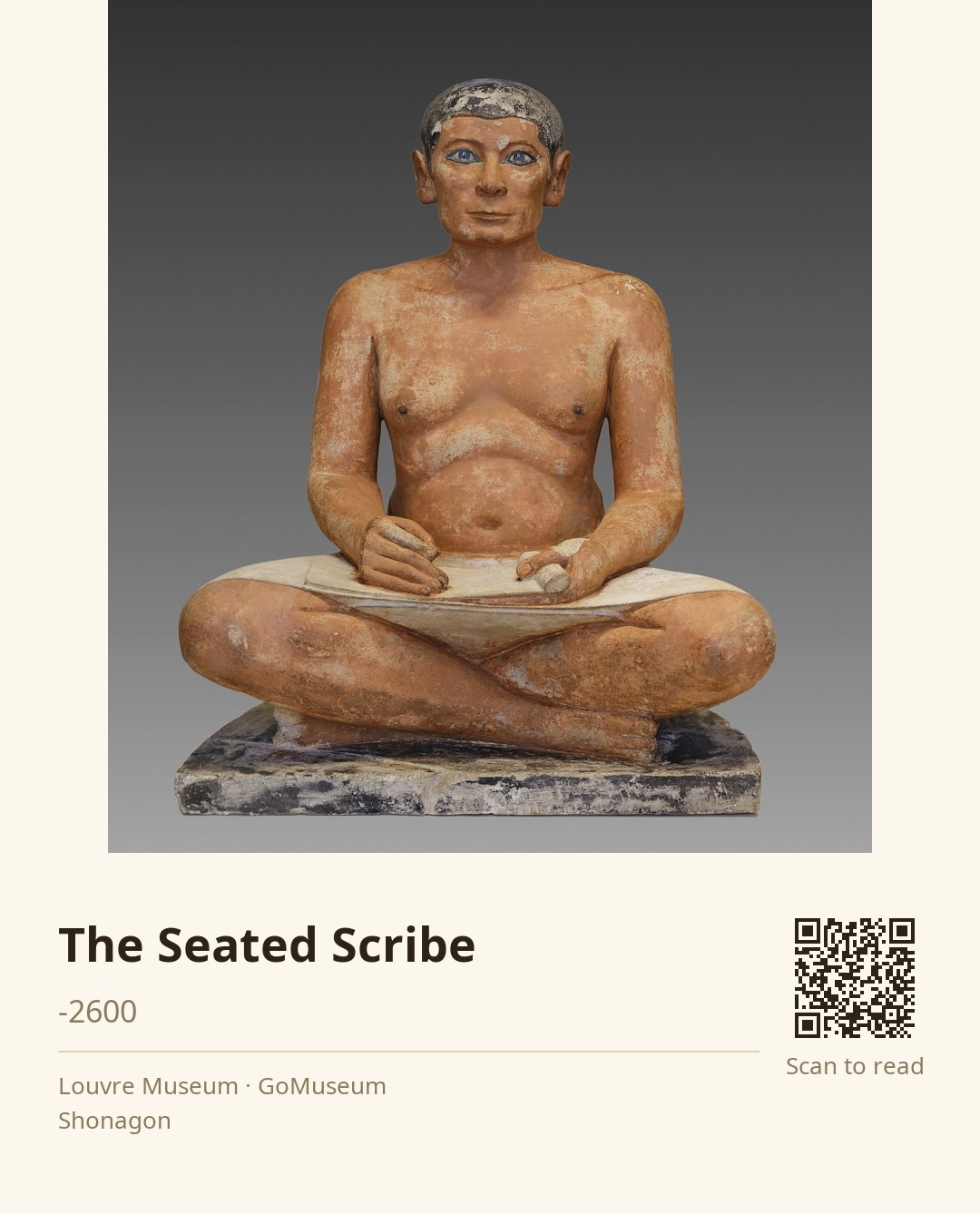
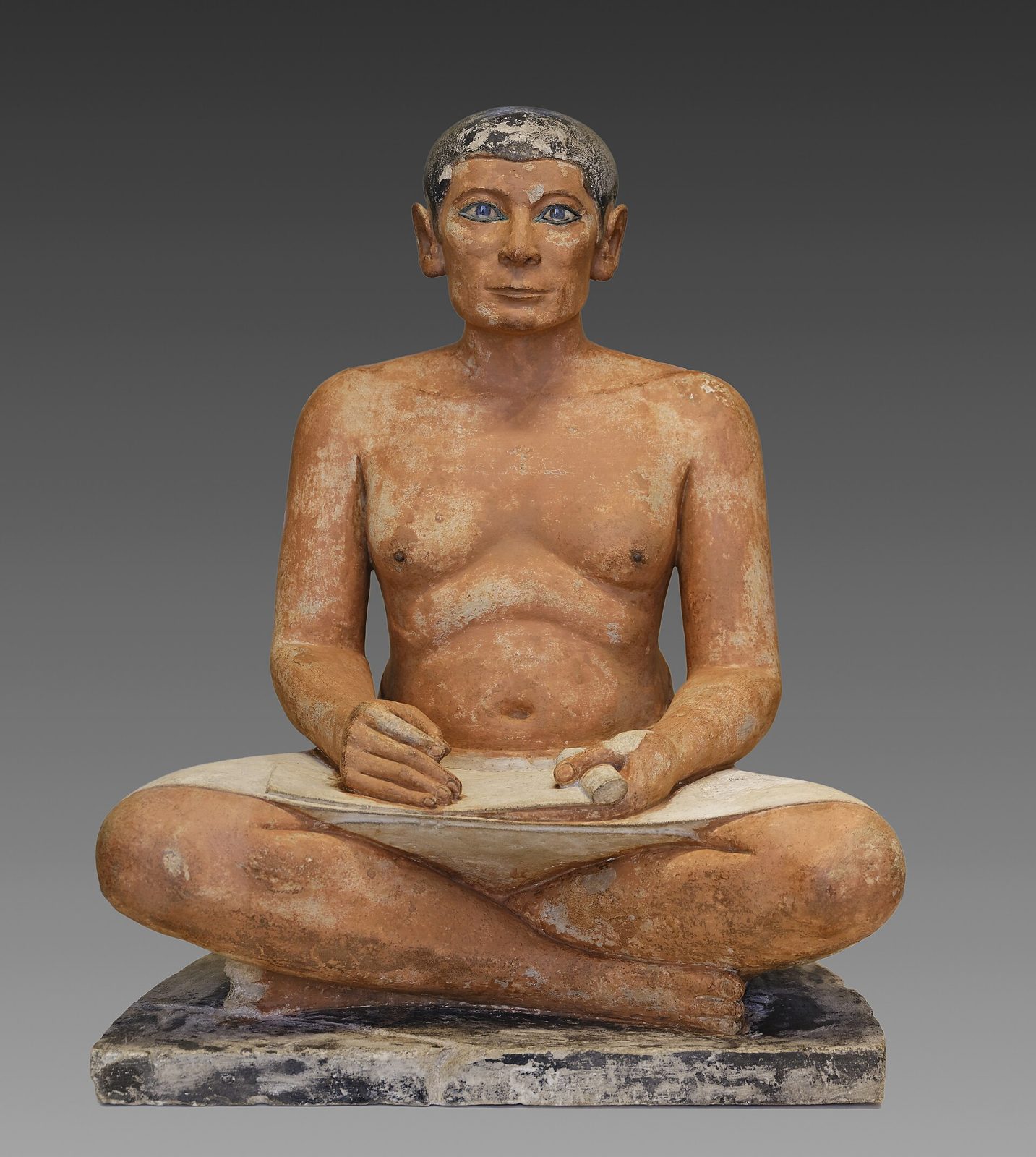
🎧 This work has audio narration — listen in the appTake a moment to really look at the face of the Seated Scribe. Notice how his eyes, made from polished rock crystal and magnesite, seem to follow you, filled with a lifelike alertness. It’s as if he’s ready to capture your words on the papyrus resting in his lap. This attention to detail isn’t just artistry; it speaks to the importance of scribes in ancient Egypt. They were the literate elite, the ones who documented everything from trade to royal decrees, and their skills were vital to the functioning of society.
The soft curves of his body suggest he was well-fed, a sign of status in a world where most toiled in the fields. His cross-legged pose was typical for scribes at work, embodying both a moment of concentration and a connection to the divine, as he was believed to assist in the afterlife.
As you stand here, consider what stories this scribe might have recorded. What would he have seen in his lifetime? What words would he have written down that shaped the world around him?
Take a closer look at the craftsmanship of the Seated Scribe. This sculpture is made from painted limestone, a material that allows for both durability and intricate detailing. The eyes are particularly striking, crafted from a combination of polished rock crystal and magnesite, giving them a lifelike depth. Notice how the eyebrows are delicately painted, adding to the expressiveness of his face. The hands are meticulously modeled, positioned as if he’s ready to write, with even the fingernails subtly detailed.
The Seated Scribe was unearthed in 1850 by French archaeologist Auguste Mariette in Saqqara, a significant burial ground for the elite. This discovery occurred near the Serapeum, a temple complex dedicated to the sacred bulls of Apis. While the exact identity of the scribe remains a mystery, some suggest he may represent a member of the royal family, given the unusual pose and high-quality craftsmanship. Initially, this statue was likely part of a larger tomb complex, intended to serve the deceased in the afterlife. The sculpture has since found its home in the Louvre, where it has captivated audiences for over a century.
The Seated Scribe is more than just a striking piece of ancient Egyptian art; it's a testament to the elevated status of scribes in society. This sculpture, with its lifelike features and intricate details, captures the essence of a profession that was vital for the administration of the state. Scribes were among the few literate individuals, wielding power through their ability to read and write, and this statue reflects that importance. Its influence can be seen in how subsequent generations of artists approached the representation of human figures, emphasizing realism and individuality. The Seated Scribe not only immortalizes a singular figure but also symbolizes the intellectual and cultural achievements of ancient Egypt during a time often regarded as its golden age. Remember, this isn't just a statue; it's a window into a world where knowledge was power.
Crafted from a combination of white magnesite and polished rock crystal, they were designed to create a striking gaze that seems to follow you. The craftsmanship is so intricate that the eyes were held in place by copper clips, adding a layer of sophistication to this ancient work. It’s a testament to the importance of the scribe in ancient Egyptian society, where literacy was a rare and valued skill.
The eyes are crafted from a combination of polished rock crystal and magnesite, which gives them a remarkable lifelike quality. Additionally, they are held in place by copper clips, showcasing the advanced techniques used in ancient Egyptian sculpture.
The absence of the reed-brush, which would have been used for writing, adds a layer of intrigue to the sculpture. It suggests that the scribe is in a moment of anticipation, ready to capture words, which emphasizes the role of scribes as communicators and recorders of history.