Hercules and Omphale
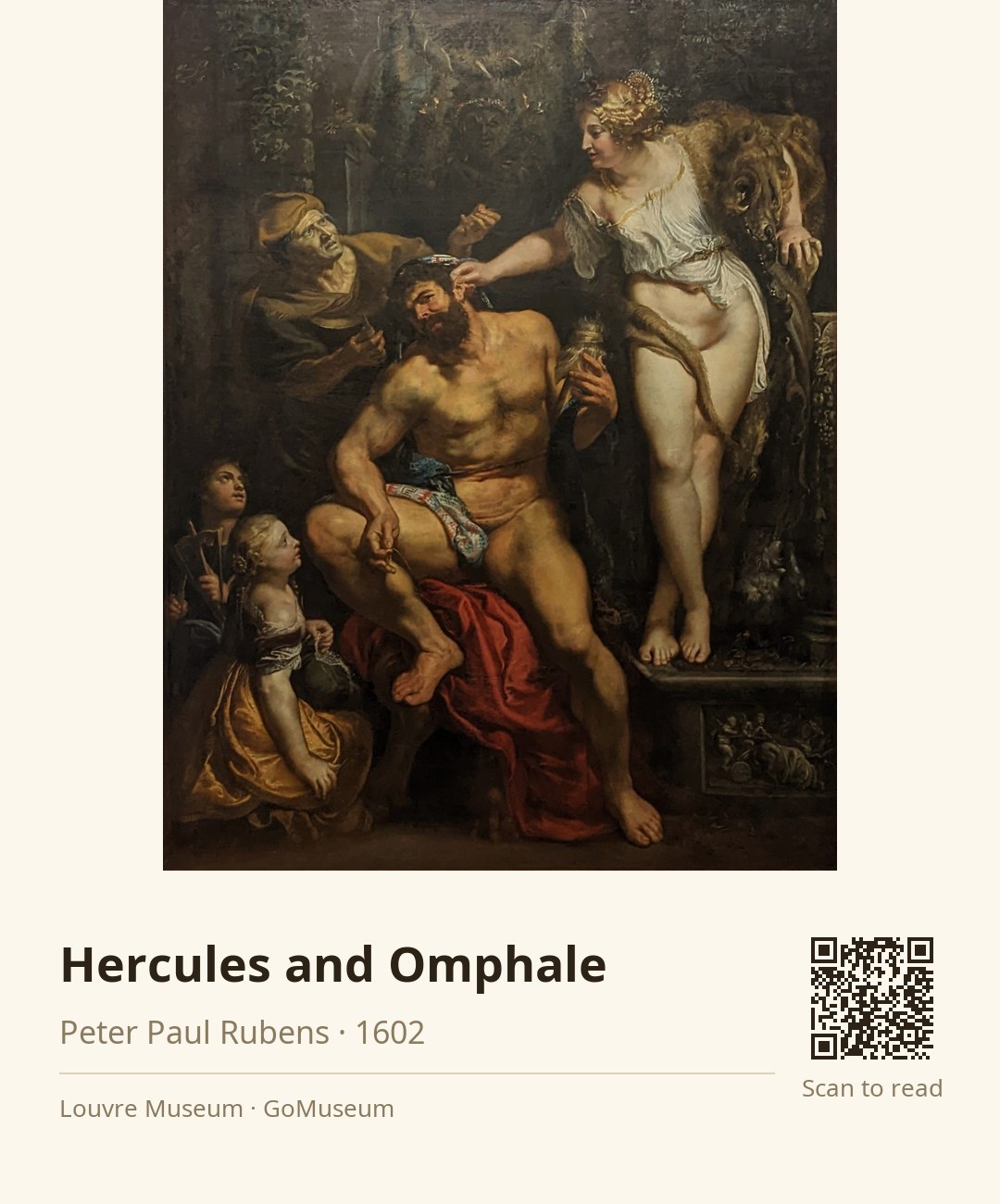
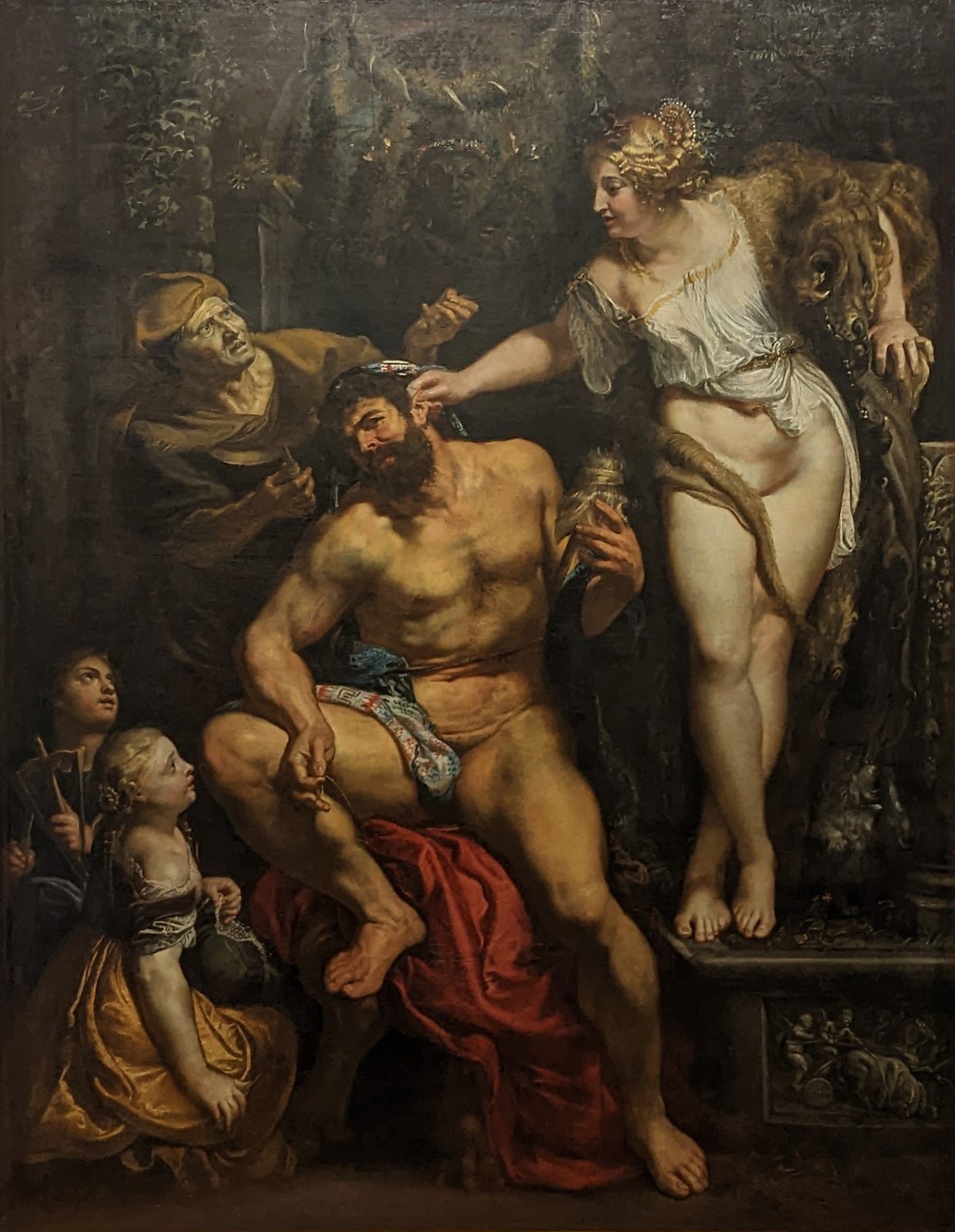
🎧 This work has audio narration — listen in the appTake a moment to really look at "Hercules and Omphale" by Peter Paul Rubens. Notice how the figures are intertwined in a playful yet powerful dynamic. Omphale stands confidently, draped in the lion's skin, while Hercules, typically the epitome of strength, sits submissively in a woman's garment, spinning wool. This striking role reversal is not just for show; it challenges our perceptions of masculinity and femininity.
Rubens painted this scene around 1602, drawing from mythological tales where Hercules, after a tragic episode, becomes the servant of Omphale. The details of their attire—Hercules in a feminine wrap and Omphale wielding his club—highlight the absurdity and humor of their situation, a commentary on power and desire that was particularly resonant in the Baroque era.
Rubens was known for his vibrant colors and dynamic compositions, and here, he uses those techniques to create a sense of movement and tension. The background, rich with classical architecture, frames this intimate yet public display of dominance and submission, reflecting the cultural values of his time.
As you stand here, consider: what does this inversion of roles say about love and power in your own life? How do we define strength today?
Sir Peter Paul Rubens was a Flemish artist and diplomat born on June 28, 1577, in Siegen, Germany. He is celebrated as a leading figure of the Flemish Baroque tradition, renowned for his dynamic compositions that intertwine classical and Christian themes. Rubens's work is characterized by vibrant color, movement, and sensuality, aligning with the dramatic style of the Counter-Reformation. His prolific output includes altarpieces, portraits, landscapes, and history paintings, with a catalog of over 1,400 works.
Raised in Antwerp after fleeing religious persecution, Rubens was a well-educated humanist and skilled diplomat, knighted by both Philip IV of Spain and Charles I of England. He managed a large workshop that produced art for European nobility and collectors, and he was also an influential art dealer. Rubens's designs extended beyond painting; he created tapestries, prints, and even contributed to architectural projects.
His legacy endures in the art world, where he is recognized for his mastery of color and form, and his ability to convey emotion and drama. Rubens's impact on Baroque art is profound, making him a pivotal figure in the evolution of Western art history. He passed away on May 30, 1640, leaving behind a rich artistic heritage that continues to inspire.
This piece was part of a pair, with its companion piece being 'The Death of Adonis.' Imperiale kept the painting until 1648, after which it changed hands several times, passing through the collections of notable figures like Francesco Maria Imperiale, Charles II of Gonzaga, and Christine of Sweden. By 1785, it was acquired by King Louis XVI along with the Château de Saint-Cloud. The painting has undergone restoration from 1973 to 1983, ensuring its vibrant colors and intricate details remain intact for future generations to admire.
Rubens's technique in 'Hercules and Omphale' showcases his mastery of color and movement. The painting measures a substantial 278 by 216 cm, allowing for a grand composition that draws the viewer in. Notice the way Rubens uses light to create depth; the figures are illuminated in a way that enhances their physicality and emotional expressions. The brushwork is dynamic, with swirling strokes that suggest movement, almost as if the figures could step off the canvas. The contrasting textures of Omphale's lion skin and Hercules's soft garment create a tactile experience, inviting you to feel the weight of their roles. The composition is structured around a diagonal line, leading your eye from Omphale's commanding stance to Hercules's submissive position, reinforcing the theme of power dynamics. This careful arrangement not only captivates but also evokes a sense of tension and playfulness, making the viewer ponder the complexities of gender roles.
This painting was actually commissioned by a Genoese patron named Giovanni Vincenzo Imperiale, who kept it until 1648. But what’s truly fascinating is that this artwork was meant to be a companion piece to another painting, 'The Death of Adonis.' Imagine the conversations that must have taken place around these two pieces, each telling a different story of love and loss, yet both steeped in the rich tapestry of mythology. It’s as if Rubens was weaving a narrative that spanned the spectrum of human emotion, all while playing with the themes of power and submission.
Rubens ran a large workshop in Antwerp that produced numerous paintings, allowing him to meet the high demand from nobility and art collectors across Europe. His workshop's collaborative environment enabled the creation of multiple versions of popular works, enhancing his reputation and influence.
In addition to being a prolific painter, Rubens was a diplomat and art collector, which not only expanded his network among the elite but also influenced his artistic style and subject matter, as he often incorporated classical and historical references that appealed to his patrons.