 Image: Wouter Engler
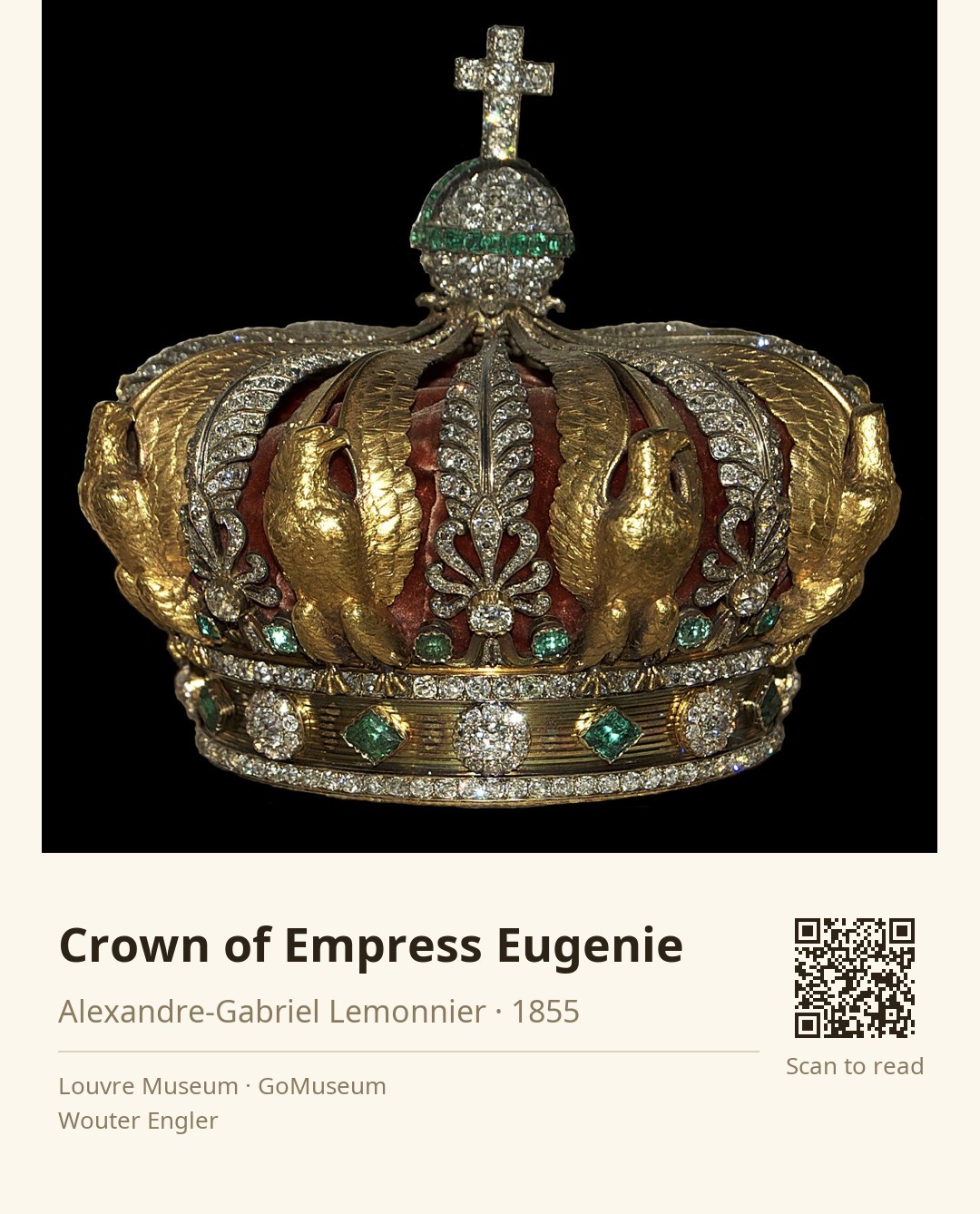
Crown of Empress Eugenie
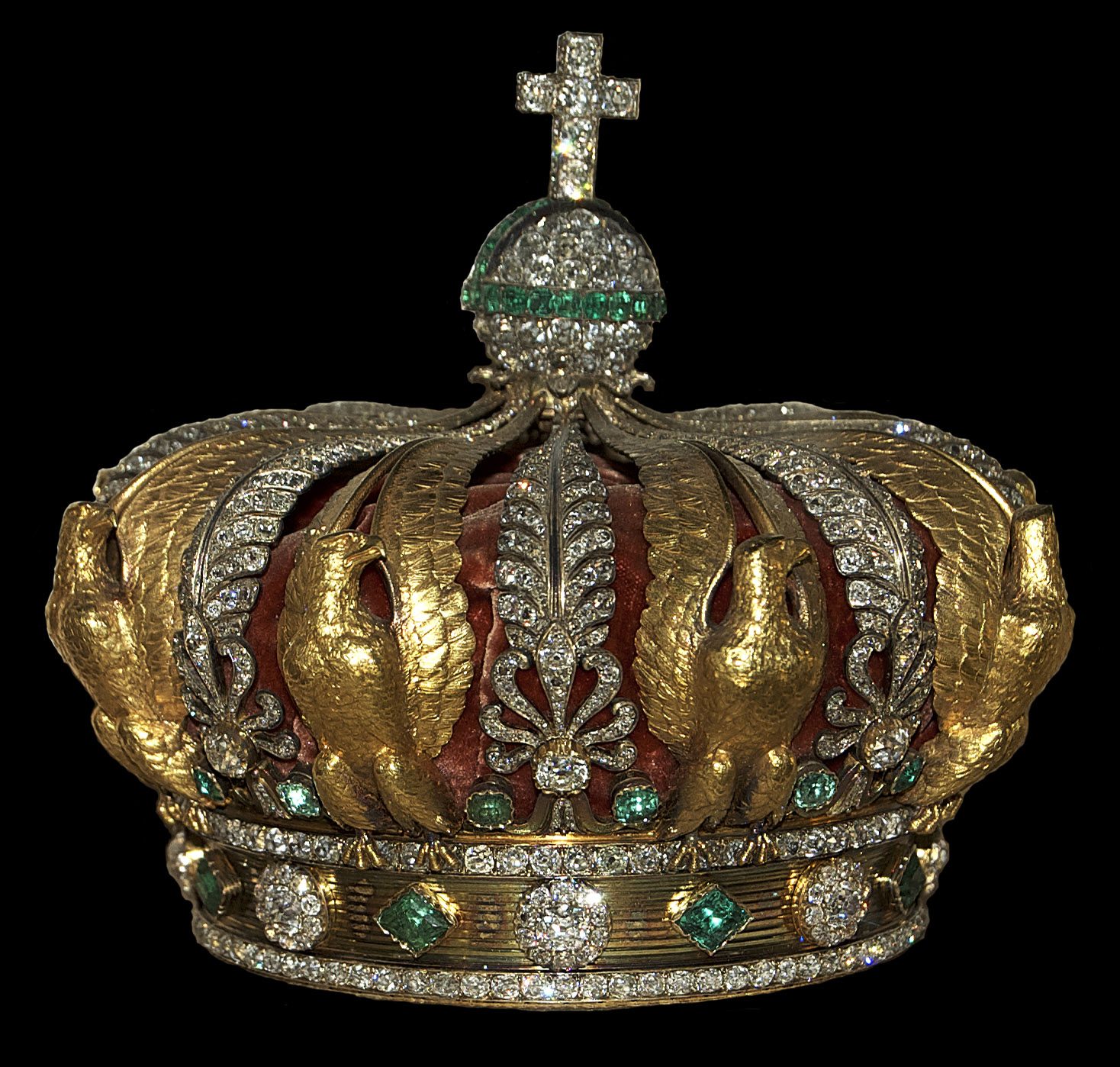
🎧 This work has audio narration — listen in the appTake a moment to really look at the Crown of Empress Eugénie. Notice the intricate designs of eagles and palmettes, shimmering in gold, and the stunning array of 1,354 diamonds and 56 emeralds. Each detail tells a story of opulence and ambition, crafted for a woman who never had a coronation but was nonetheless a symbol of imperial power.
Why does this crown matter? It was created for the 1855 Exposition Universelle, a showcase of France’s grandeur, reflecting not just Eugénie’s status as the wife of Napoleon III, but also the aspirations of a nation at the height of its imperial ambitions. The crown embodies a moment in history when France sought to assert its dominance on the world stage, and Eugénie was at the center of that narrative.
Alexandre-Gabriel Lemonnier, the jeweler behind this masterpiece, was renowned for his exquisite craftsmanship and was a favorite of the imperial court. His work on this crown solidified his legacy, even as the political tides turned against the empire.
As you stand here, consider the journey of this crown. From the heights of imperial glory to the shadows of exile, it has witnessed the rise and fall of a dynasty. What do you think it would say if it could speak?
Alexandre-Gabriel Lemonnier, born on May 14, 1808, in Rouen, was a prominent French jeweler whose career flourished in the mid-19th century. The son of a young opera singer and recognized by his stepfather, he adopted the surname Lemonnier in 1827. After apprenticing with jeweler Bury, he established his own workshop around 1848 in the prestigious Place Vendôme, a hub for luxury artisans.
Lemonnier gained international acclaim when he showcased a jewelry set commissioned by Queen Isabella II of Spain at the 1851 London Universal Exhibition, earning a grand medal and the Légion d'honneur from Louis-Napoléon Bonaparte. His work caught the attention of the emperor, who became his patron and facilitated the expansion of his business. By 1852, he was appointed jeweler to the Crown.
Despite his early successes, Lemonnier's fortunes waned in the 1870s, leading to the decline of his business. He eventually worked for a colleague before his death on July 16, 1884, nearly blind and reflecting the challenges of a once-celebrated artisan. His legacy remains significant in the history of French jewelry, marking a blend of craftsmanship and royal patronage during a transformative era.
The Crown of Empress Eugénie was crafted in 1855 for the Exposition Universelle in Paris, a grand showcase of French culture and innovation. Although neither Eugénie nor her husband, Napoleon III, had a coronation, this crown symbolized their imperial aspirations. The crown was designed by the renowned jeweler Alexandre-Gabriel Lemonnier, who had become a favorite of the imperial court. After the fall of the empire in 1870, Eugénie and Napoleon lived in exile in England. The crown remained with Eugénie until her death in 1920, after which it was bequeathed to Princess Marie-Clotilde Bonaparte. In 1988, it was auctioned and later donated to the Louvre, where it was displayed until the infamous 2025 robbery. The thieves damaged the crown during their escape, leading to a delicate restoration process that the Louvre is currently undertaking.
Created for the 1855 Exposition Universelle, it marked a shift in how crowns were perceived, especially since Eugénie and her husband, Napoleon III, never had a formal coronation. This crown, adorned with diamonds and emeralds, became a symbol of imperial power and elegance, influencing later designs in royal regalia. Its journey through history—from being a cherished possession of Eugénie to surviving the upheaval of the Franco-Prussian War and even a modern-day heist—highlights its enduring legacy. The crown's recent theft and subsequent damage have sparked discussions about preservation and the importance of cultural heritage, reminding us that even the most opulent symbols of power are vulnerable.
That's right! Although Eugénie de Montijo was the empress consort of Napoleon III, she and her husband never had an official coronation ceremony. Instead, this stunning crown was specially crafted for the 1855 Exposition Universelle in Paris, a world's fair that showcased the best of French culture and industry. Imagine the excitement of that time, with the crown symbolizing not just royal power, but also the hopes and aspirations of a nation on display!
After Eugénie's death in 1920, the crown was bequeathed to Princess Marie-Clotilde Bonaparte, and it later went to auction in 1988, marking a significant transition from royal possession to public display.