 Image: Sailko · WikiPaintings · Aannaloro · Rodney · Sailko
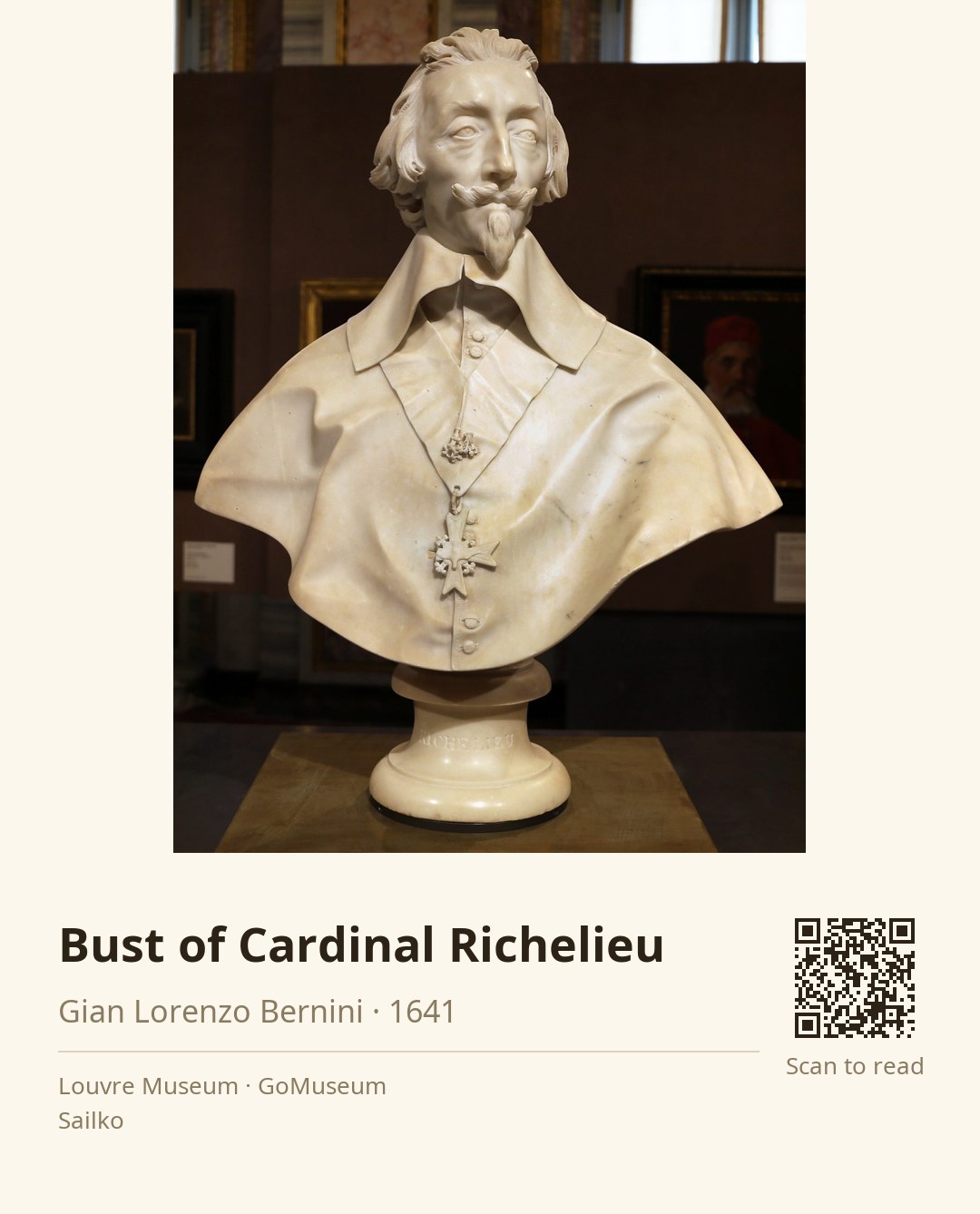
Bust of Cardinal Richelieu
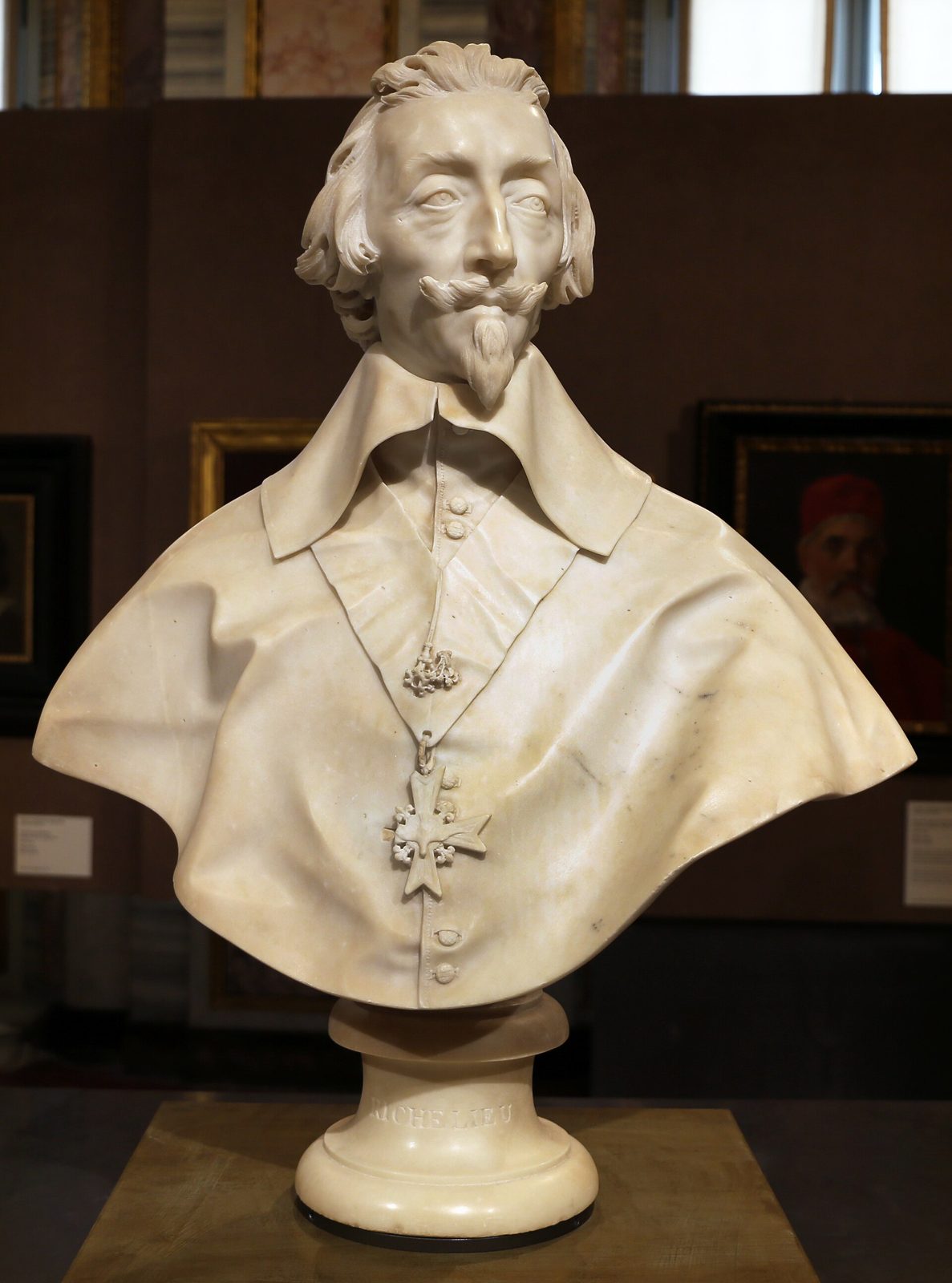
🎧 This work has audio narration — listen in the appTake a moment to really look at the Bust of Cardinal Richelieu by Gian Lorenzo Bernini. Notice how the marble seems to capture not just the likeness of the cardinal, but also a certain intensity in his gaze. The way his robes are sculpted, with intricate folds that suggest movement, draws you in, doesn’t it?
These details matter because they reflect Bernini's mastery of marble, transforming a cold stone into something that feels alive and almost breathing. This bust was created in 1641, during a time when Richelieu was a powerful figure in France, serving as chief minister to Louis XIII. Bernini was commissioned to create a full-length statue, but due to papal restrictions, he settled for this bust instead.
Richelieu was not entirely pleased with the result, feeling it didn’t capture his essence, which led him to commission another artist for a different bust. So, as you stand here, consider: what do you think makes a portrait truly resonate? Is it the likeness, the emotion, or perhaps the story behind it?
Gian Lorenzo Bernini, born on December 7, 1598, in Naples, was a preeminent Italian sculptor, architect, and painter, celebrated as a defining figure of Baroque art. Recognized as a prodigy from a young age, his talent was nurtured by his father, a Mannerist sculptor, and quickly garnered the attention of influential patrons, including Pope Paul V, who famously predicted Bernini would be the "Michelangelo of his age."
Bernini's work is characterized by dynamic movement, intricate forms, and a theatrical quality that set the standard for Baroque sculpture. His masterpieces, such as the Ecstasy of Saint Teresa and the Fountain of the Four Rivers, exemplify his ability to blend sculpture with architecture, creating cohesive visual narratives. His architectural contributions include the design of St. Peter's Basilica's grand colonnade, which remains a hallmark of Roman urban planning.
Throughout his life, Bernini was deeply engaged with the Counter-Reformation, using his art to convey the Catholic Church's power and spirituality. His versatility extended to painting and theatrical productions, where he showcased his multifaceted creativity. Bernini's legacy as a transformative artist solidified his place in art history, influencing generations and earning him the title of the first pan-European sculptor. He passed away on November 28, 1680, in Rome, leaving behind a monumental body of work that continues to inspire awe.
As you gaze at the Bust of Cardinal Richelieu, take a moment to appreciate the exquisite craftsmanship of Bernini. Notice how the marble has been meticulously carved to create lifelike details, from the intricate folds of the cardinal's robes to the subtle expression on his face. Bernini's technique involves a delicate balance of light and shadow, which brings depth to the sculpture. The smoothness of the marble contrasts with the textured areas, drawing your eye to the cardinal's piercing gaze. This mastery of marble transforms a solid block into a dynamic representation of a powerful figure, capturing not just his likeness but also a sense of his character.
The creation of this bust was a fascinating journey that began in 1640 when Cardinal Richelieu sought to commission a full-length sculpture from Bernini. However, due to the restrictions imposed by Pope Urban VIII, Bernini pivoted to create this bust instead. Working from portraits sent from France, he sculpted the piece between November 1640 and January 1641. However, Richelieu was not satisfied with the result, feeling it lacked a true representation of his essence. This dissatisfaction led him to commission another artist, Jean Warin, for a different bust, highlighting the complexities of artistic expectations and patronage during this period.
Bernini's ability to infuse marble with life and emotion set a new standard for portraiture, influencing generations of artists who followed. This bust, though it didn't meet Richelieu's expectations, showcased Bernini's mastery in capturing the essence of his subjects. The way he rendered the cardinal's features—his waist-length hair and moustache—demonstrated a keen understanding of character and presence.
Interestingly, while Bernini was celebrated for his mastery of marble, this bust was not initially well-received. Critics noted that it failed to capture Richelieu's physical characteristics accurately. It underscores the high stakes and expectations that came with creating art for powerful figures during the Baroque period.
Cardinal Richelieu originally sought a full-length statue from Bernini, but due to restrictions from Pope Urban VIII, the project was scaled down to a bust instead.
To aid Bernini in capturing Richelieu's likeness, a triple portrait was painted by Philippe de Champaigne, which served as a reference for the sculpture, highlighting the logistical challenges of working from afar.
Upon its arrival, the bust was not well-received; critics felt it failed to accurately represent Richelieu's physical features, leading to dissatisfaction from the cardinal himself.