Allegory of Vices
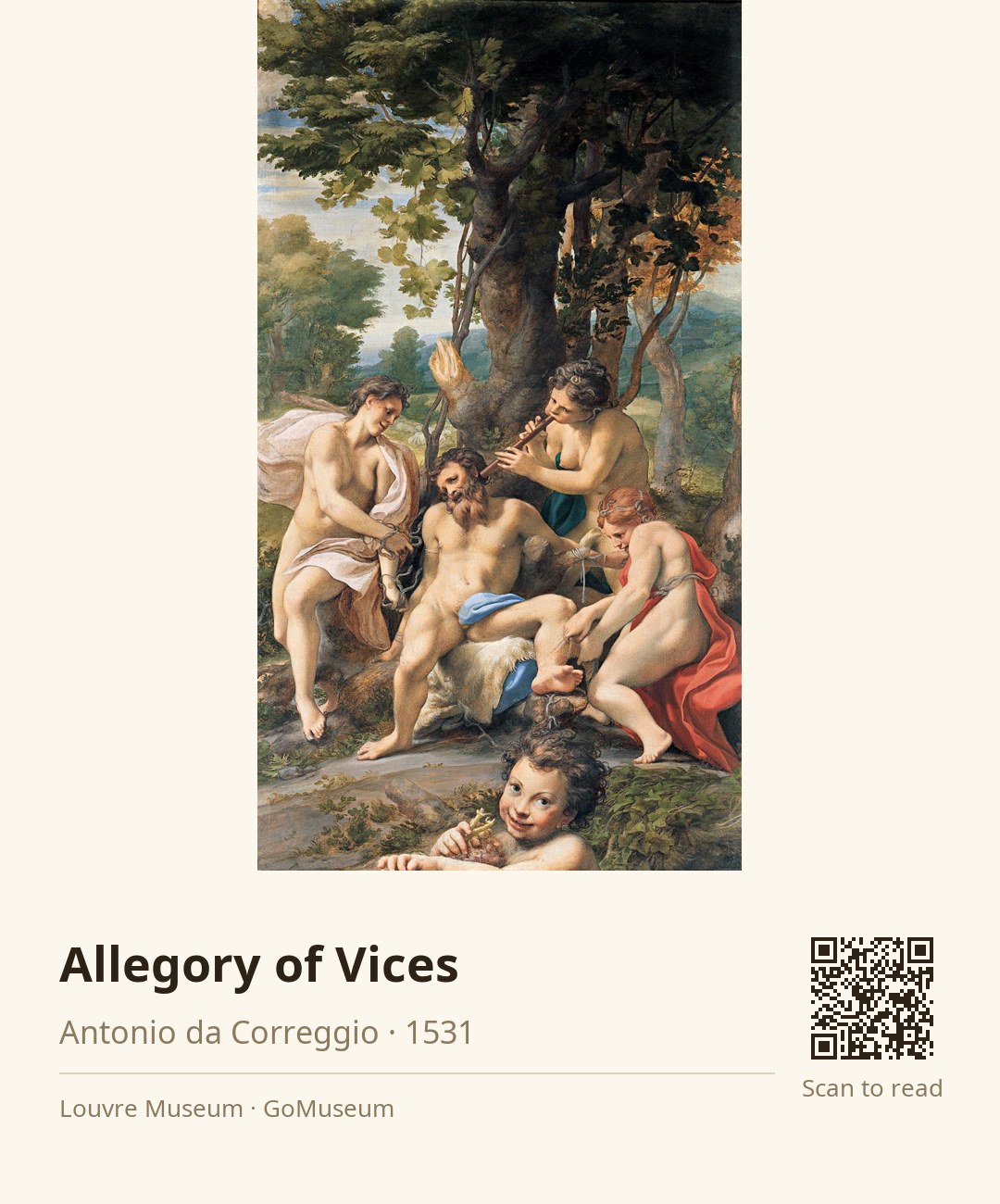
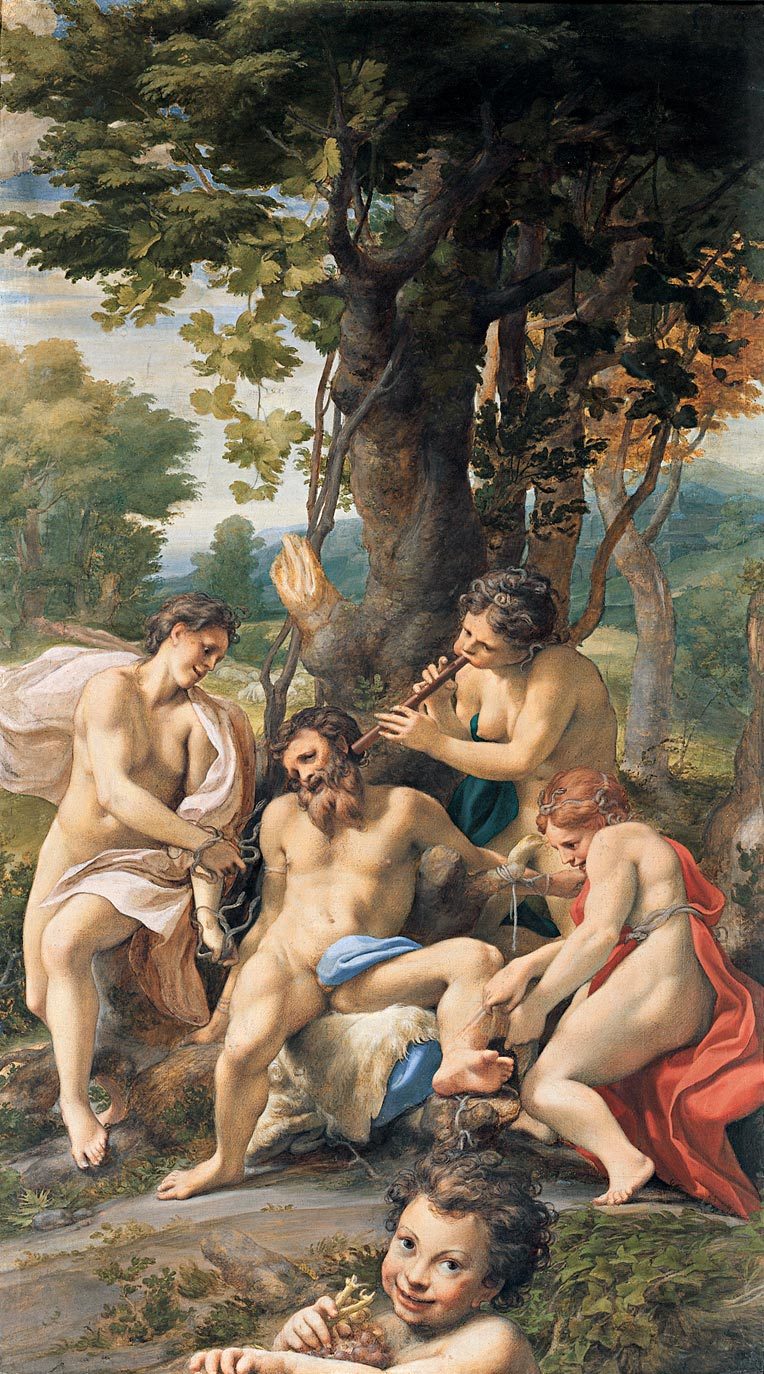
🎧 This work has audio narration — listen in the appTake a moment to really look at "Allegory of Vices" by Correggio. Notice how the central figure, often seen as a personification of Vice, is draped in rich, flowing fabrics that seem to almost come alive. The way the light dances across his form creates a sense of movement, drawing your eye to the intricate details of his expression and posture.
These details matter because they reveal Correggio's mastery of chiaroscuro, the technique of using light and shadow to create depth and emotion. This painting isn't just a depiction of vice; it’s a dynamic exploration of human nature, inviting you to reflect on the complexities of morality.
Created around 1531 for Isabella d'Este's studiolo, this piece was meant to hang alongside its counterpart, "Allegory of Virtue." Together, they offer a dialogue about the dualities of human experience, a theme that resonates through the ages.
As you stand here, consider what vices might look like in your own life. What does this artwork stir within you?
Antonio Allegri da Correggio, known simply as Correggio, was an influential Italian Renaissance painter born around August 1489 in Correggio, Emilia-Romagna. He emerged as a leading figure in the Parma school, celebrated for his dynamic compositions and mastery of chiaroscuro. Little is known about his early life, but he likely received his initial training from his uncle, Lorenzo Allegri, and later apprenticed with Francesco Bianchi Ferrara in Modena.
Correggio's career flourished in Parma, where he created some of his most significant works, including the ceiling frescoes of the Camera di San Paolo and the dome of the Cathedral of Parma. His innovative use of illusionistic perspective and foreshortening prefigured the Baroque style, influencing future generations of artists. His mythological series, particularly the Loves of Jupiter, showcased his ability to blend sensuality with narrative depth.
Despite a relatively short life, ending in 1534, Correggio's contributions to art were profound, establishing him as a precursor to Baroque painting and a master of emotional expression. His legacy endures, with his works continuing to inspire artists and captivate audiences.
This painting was created to complement its counterpart, the 'Allegory of Virtue,' and both were intended to adorn the walls of Isabella's studiolo in Mantua. The two paintings were strategically placed on either side of the door, inviting contemplation on the dualities of human nature. After Isabella's death in 1542, the works were recorded as hanging in the Corte Vecchia. Over the years, the painting changed hands, eventually being sold to Charles I of England, and later to Cardinal Mazarin. It found its way to the Louvre, where it now resides alongside 'Virtue.' The history of this artwork is not just about its creation; it reflects the shifting tides of ownership and appreciation through the centuries, showcasing its enduring relevance and allure.
Correggio's technique in the 'Allegory of Vices' is a masterclass in the use of chiaroscuro, where light and shadow are employed to create a sense of depth and movement. Notice how the rich, flowing fabrics of the central figure seem to ripple with life, enhanced by the delicate handling of tempera on canvas. The choice of tempera, rather than oil, was deliberate, aligning with the existing works of Mantegna and Perugino that adorned Isabella's studiolo. The brushwork feels almost restless, capturing the dynamic energy of the scene. The composition draws your eye diagonally across the canvas, leading you through the intricate details of the figure's expression and posture. The interplay of light creates a three-dimensional effect, making the figure appear to emerge from the background, almost inviting you into the narrative. This technique not only highlights the central figure but also emphasizes the emotional weight of the allegory.
Created around 1531 for Isabella d'Este's studiolo, this work, along with its counterpart 'Allegory of Virtue,' showcases Correggio's masterful use of tempera on canvas, a choice that aligned with the existing artworks of his time. Correggio's dynamic compositions and innovative use of chiaroscuro set the stage for the Baroque movement, inspiring artists like Caravaggio and Rubens. His ability to blend emotional depth with illusionistic techniques transformed the way allegories were perceived, making them not just moral lessons but also engaging visual narratives. Remember, this painting isn't just about vice; it's a bridge to the dramatic flair of Baroque art that would follow.
Did you know that 'Allegory of Vices' was painted as a pair with its counterpart, 'Allegory of Virtue'? These two works were specifically commissioned by Isabella d'Este for her studiolo, a private study where she could escape and indulge in art and intellect. Interestingly, Correggio chose to use tempera instead of oil paint for this piece, aiming to harmonize it with the existing artworks by Mantegna and others already hanging in the room.
The existence of only one surviving sketch for 'Allegory of Vices' suggests that Correggio may have faced challenges during its creation, indicating that it was likely completed after 'Allegory of Virtue,' which has multiple preparatory studies. This reflects his evolving proficiency as an artist.
The central figure of the painting was misidentified as Apollo and Marsyas in a 1542 inventory, which led to confusion and the misattribution of another artwork to Correggio. This highlights the complexities of art history and how misunderstandings can influence the legacy of an artist.
The putto in 'Allegory of Vices' was influenced by Raphael's putti in the Sistine Chapel, showcasing how Correggio absorbed and reinterpreted elements from his contemporaries. This connection illustrates the interplay of artistic ideas during the Renaissance and how they shaped subsequent works.