 Image: Auguste Mariette (1821-1881)
Stela of Pasenhor
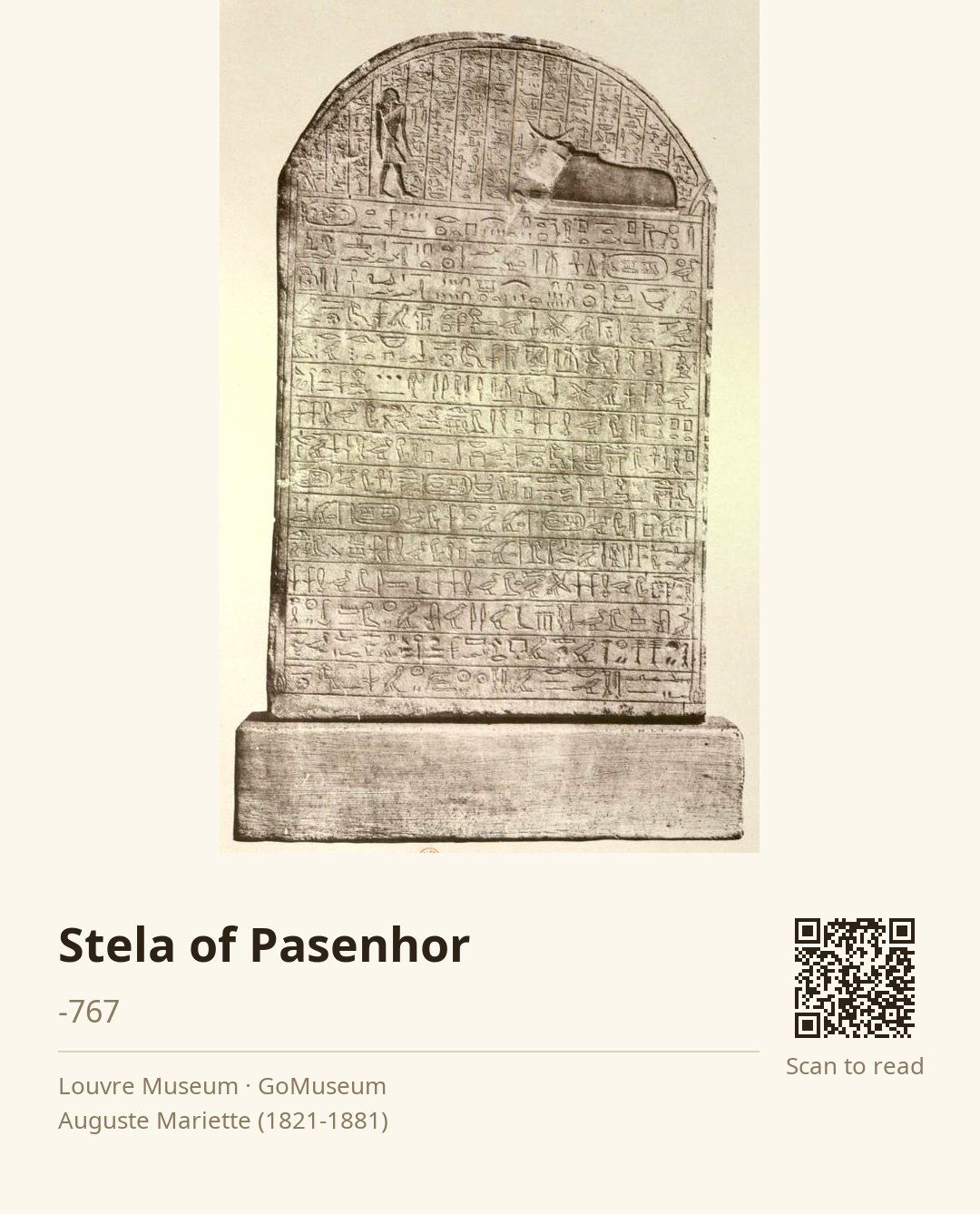
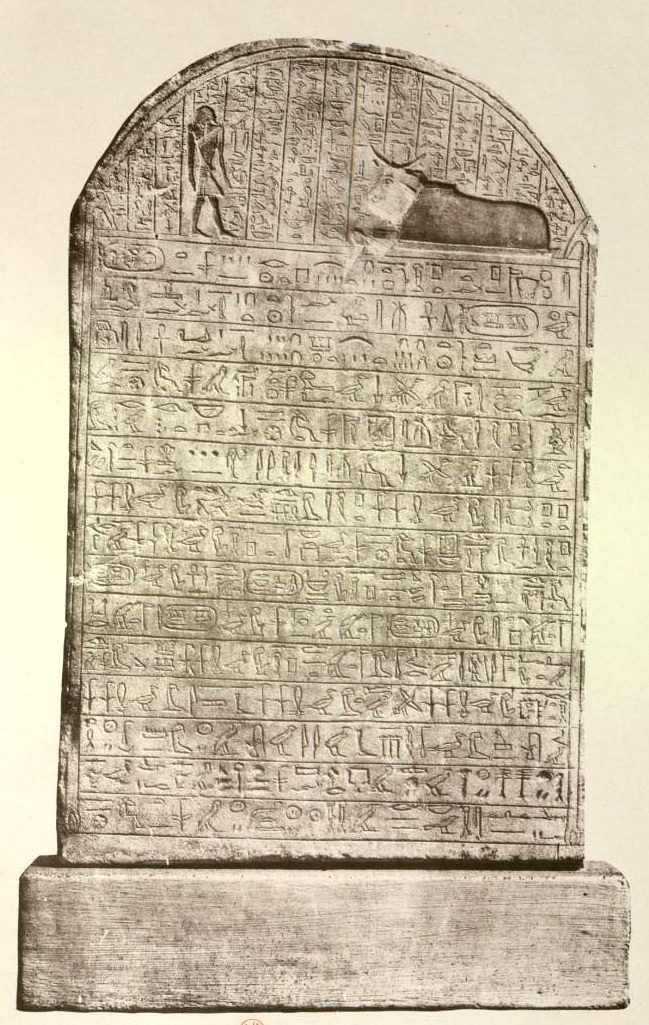
🎧 This work has audio narration — listen in the appTake a moment to really look at the Stela of Pasenhor. Notice how the limestone surface is adorned with intricate carvings, especially the figure of Pasenhor himself, dressed in priestly garb, standing in reverence before the mummified Apis bull. The way he’s positioned, facing the bull, speaks volumes about the deep respect and ritual significance of this moment.
These details matter because they reveal not just a personal tribute but a vital connection to the divine. The Apis bull was considered a living manifestation of the god Ptah, and this stela commemorates its death, marking a significant event in ancient Egyptian religious life. But what’s fascinating is that Pasenhor didn’t just honor the bull; he also inscribed his own genealogy, tracing his lineage back through sixteen generations to royal ancestors. This act was a powerful assertion of his status and connection to the divine.
Created around 767 BCE during the reign of Pharaoh Shoshenq V, this stela was found in the Serapeum of Saqqara, a sacred burial ground for these revered bulls. It’s a window into the past, showing us how intertwined religion, politics, and family lineage were in ancient Egypt.
As you stand here, think about the legacy of Pasenhor. What stories might his ancestors have told? What would it have been like to be part of such a lineage? Let your imagination wander through the ages.
Discovered on February 26, 1852, by the French archaeologist Auguste Mariette in the Serapeum of Saqqara, this limestone stela was later moved to The Louvre, where it remains today. Its creation was prompted by the death of an Apis bull, a sacred creature in Egyptian culture, and it served to commemorate this event. This stela not only honors the deceased bull but also provides invaluable insights into the lineage of Pasenhor, revealing connections to the royal family and shedding light on the history of the 22nd Dynasty. The stela's dual purpose—both as a memorial and a record of ancestry—highlights the intertwining of religious and familial significance in ancient Egyptian society.
By inscribing his genealogy, Pasenhor not only honored the deceased Apis bull but also asserted his own noble heritage, connecting himself to the royal bloodline of the 22nd Dynasty. This act of self-affirmation through lineage was significant in a culture where ancestry could dictate one's status and influence. The stela thus serves as a historical document, shedding light on the royal connections and the socio-political landscape of the time, influencing how future generations viewed their own heritage and the importance of genealogy in maintaining power.
One intriguing aspect of the Stela of Pasenhor is its dual purpose: while it commemorates the Apis bull, it also serves as a genealogical record. Such details enrich our understanding of the social fabric of ancient Egypt.
The Serapeum of Saqqara was a sacred burial ground specifically for the revered Apis bulls, which were considered manifestations of the god Ptah. This site not only served as a necropolis but also as a center for religious rituals and ceremonies related to the worship of these sacred animals.
The stela provides a rare glimpse into the genealogy of Pasenhor, tracing his lineage back through sixteen generations to royal ancestors, which helps historians piece together the complex family ties within the 22nd Dynasty. This information is crucial for understanding the political and social dynamics of the time.