Portrait of Madame de Verninac
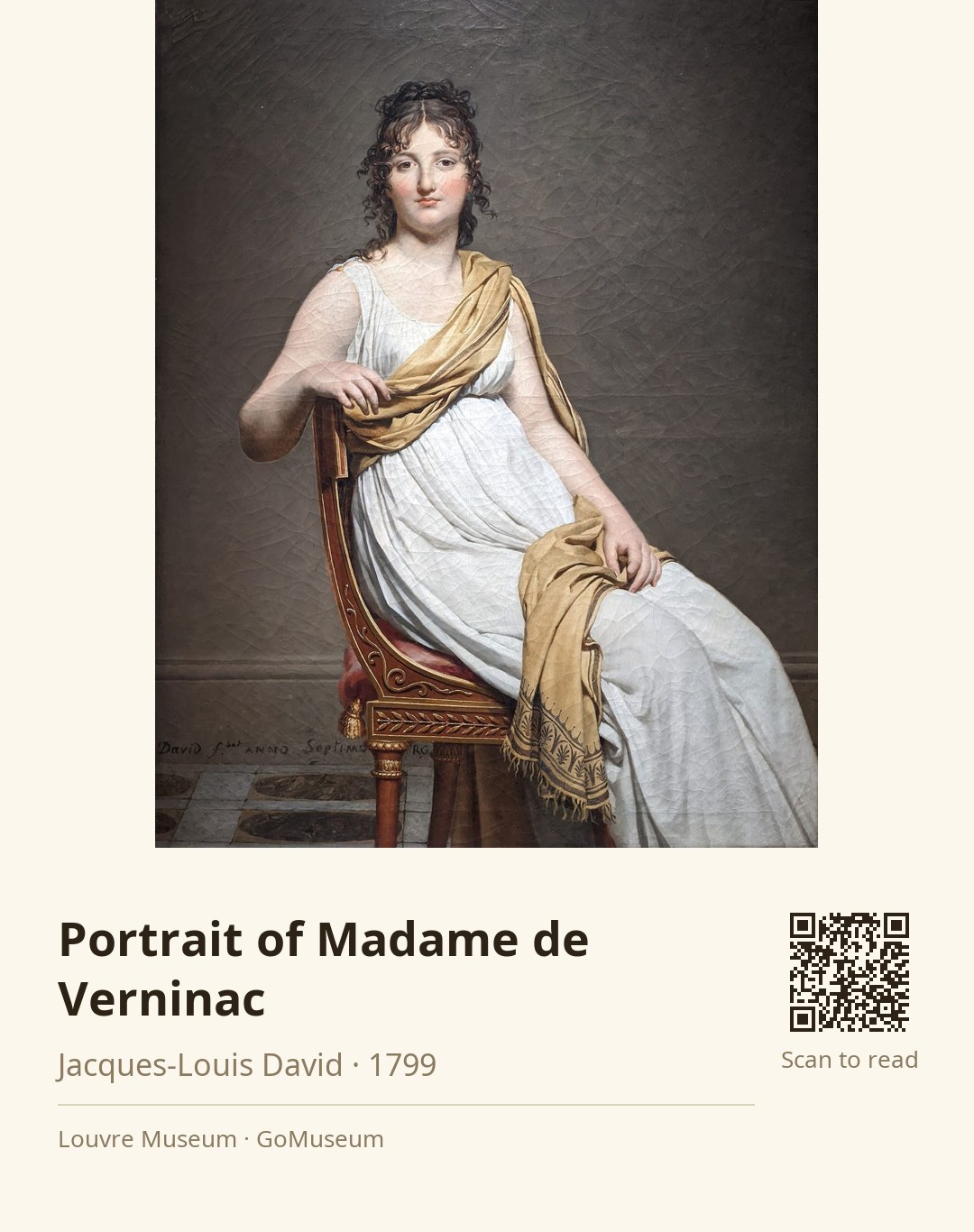
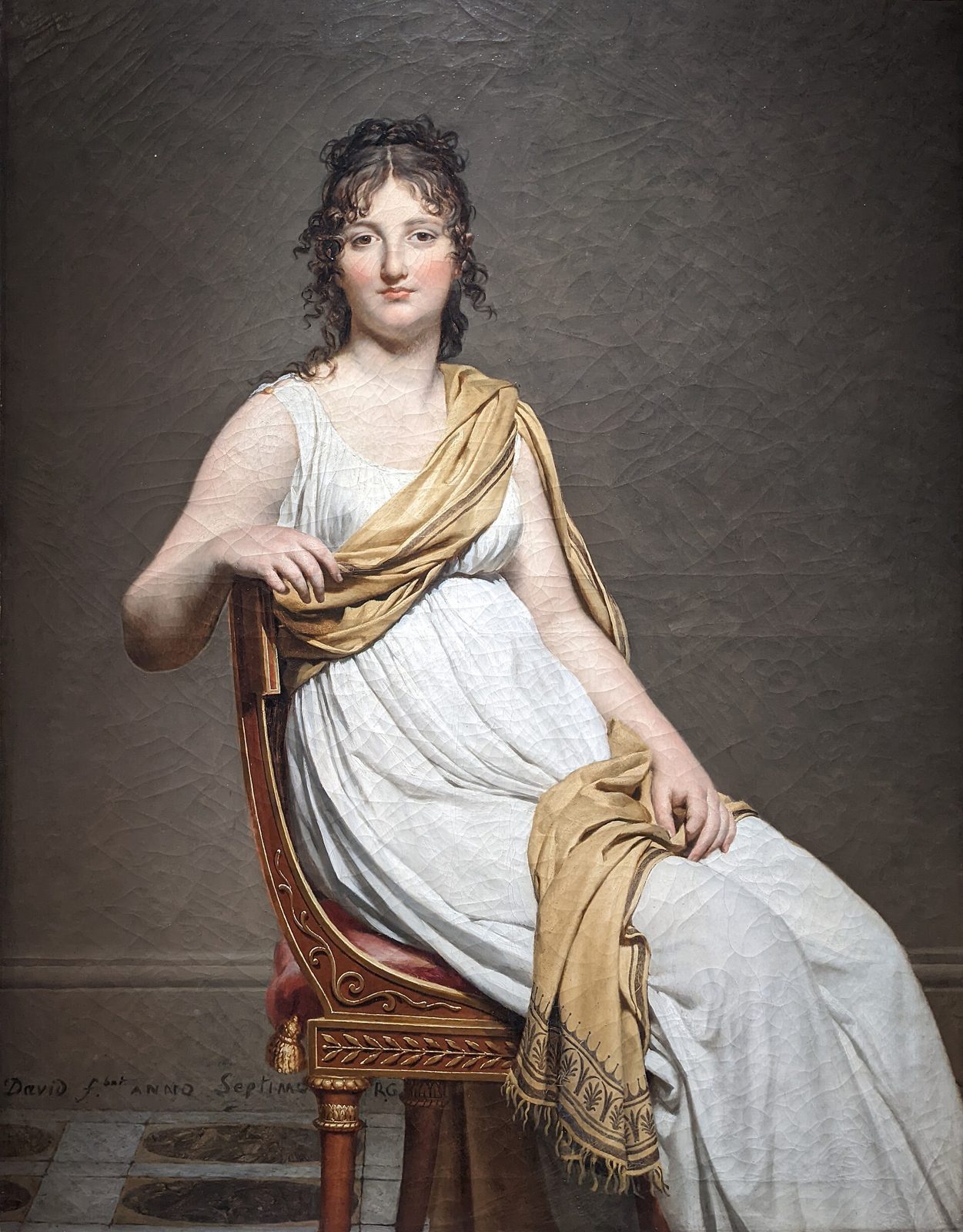
🎧 This work has audio narration — listen in the appAs you stand before Jacques-Louis David's "Portrait of Madame de Verninac," take a moment to really look at her. Notice how her confident posture and serene expression draw you in, almost as if she’s inviting you into her world. Look closely at the elegant drapery of her white gown, which echoes the classical ideals of beauty and grace, reminiscent of ancient sculptures.
These details matter because they reflect not just her status as the wife of a diplomat, but also the Neoclassical movement that David championed, emphasizing virtue, strength, and the beauty of the human form. At just nineteen, Henriette de Verninac embodies these ideals, standing as a symbol of the new French Republic's aspirations after the Revolution.
David painted this portrait in 1799, a time when France was in turmoil yet also seeking to redefine itself through art. His choice to depict her in such a dignified manner speaks volumes about the role of women in this transformative period.
As you take in this masterpiece, think about how art can capture not just a moment in time, but the very essence of a society. What do you think Henriette's expression reveals about her life and the era she lived in?
Jacques-Louis David was a pivotal French painter born on August 30, 1748, in Paris. He emerged as the leading figure of the Neoclassical movement, marking a significant shift in artistic taste from the frivolity of Rococo to a more austere and emotionally charged classical style. His early life was marked by personal tragedy, losing his father at a young age, which shaped his character and determination to pursue art against familial expectations.
David's career flourished during the tumultuous political landscape of France, where he became an ardent supporter of the French Revolution, aligning himself with figures like Robespierre. His political engagement influenced his art, producing iconic works such as "The Death of Marat" and "The Coronation of Napoleon," which reflect both historical narratives and his personal convictions. After the fall of Napoleon, David faced exile but continued to influence generations of artists, establishing a legacy that shaped academic painting in the early 19th century. His works remain celebrated in major museums, particularly the Louvre, solidifying his status as a cornerstone of Western art history. David's life and art were inextricably linked to the evolving identity of France, embodying the spirit of revolution and the quest for artistic integrity.
Commissioned by Raymond de Verninac shortly after his marriage to Henriette Delacroix, the painting captures her at just nineteen years old. David, a leading figure in the Neoclassical movement, portrayed her with a striking confidence, reminiscent of classical ideals. After Henriette's death in 1827, the painting passed through several hands, including her son Charles and the famous artist Eugène Delacroix, her brother. It eventually found its way to the Louvre in Paris, where it was officially acquired in 1942. Today, it stands as a testament to both David's artistry and the intricate stories of its subjects.
David's technique in 'Portrait of Madame de Verninac' is strikingly meticulous. The brushwork feels both confident and delicate, capturing the soft texture of Henriette's gown while maintaining the sharpness of her features. Notice how the light falls on her face, creating a serene glow that enhances her dignified presence. The composition is carefully structured; Henriette is seated slightly turned, which adds a dynamic quality to the portrait. The background is intentionally subdued, allowing her figure to dominate the canvas. The use of color is also significant—her white dress symbolizes purity and virtue, while the rich red drapery of the chair adds a touch of warmth and intimacy, inviting you into her world.
This painting not only showcases David's mastery in portraying the human figure with classical dignity but also set a precedent for future portraiture. Influencing artists like François Gérard and Ingres, David's work emphasized a return to simplicity and moral seriousness in art, steering away from the frivolity of the Rococo style. The assured posture of Henriette de Verninac, inspired by classical sculptures, reflects a new ideal of femininity that resonated through the 19th century. Remember, this painting is more than just a portrait; it's a bridge between the past and the evolving ideals of modern art.
Henriette de Verninac was the daughter of Charles-François Delacroix, the French Revolutionary Foreign Minister, and the elder sister of the famous artist Eugène Delacroix, linking her to significant cultural and political figures of her time.
After Henriette's death, the portrait was passed down to her son Charles, who had to pawn it due to financial difficulties. It was later recovered by Eugène Delacroix and eventually donated to the Louvre in 1942.
The pose of Henriette de Verninac inspired other artists, such as François Gérard and Ingres, who adopted similar postures in their own portraits, showcasing David's lasting impact on the Neoclassical style.