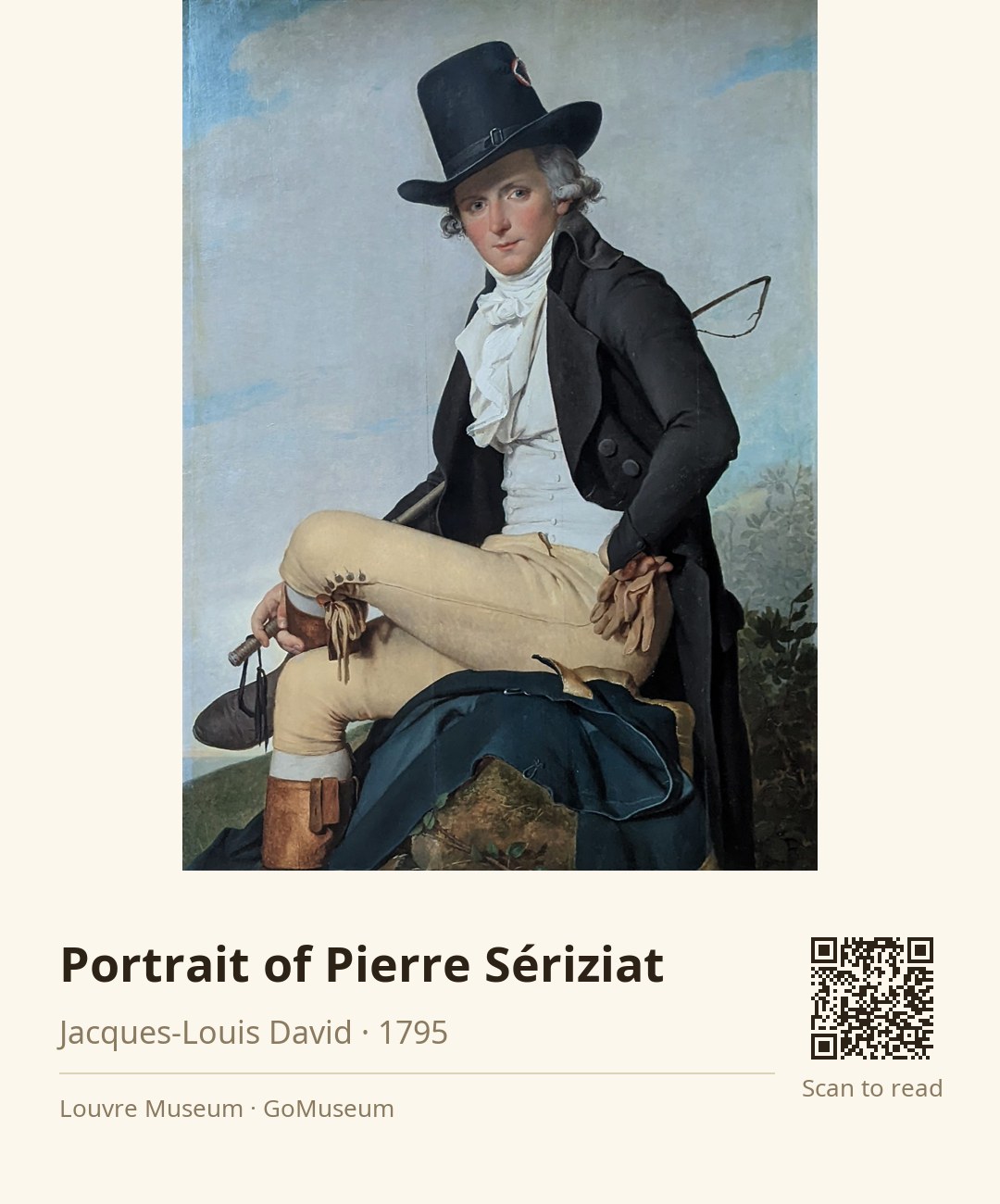
Portrait of Pierre Sériziat
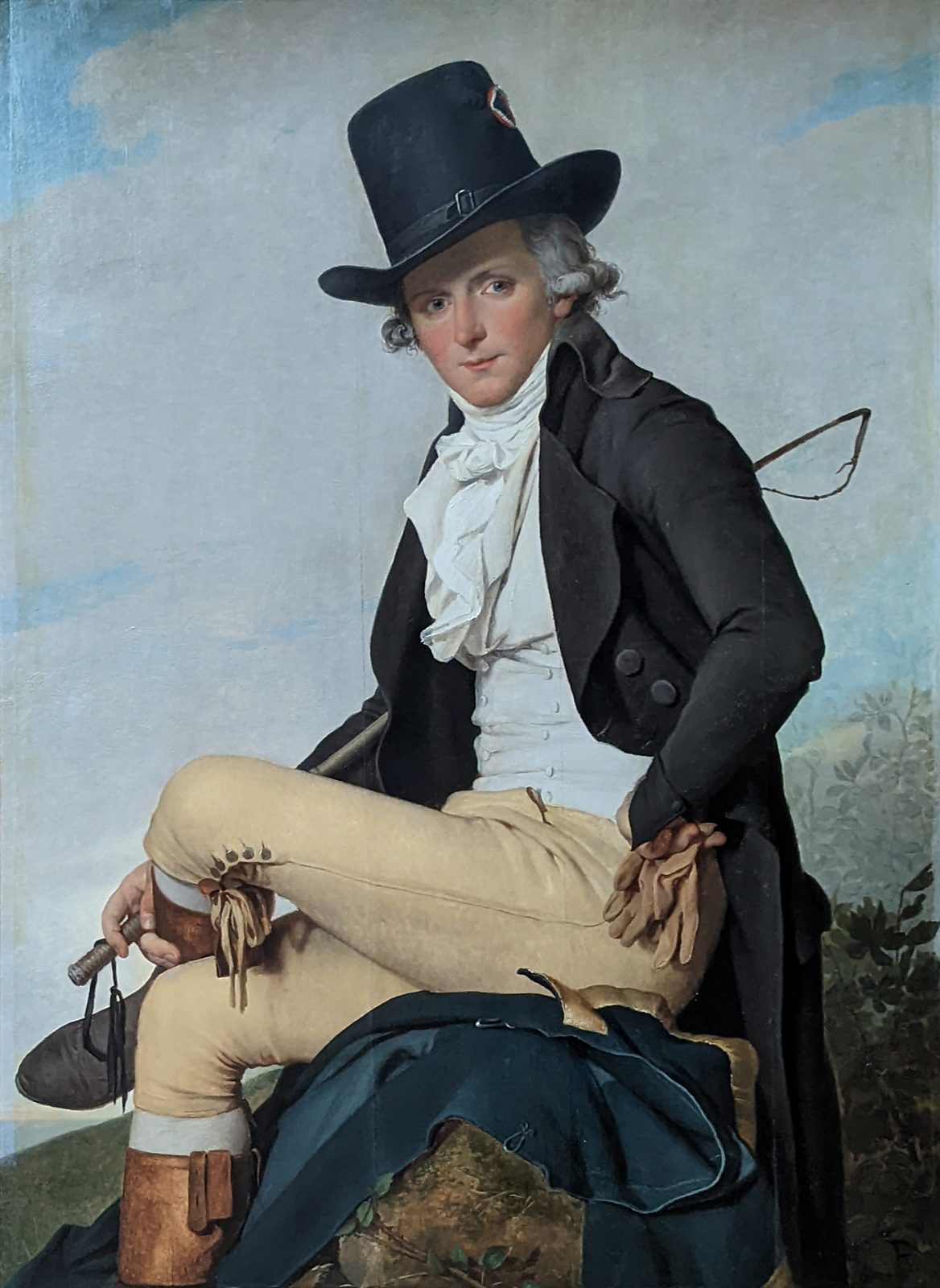
🎧 This work has audio narration — listen in the appTake a moment to really look at Jacques-Louis David's "Portrait of Pierre Sériziat." Notice how Sériziat is seated on that rocky outcrop, his posture relaxed yet confident, dressed in a striking English-style outfit. The way his redingote is tailored, with those sharply buttoned sleeves, speaks volumes about his status and the fashion of the time.
These details matter because they reveal not just the elegance of the subject but also the shifting cultural tides in post-revolutionary France. David painted this portrait in 1795, a time when the country was grappling with its identity after the upheaval of the Revolution. The choice of attire reflects a move towards simplicity and comfort, a stark contrast to the opulence of the Ancien Régime.
David, a key figure in the Neoclassical movement, was also deeply intertwined with the political landscape of his day. He painted this piece during a tumultuous period in his life, having just been released from prison after supporting Robespierre. This portrait is not just a likeness; it’s a statement of resilience and adaptation.
As you stand here, think about Sériziat’s gaze. What do you think he was contemplating in that moment? What stories might he have shared with David as he posed for this striking image?
Jacques-Louis David was a pivotal French painter born on August 30, 1748, in Paris. He emerged as the leading figure of the Neoclassical movement, marking a significant shift in artistic taste from the frivolity of Rococo to a more austere and emotionally charged classical style. His early life was marked by personal tragedy, losing his father at a young age, which shaped his character and determination to pursue art against familial expectations.
David's career flourished during the tumultuous political landscape of France, where he became an ardent supporter of the French Revolution, aligning himself with figures like Robespierre. His political engagement influenced his art, producing iconic works such as "The Death of Marat" and "The Coronation of Napoleon," which reflect both historical narratives and his personal convictions. After the fall of Napoleon, David faced exile but continued to influence generations of artists, establishing a legacy that shaped academic painting in the early 19th century. His works remain celebrated in major museums, particularly the Louvre, solidifying his status as a cornerstone of Western art history. David's life and art were inextricably linked to the evolving identity of France, embodying the spirit of revolution and the quest for artistic integrity.
Jacques-Louis David's 'Portrait of Pierre Sériziat' was painted in 1795, during a pivotal moment in French history. Commissioned by Sériziat himself, this portrait was part of a pair that included a companion piece of his wife, Emilie, who was also David's sister-in-law. Both portraits were showcased at the Salon de peinture in the same year, where they were likely met with a mix of admiration and scrutiny, reflecting the changing tastes of post-revolutionary France. The paintings are now housed in the Louvre, a testament to their enduring significance. David, fresh from imprisonment due to his political affiliations, found refuge with Sériziat, which underscores the personal connections that often influenced his work. This portrait is not merely a depiction; it encapsulates a moment of resilience in David's life and the broader cultural shifts of the time.
As you gaze at 'Portrait of Pierre Sériziat,' pay attention to the brushwork and the way David captures light. The outdoor setting, with its cloudy sky, creates a dramatic backdrop that enhances Sériziat's presence. Notice how the textured strokes of the rocky outcrop contrast with the smoothness of his tailored attire. David's choice of a muted color palette, punctuated by the rich reds and whites of Sériziat's clothing, draws your eye to the subject, emphasizing his status and confidence. The composition is carefully structured, with Sériziat's relaxed posture suggesting both ease and authority. The balance between the figure and the landscape creates a sense of harmony, inviting you to ponder the relationship between the man and his environment. This meticulous handling of paint and form is what makes the portrait feel alive, almost as if Sériziat might speak to you.
Painted in 1795, it reflects a shift towards a more austere and dignified representation of subjects, moving away from the frivolity of Rococo. This portrait, alongside its companion piece of Sériziat's wife, showcases the intimate connection between the artist and his patrons, revealing the personal relationships that often underpin great art. Remember, this painting isn't just about a man in a fine outfit; it's a statement about identity, social status, and the changing tides of artistic expression in a revolutionary era.