Portrait of Louis XIV
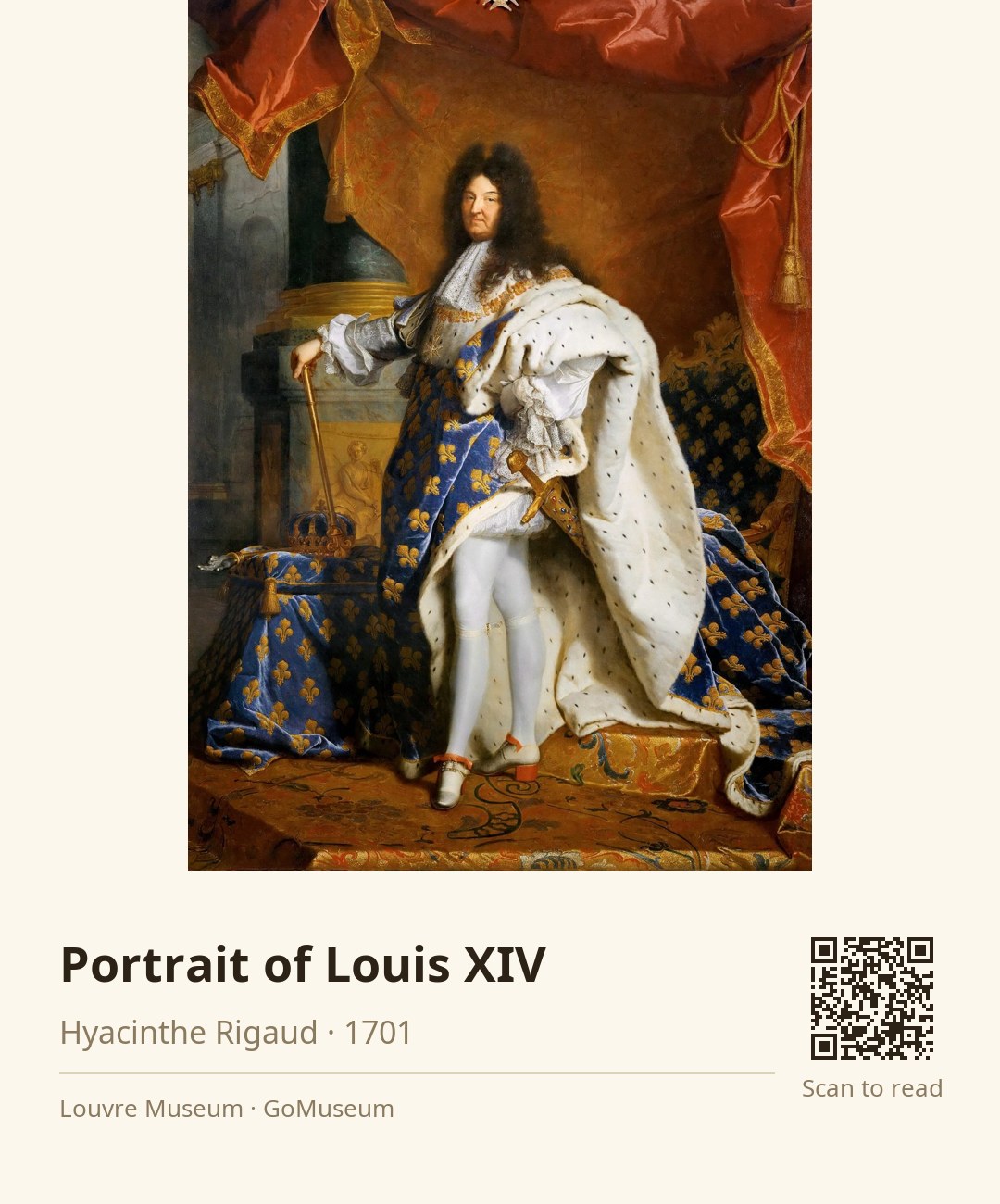
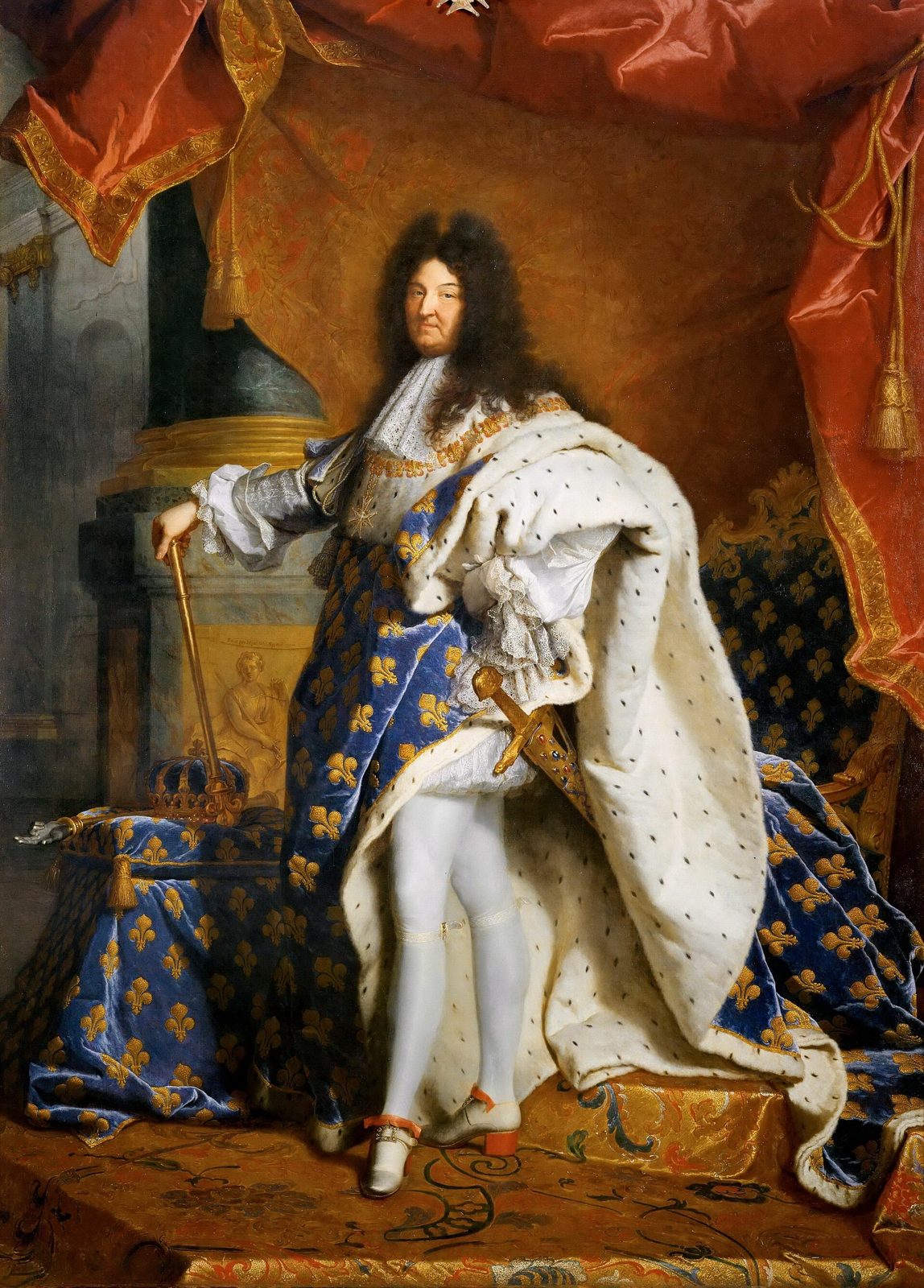
🎧 This work has audio narration — listen in the appTake a moment to really look at this magnificent portrait of Louis XIV by Hyacinthe Rigaud. Notice the way the king stands, draped in his grand coronation robes, exuding an undeniable aura of authority. The intricate details of the fabric, the rich golds and deep reds, almost seem to shimmer, don’t they?
These details matter because they reflect not just the king’s wealth, but also the power and prestige of the French monarchy at the time. Painted in 1701, this portrait was commissioned to convey the absolute image of royal power, especially to Philip V of Spain, Louis's grandson. It’s more than just a likeness; it’s a statement of dominance and grandeur, meant to inspire awe both at home and abroad.
Rigaud was known for his ability to capture the essence of his subjects, and this painting became the definitive representation of Louis XIV, who ruled for over 70 years. The king kept this portrait in Versailles, where it became a symbol of his reign and the opulence of the French court.
As you stand here, think about how this portrait not only immortalizes Louis XIV but also shaped the way future generations viewed monarchy. What do you think it says about power and legacy?
Hyacinthe Rigaud, born Jacint Rigau-Ros i Serra in Perpignan on July 18, 1659, was a prominent Catalan-French Baroque painter renowned for his striking portraits, particularly of Louis XIV and the French nobility. His family's artistic lineage, rooted in tailoring and gilding, influenced his early exposure to art. Trained under Antoine Ranc in Montpellier, Rigaud honed his skills, absorbing the techniques of Flemish and Italian masters like Rubens and Titian.
After moving to Paris in 1681, he quickly gained recognition, winning the prestigious prix de Rome in 1682, though he never traveled to Italy. By 1710, he was a member of the Académie royale de peinture et de sculpture, where he eventually became a leading figure. Rigaud's portraits are celebrated for their meticulous detail and accuracy, capturing not just the likenesses but also the fashion and status of his subjects, creating a visual record of the era.
His legacy endures as he painted over a thousand portraits, leaving behind a gallery of influential figures from the late 17th to early 18th centuries. Rigaud's work remains essential to understanding the grandeur of the French monarchy and the artistic achievements of the Baroque period. He passed away in Paris on December 29, 1743, leaving a lasting impact on portraiture and art history.
The portrait of Louis XIV, painted by Hyacinthe Rigaud in 1701, was commissioned by the king himself to fulfill a request from his grandson, Philip V of Spain. This request came in the wake of the death of Charles II of Spain, which sparked a succession crisis in Europe. Louis XIV wanted to provide Philip with a powerful image of his royal lineage as he prepared to ascend the Spanish throne. The painting was created during a time when the king was suffering from gout, which made the lengthy sittings a challenge. Despite this, Rigaud's skill captured not only the likeness of Louis XIV but also the grandeur of his royal attire. The portrait was displayed prominently in Versailles, where it garnered widespread admiration from the court and became the definitive representation of the king. Interestingly, the original portrait was never sent to Spain; instead, Rigaud was commissioned to create a copy for Philip V, which speaks to the importance of this work in royal diplomacy and family legacy.
As you gaze at this portrait, take a moment to appreciate the meticulous brushwork that Rigaud employed. The artist used a technique that combined fine, delicate strokes with bold, sweeping gestures, creating a dynamic texture that brings the fabric of the king's robes to life. Notice how the rich reds and golds seem to shimmer under the light, a result of Rigaud's expert handling of color and light. The composition is grand and imposing, with Louis XIV standing tall and proud, his posture exuding authority. The scale of the painting, nearly ten and a half feet high, amplifies the king's presence, making him appear almost larger than life. The careful arrangement of elements, from the intricate details of the crown to the flowing drapery of the robes, draws your eye across the canvas, inviting you to explore every facet of the king's royal attire. This is not just a portrait; it's a masterclass in how to convey power and prestige through paint.
Commissioned by Louis XIV himself, this work set a new standard for how monarchs were depicted, blending grandeur with an intimate likeness that resonated through generations. The king wanted a powerful image to send to his grandson, Philip V of Spain, and Rigaud delivered a masterpiece that became the archetype of royal representation. Its influence is palpable, inspiring countless portraits of rulers and nobility across Europe. The way Rigaud captured the king's opulence and authority not only immortalized Louis XIV but also solidified the role of portraiture as a tool of political power and personal legacy. Remember, this isn't just a portrait; it's a declaration of royal supremacy that shaped the visual language of monarchy for years to come.
One intriguing detail about the creation of this portrait is that it was painted during a time when Louis XIV was suffering from gout, a condition that made it difficult for him to sit for long periods. To accommodate the king's discomfort, Rigaud had to work quickly and efficiently, often painting in short sessions. This urgency adds a layer of complexity to the portrait, as it captures a moment of both vulnerability and strength in the king's life.
Rigaud had to contend with the king's gout, which made it difficult for Louis XIV to sit for long periods. This condition forced the artist to work quickly and in shorter sessions, adding a sense of urgency to the creation of the portrait.
The portrait received widespread admiration from the French court, with many praising its beauty and the accuracy of the likeness, establishing it as a definitive representation of the king that would influence perceptions of monarchy for generations.