 Image: Unknown authorUnknown author
Anjou Legendarium
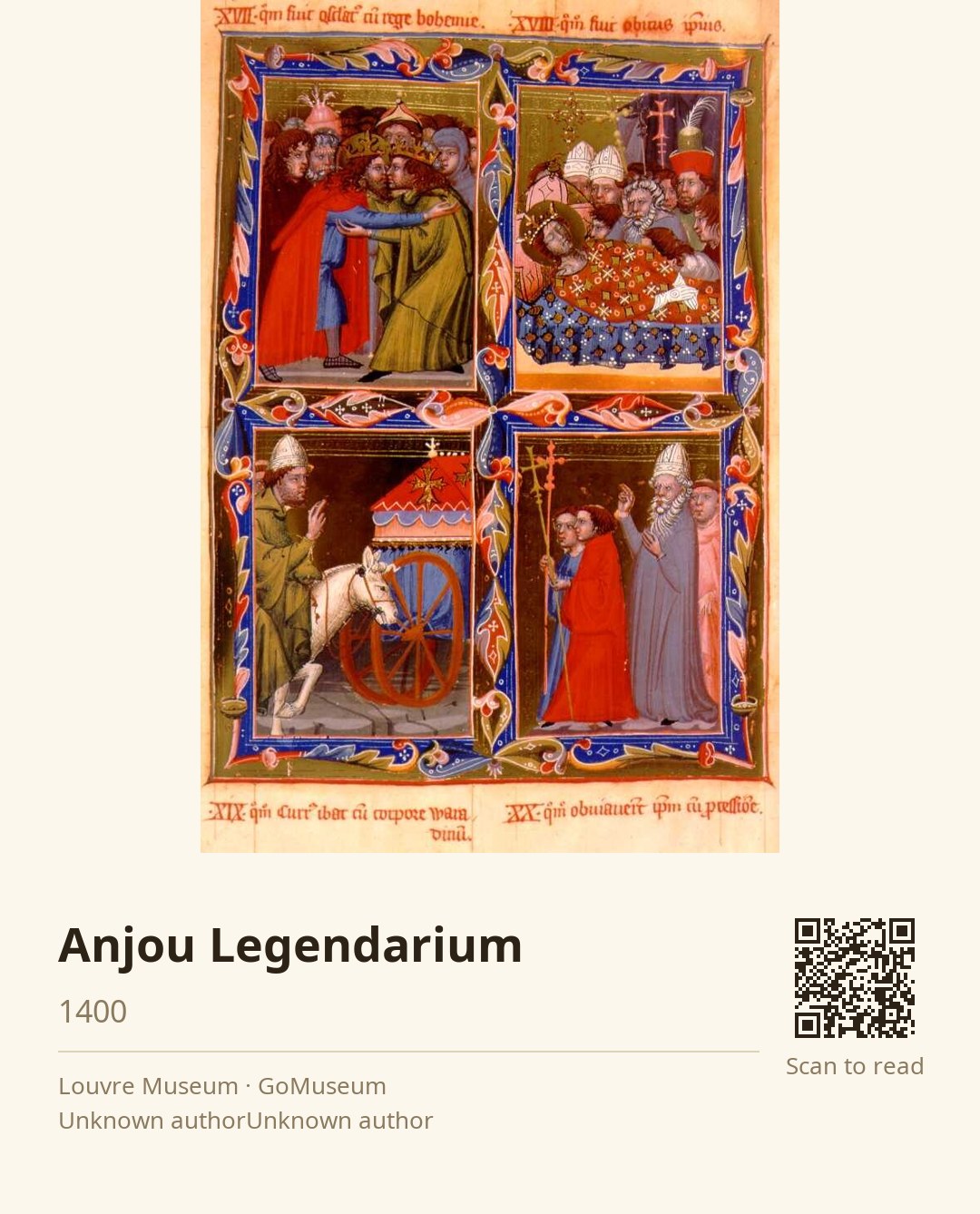
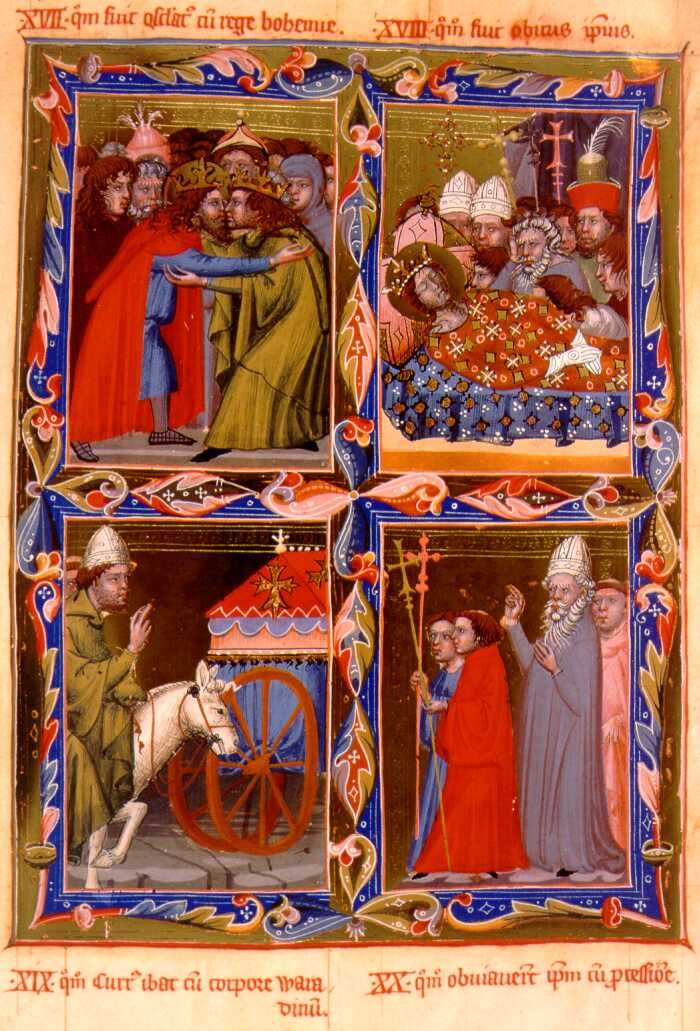
🎧 This work has audio narration — listen in the appTake a moment to really look at the Anjou Legendarium. Notice the vibrant colors and intricate details in the illustrations. Each image is a window into a world where saints come to life, their stories bursting with adventure and moral lessons. Look closely at the expressions on their faces; they convey a sense of hope and divine purpose that was meant to inspire young readers.
This manuscript wasn’t just a book; it was a tool for teaching children about faith and virtue through captivating stories. The artists, hailing from Bologna, infused their work with the trecento style, making these illustrations not only educational but also visually stunning.
Created around 1400, the Anjou Legendarium was likely commissioned for a royal audience, possibly Charles I of Hungary and his son. It’s fascinating to think about how this manuscript traveled through time, ending up in various prestigious libraries around the world.
As you stand here, consider what stories resonate with you today. What lessons from the past do you carry into your own life?
Created around 1400, it is believed to have been commissioned for a royal audience, possibly Charles I of Hungary and his son, Prince Andrew. The manuscript was crafted by a team of artists from Bologna, who infused their work with the trecento style, making it visually captivating. Over time, this manuscript has traveled through various prestigious libraries, including the Vatican Library and the Morgan Library. The exact origins and the specific patrons remain unclear, adding an air of intrigue to its legacy.
One surprising aspect of the Anjou Legendarium is its dispersion across several major libraries today. While it was once a singular manuscript, it now exists in fragments, with portions found in the Vatican Library, the Morgan Library, and even the Hermitage Museum. This scattering of its pages adds an element of mystery to its history, as each fragment tells a part of the larger story, inviting viewers to ponder the manuscript's journey through time and space.
The illustrations reflect a blend of Gothic and trecento styles, showcasing the influence of both Italian and Hungarian artistic traditions. This fusion highlights the cultural exchanges occurring in medieval Europe, particularly in the realm of manuscript illumination.