The Charging Chasseur
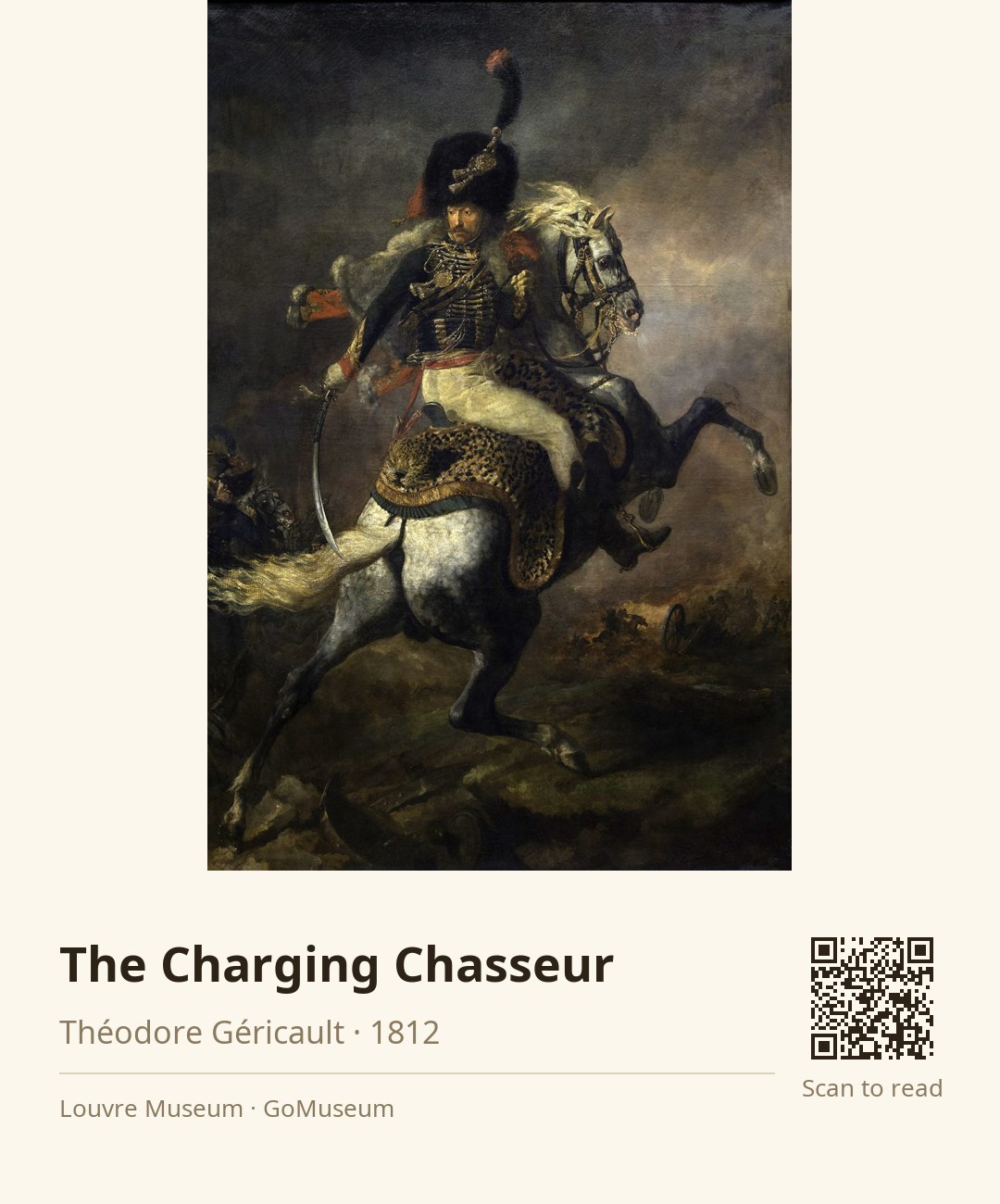
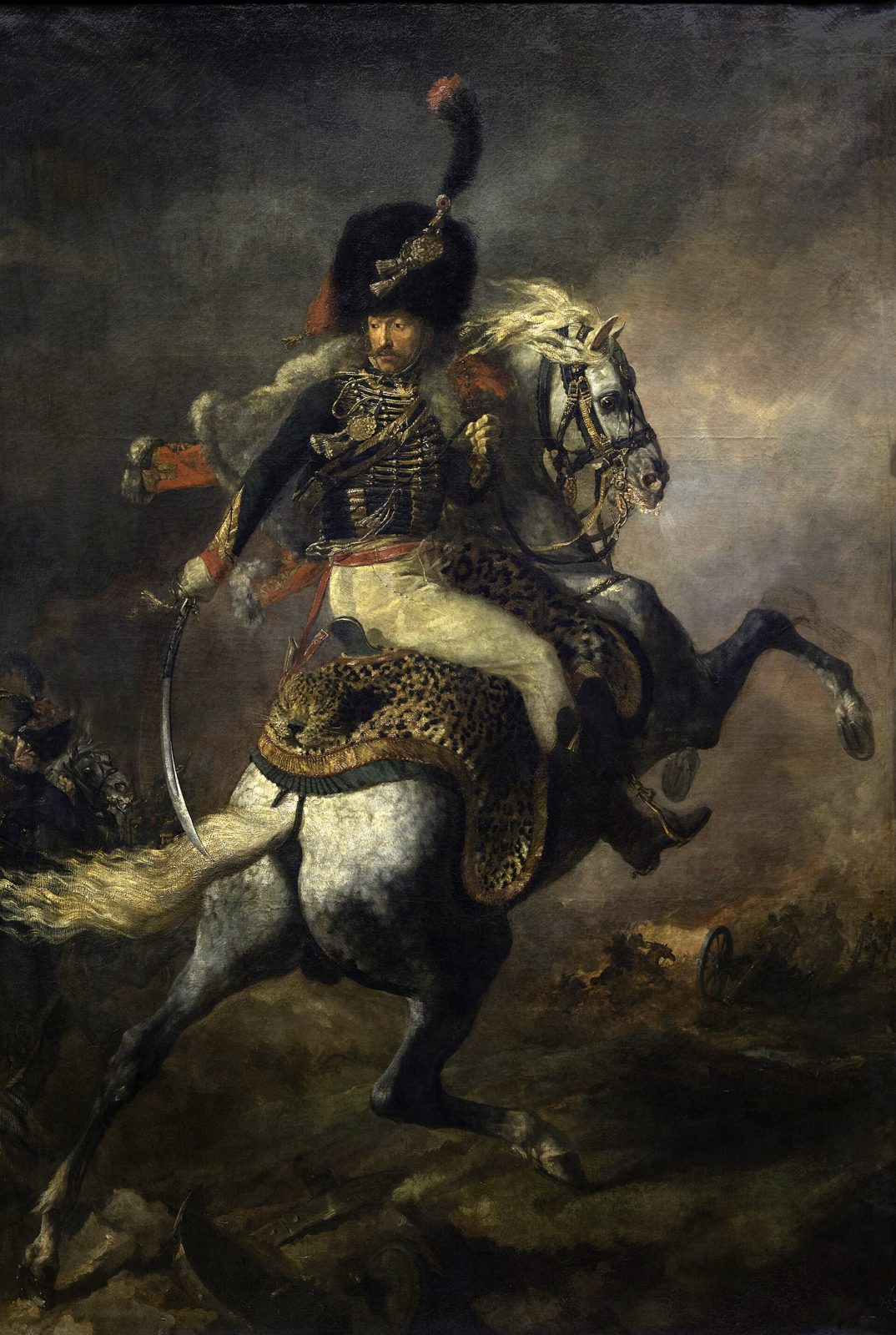
🎧 This work has audio narration — listen in the appTake a moment to really absorb the energy in Théodore Géricault's "The Charging Chasseur." Look closely at the officer on the rearing horse—can you feel the tension in that moment? Notice how the horse's muscles ripple, every sinew taut as it prepares to leap into action. The officer's expression is fierce, embodying both bravery and urgency, as if he’s charging straight out of the canvas.
These details matter because they capture the very essence of Romanticism, a movement that sought to convey emotion and dynamism over classical restraint. Géricault’s vigorous brushwork and dramatic diagonal composition pull you into the chaos of battle, making you feel the adrenaline of the charge. This was Géricault's first major work, and it set the stage for his exploration of movement and emotion in art.
Created in 1812, during a time when France was embroiled in Napoleonic wars, this painting reflects not just a moment in history but also Géricault's fascination with horses and military life. His passion for capturing the raw power of the horse, almost as if it were a character in its own right, speaks to his deep understanding of anatomy and movement.
As you stand here, consider this: what emotions does this scene evoke in you? Are you inspired by the bravery, or perhaps overwhelmed by the chaos? Let that feeling linger as you move on.
Jean-Louis André Théodore Géricault was a French painter and lithographer born on September 26, 1791, in Rouen. He moved to Paris as a child, where his artistic talent was nurtured by family connections in the art world. Géricault's life was marked by a passionate pursuit of art, characterized by a fascination with the human condition and dramatic themes. His early works, influenced by the classical tradition, evolved into a distinctive style that bridged Neoclassicism and Romanticism.
Géricault's most renowned painting, The Raft of the Medusa, created between 1818 and 1819, reflects his deep engagement with contemporary issues, depicting the aftermath of a tragic shipwreck that became a national scandal. This monumental work showcased his ability to convey intense emotion and the struggle against nature, establishing him as a pioneer of the Romantic movement. Despite his brief life—he died at just 32—Géricault's innovative approach and exploration of human suffering left a lasting impact on the art world, influencing future generations of artists. His legacy endures, celebrated for its emotional depth and dramatic intensity.
Géricault's 'The Charging Chasseur' was first exhibited at the Salon of 1812, where it quickly garnered attention and praise, earning the artist a medal from Dominique Vivant Denon, the director of the Louvre. This was a pivotal moment for Géricault, marking his emergence as a significant figure in the Romantic movement. The painting was shown again at the Salon of 1814, further solidifying its reputation. Over the years, it has remained a staple of French Romanticism and is now housed in the Louvre, where it continues to draw viewers into its dynamic portrayal of military life. Interestingly, the painting underwent several title changes, initially called 'Portrait du lieutenant M.D.' before settling on its current name. Géricault completed this work in just five weeks, showcasing his remarkable skill and dedication to capturing the essence of the moment.
As you gaze at 'The Charging Chasseur,' pay attention to Géricault's masterful brushwork. The vigorous strokes create a sense of movement, almost as if the officer and horse are about to leap off the canvas. The dramatic diagonal composition draws your eye across the painting, emphasizing the tension of the charge. Notice how the horse's powerful muscles are rendered with a mix of light and shadow, giving it a three-dimensional quality that feels alive. The background, with its blurred colors, adds to the chaos of battle, enhancing the emotional intensity of the scene. Géricault's choice to depict the horse and rider in such a dynamic pose reflects his deep understanding of anatomy and movement, a skill honed from years of studying horses in action.
Théodore Géricault's 'The Charging Chasseur' is a pivotal work that marks a significant departure from the rigid structures of Neoclassicism, embracing the emotional intensity of Romanticism. This painting not only showcases Géricault's fascination with movement and drama but also influenced a generation of artists who sought to capture the raw energy of their subjects. Its dynamic composition and vigorous brushwork paved the way for future explorations in genre art and equestrian portraits, inspiring artists like Kehinde Wiley, who reinterpreted this iconic image in contemporary contexts. Remember, this piece is more than just a depiction of a soldier; it’s a bold statement about the power of emotion in art, forever changing how we view the relationship between man, horse, and the chaos of battle.
One fascinating tidbit about 'The Charging Chasseur' is that Géricault was so passionate about horses that he spent time at the stables of Versailles, studying their anatomy and movement. This intimate connection with his subject matter allowed him to portray the horse almost as a character in its own right, reflecting his deep admiration for these magnificent animals.
The painting was initially titled 'Portrait du lieutenant M.D.' before it was renamed to its current title, reflecting Géricault's evolving vision for the work.
Géricault spent significant time at the stables of Versailles, which allowed him to study horses in action and understand their anatomy, greatly enhancing the realism and dynamism of the horse depicted in 'The Charging Chasseur'.
The painting inspired American artist Kehinde Wiley, who reimagined it in his 2007 work 'Officer of the Hussars', showcasing a contemporary reinterpretation of Géricault's themes with a modern subject.