Combat of Love and Chastity
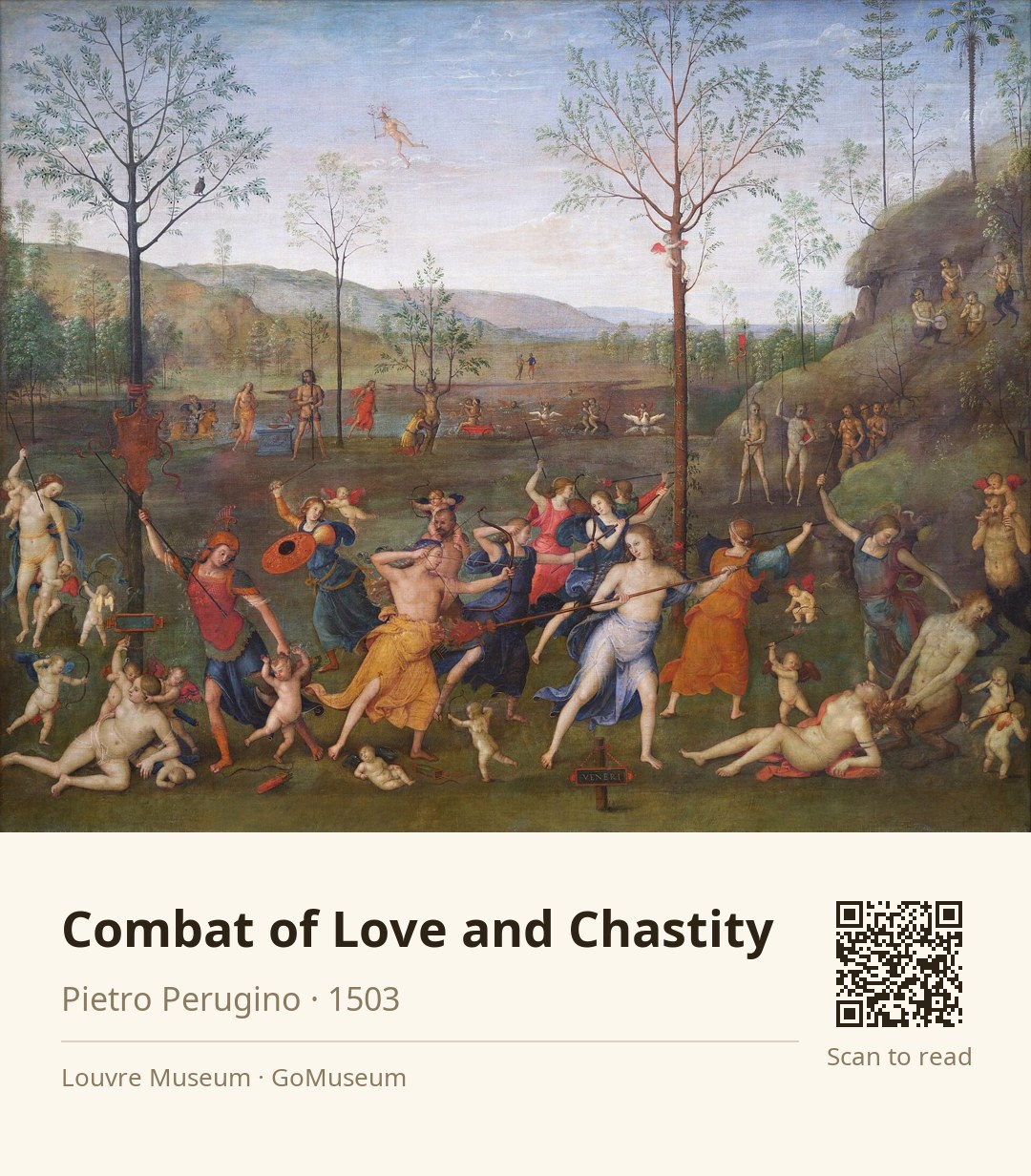
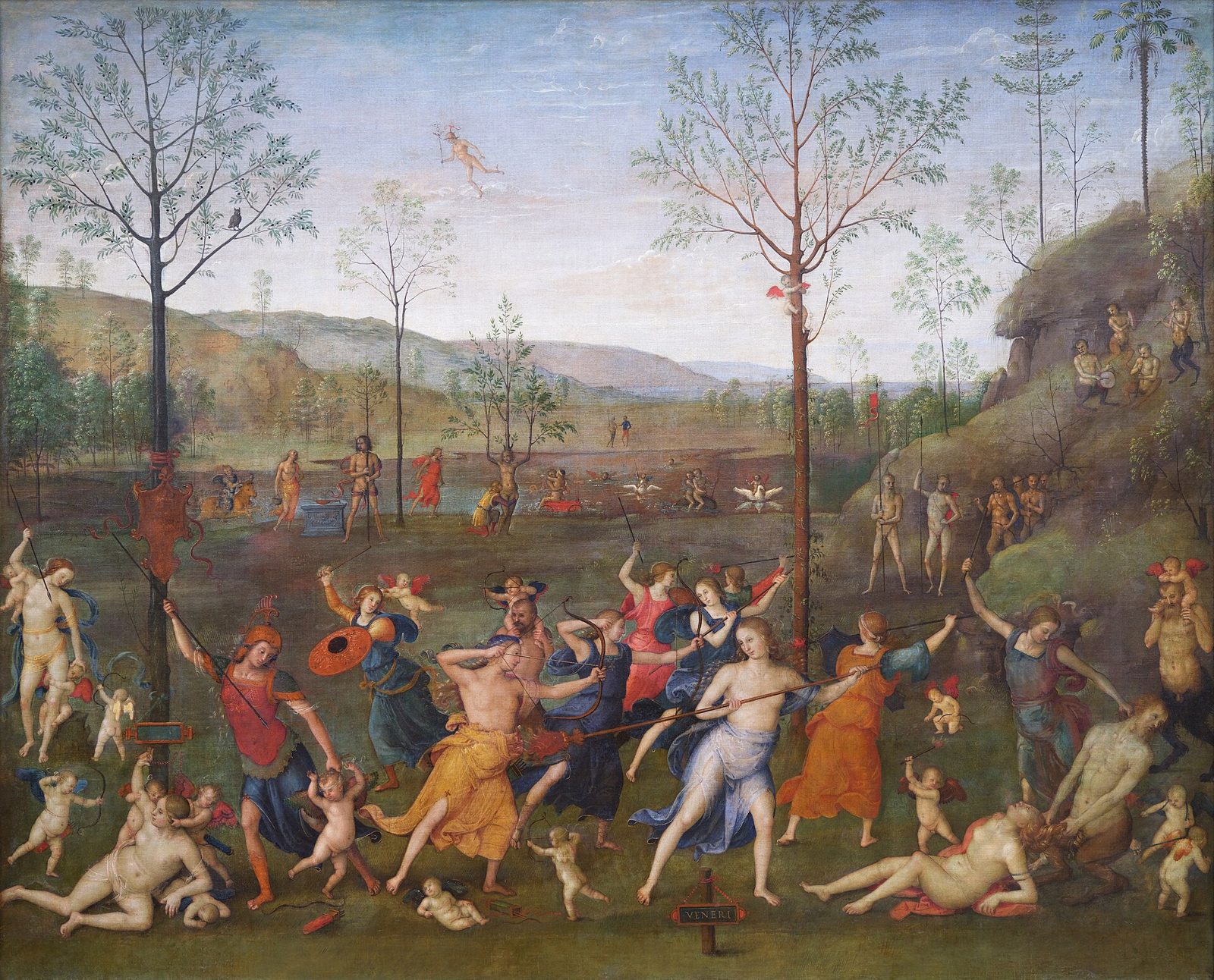
🎧 This work has audio narration — listen in the appAs you stand before "Combat of Love and Chastity," let your eyes wander over the intense struggle depicted in this Renaissance masterpiece. Notice how Love, personified by a youthful figure, grapples with Chastity, who stands resolute and dignified. Their expressions are a captivating blend of passion and determination, pulling you into the heart of their conflict.
These details matter because they encapsulate a timeless theme: the battle between desire and virtue. In a world where these forces often clash, Perugino invites us to reflect on our own choices. The backdrop of gentle hills and mythological figures, including Minerva and Venus, enhances this allegory, suggesting that this struggle is not just personal but universal, echoed through history.
Commissioned by Isabella d'Este in 1503 for her studiolo, this painting was part of a larger conversation about virtue and morality in the Renaissance. Perugino, an influential figure of his time, was known for his ability to blend narrative with beauty, and here he does just that.
As you take in this scene, consider: which side do you find yourself rooting for—Love or Chastity? What does that say about your own beliefs and values? Let this artwork linger in your thoughts as you continue your journey through the museum.
Pietro Perugino, born Pietro Vannucci around 1446-1452 in Città della Pieve, was a pivotal figure in the Italian Renaissance, particularly within the Umbrian school. His early training in Perugia and Florence, where he likely apprenticed under Verrocchio alongside Leonardo da Vinci, laid the foundation for his mastery in fresco and oil painting. Perugino's style is characterized by serene compositions, elegant figures, and harmonious landscapes, reflecting a balance between realism and idealism.
His career flourished after he was commissioned to create frescoes for the Sistine Chapel, including the Baptism of Christ and Delivery of the Keys, showcasing his significant role in the High Renaissance. Notably, he became Raphael's mentor, influencing the next generation of artists. Despite facing criticism later in life, including a public rebuke from Michelangelo, Perugino continued to produce notable works, such as the extensive decoration of the Sala delle Udienze del Collegio del Cambio in Perugia.
Perugino's legacy endures through his innovative techniques and the serene beauty of his religious subjects, marking him as one of the foremost painters of his time. His contributions helped shape the trajectory of Renaissance art, bridging the gap between earlier and later masters. He passed away in 1523, leaving behind a rich body of work that continues to inspire.
Commissioned by Isabella d'Este in 1503, 'Combat of Love and Chastity' was the third artwork for her studiolo, following two by Andrea Mantegna. The theme, suggested by Isabella's court poet, Paride da Ceresara, was meticulously detailed in a notary contract, which included a drawing for Perugino to follow. Isabella was quite particular; when Perugino painted Venus nude instead of clothed, she protested. Upon delivery in 1505, Isabella expressed dissatisfaction, wishing it had been painted in oil rather than tempera, which was her directive to align with Mantegna's style. This dissatisfaction led to no further commissions from her. After the Gonzaga dynasty's decline, the painting was gifted to Cardinal Richelieu and eventually found its home in the Louvre, where it remains today.
As you gaze at 'Combat of Love and Chastity,' notice how Perugino's brushwork creates a sense of tension and movement. The figures are rendered with a soft, almost ethereal quality, enhanced by the tempera medium he used. The composition, while rich in detail, can feel a bit crowded, which might stem from Perugino's struggle with the smaller format compared to his usual grand works. The light falls gently across the scene, illuminating the youthful figure of Love and the dignified Chastity, drawing your eye to their intense expressions. The background, with its gentle hills and mythological figures, serves not just as a setting but as a narrative device, intertwining the personal struggle with broader themes of virtue and desire.
Interestingly, Isabella d'Este's dissatisfaction with the painting led her to decline further commissions from Perugino. She even turned down an offer from his wife for a painting by Perugino after his death, indicating a significant rift in their artistic relationship.
The notary contract not only outlined the specific theme suggested by Isabella's court poet but also included a drawing that Perugino was required to follow closely, showcasing the meticulous nature of commissions during the Renaissance.
Isabella d'Este's insistence on the use of tempera to align with Mantegna's style led to her dissatisfaction with the final product, as she felt it would have been better in oil, reflecting her strong influence over the artistic process.
After the Gonzaga dynasty's decline, the painting was gifted to Cardinal Richelieu, which marked a significant shift in its ownership and ultimately led to its acquisition by the state and placement in the Louvre.