 Image: Sailko
Madonna and Child
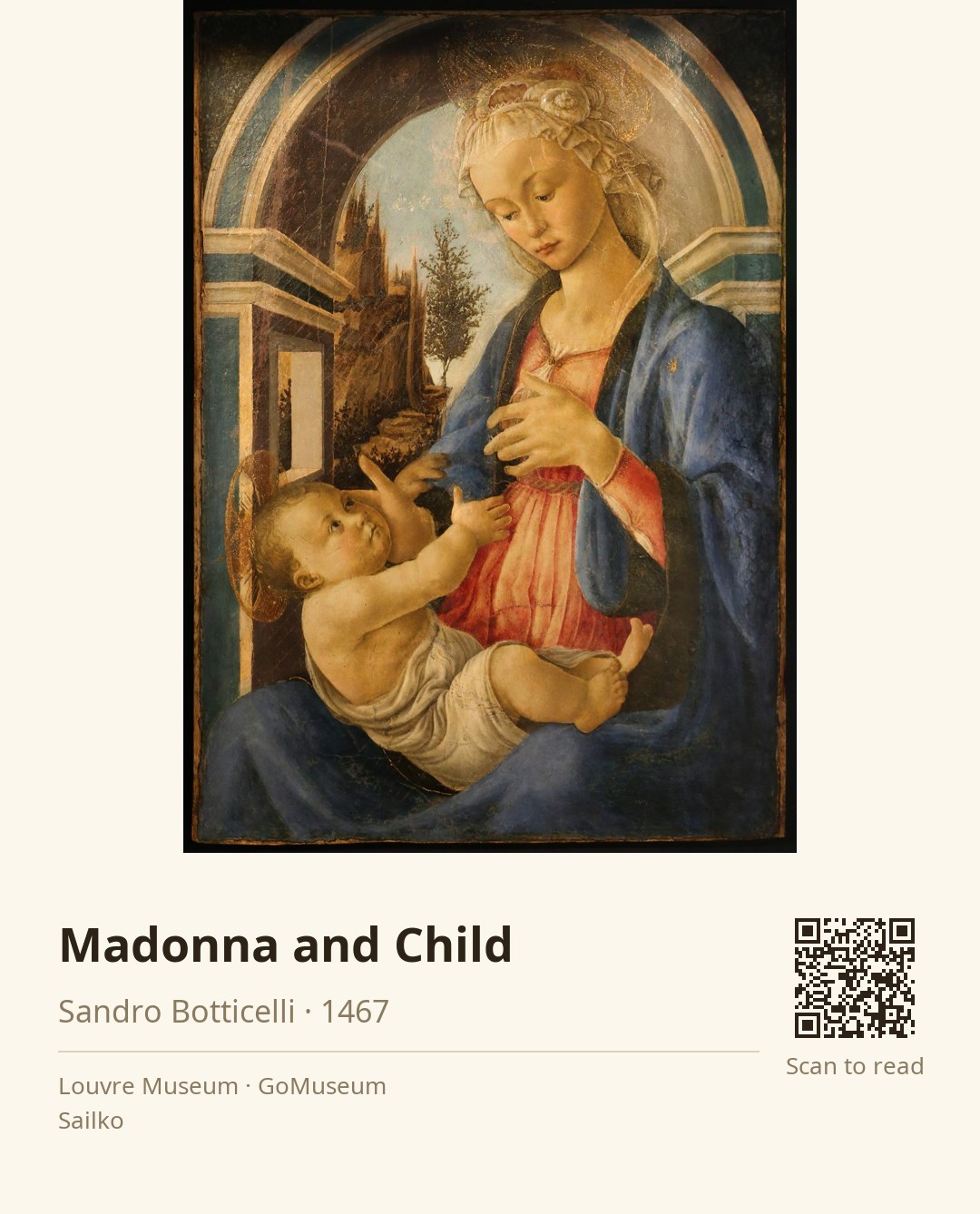
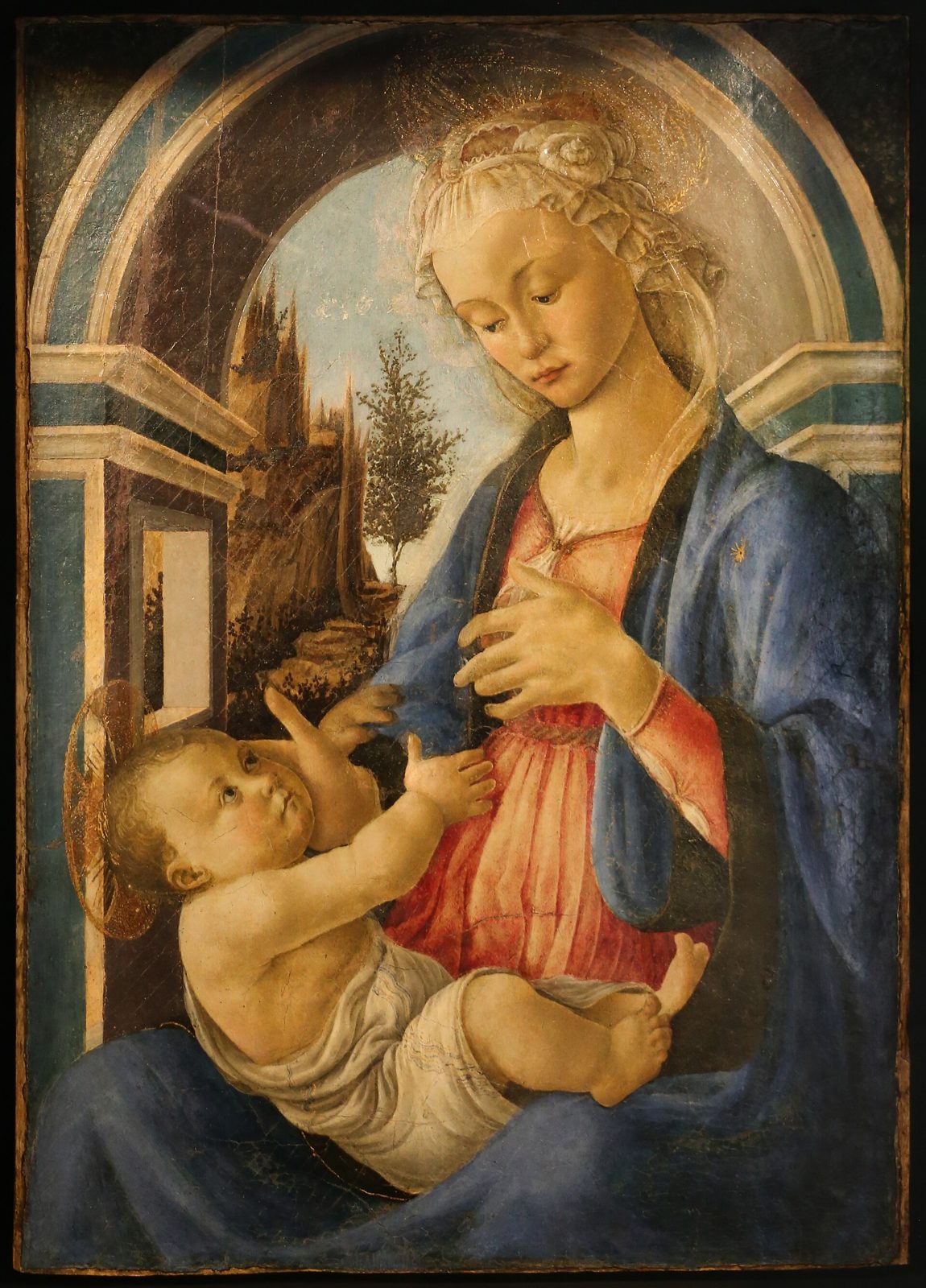
🎧 This work has audio narration — listen in the appTake a moment to really look at Botticelli's "Madonna and Child." Notice how the Virgin Mary holds her child with such tenderness, her hand gently caressing his cheek. It’s a simple gesture, yet it radiates warmth and love, inviting you into this intimate moment.
Now, focus on the colors—those deep reds and soft blues. They’re not just pretty; they symbolize Mary's purity and motherhood, a visual language that speaks to the heart of Christian devotion. Botticelli was a master at using color to evoke emotion, and here, he creates a serene atmosphere that feels almost sacred.
Created in 1467, this painting reflects the Renaissance's deepening exploration of human emotion and spirituality. Botticelli, influenced by earlier masters, infused his work with a sense of grace and beauty that was revolutionary for its time.
As you stand here, think about the connection between mother and child. What feelings does this image stir in you? How does it resonate with your own experiences of love and care? Let that linger as you take in the rest of the gallery.
Filippino Lippi, born around 1457 in Prato, Tuscany, was an influential Italian Renaissance painter, the illegitimate son of the renowned artist Fra Filippo Lippi. His upbringing was marked by the artistic environment of his father's workshop, where he began his training. After his father's death, Filippino continued to hone his skills under Sandro Botticelli, contributing to a blend of styles that defined his early works.
As a painter, Filippino specialized in religious themes, often depicting elongated figures and intricate details that conveyed a sense of the surreal. His style evolved significantly after a formative period in Rome, where he absorbed classical influences and developed a unique approach characterized by vibrant, imaginative compositions. His notable works include the frescoes in the Brancacci Chapel and the altarpiece for the Strozzi Chapel, which reflect the political and religious tensions of his time.
Filippino's contributions to art history are significant; he is recognized for bridging the Early and High Renaissance styles, paving the way for the expressive tendencies that would lead to Mannerism. His innovative techniques, including visible brushwork, influenced later artists and positioned him as a pivotal figure in the evolution of Renaissance art. He passed away in Florence on April 18, 1504, leaving behind a legacy that continues to resonate in the art world.
This captivating painting, titled 'Madonna and Child,' was created by the renowned Italian artist Sandro Botticelli around 1467. It was commissioned during a vibrant period of the Renaissance, a time when art flourished in Florence. Initially, the work was attributed to Filippino Lippi, Botticelli's assistant, but over time, art historians recognized Botticelli's distinct style in this piece. The painting found its way into the Louvre's collection after being acquired by Napoleon III in 1862 from the Campana collection. Today, it resides in the Musée du Petit Palais in Avignon, France, where it continues to draw admiration.
As you gaze at 'Madonna and Child,' pay attention to Botticelli's masterful brushwork. The soft, flowing lines create a sense of tenderness, particularly in the way Mary cradles her child. Notice how the colors are applied; the rich reds and soft blues are not just decorative but serve to evoke a sense of warmth and spirituality. The composition is carefully structured, with Mary positioned under an archway that frames her and the child, drawing your eye to their intimate connection. The background, with its architectural elements, adds depth and context, enhancing the serene atmosphere. Botticelli’s choice of tempera on panel allows for a delicate finish, giving the figures a luminous quality that feels almost ethereal. The overall effect is one of calm contemplation, inviting you to linger in this moment of maternal love.
It wasn't until art historian Bernard Berenson recognized Botticelli's distinctive style that it was reassigned to him. This painting, created around 1467, showcases Botticelli's unique approach to religious themes, blending tenderness with a sense of divine beauty. It's fascinating how art can be a puzzle, with pieces shifting over time as experts weigh in on the true creators behind the masterpieces.