Madonna and Child with Two Angels, Saint Rose and Saint Catherine
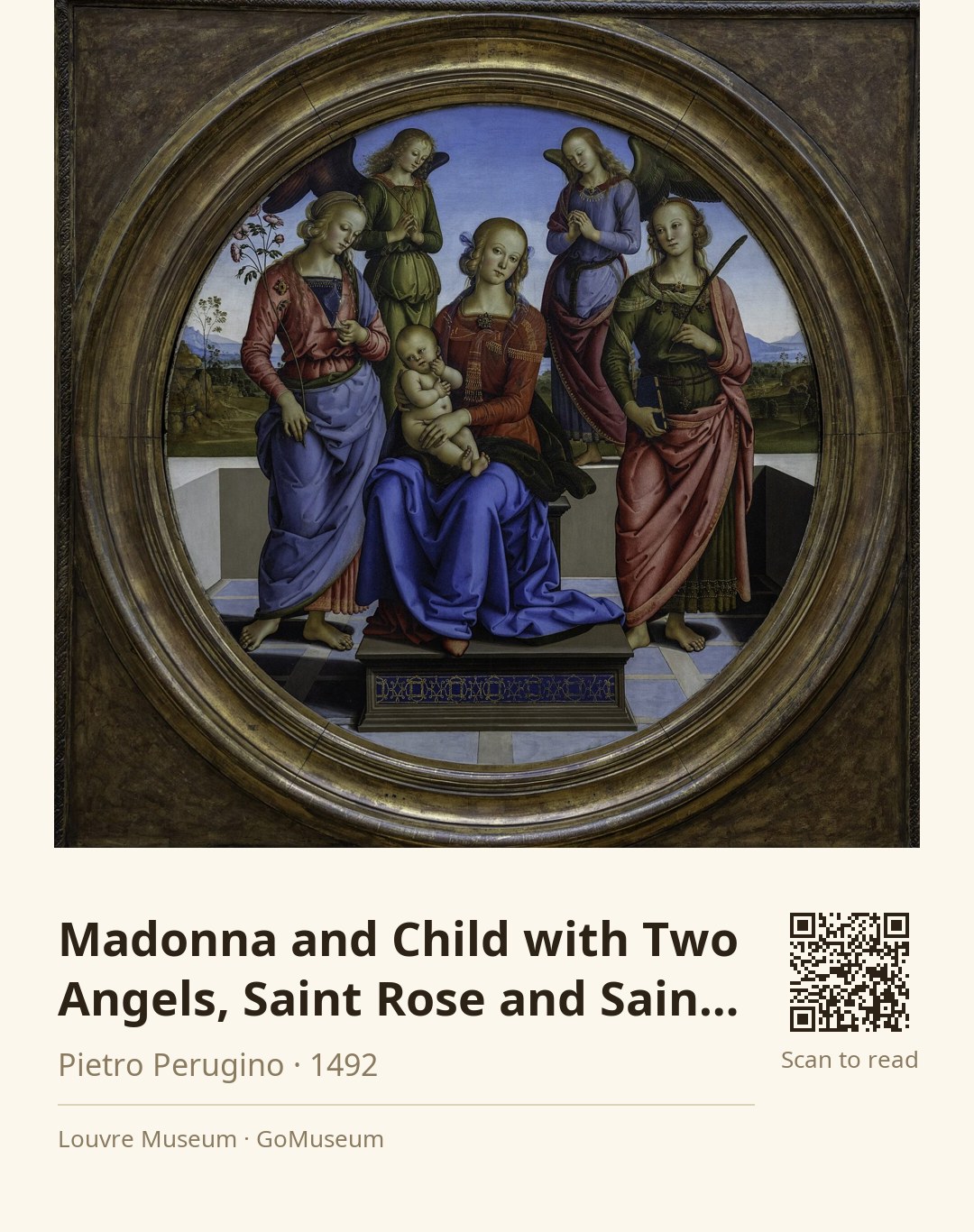
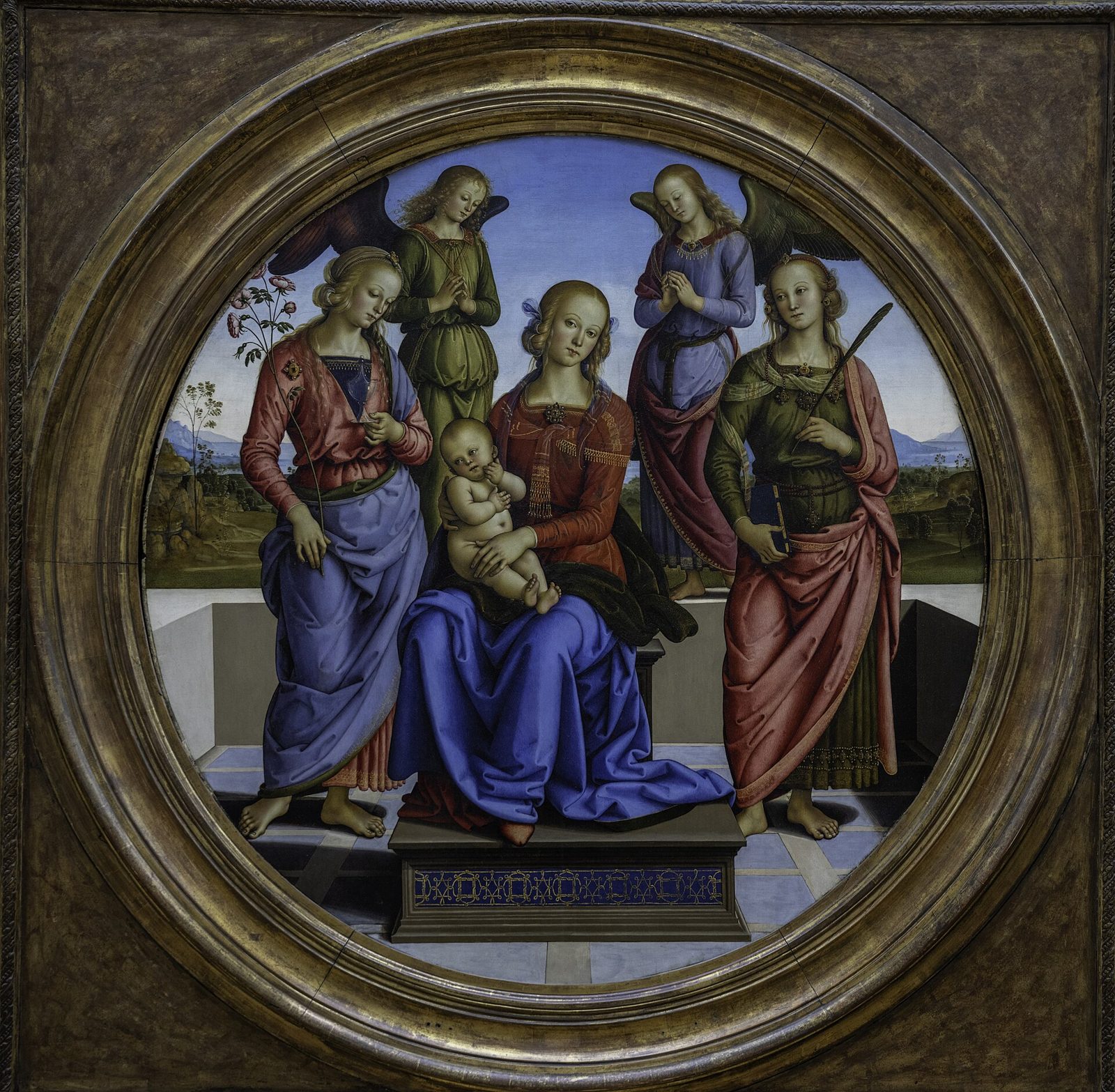
🎧 This work has audio narration — listen in the appTake a moment to really look at this painting, "Madonna and Child with Two Angels, Saint Rose and Saint Catherine." Notice how the Madonna sits regally on her throne, cradling the Christ Child, while the two saints stand beside her, each holding symbols of their faith. Saint Rose, with her blooming branch, and Saint Catherine, with her palm, create a beautiful balance in this serene scene.
These details matter because they reflect the harmony and grace that Perugino aimed to convey. The way the saints are positioned not only highlights their importance but also draws your eye back to the Madonna and Child, emphasizing their central role in this sacred narrative. The angels behind them, with their outstretched wings, seem to lift the entire composition, creating a sense of divine presence.
The tondo format, a circular shape, invites you to engage with the scene from all angles, making it feel almost like a window into another world.
As you stand here, think about the emotions this artwork evokes. What do you feel when you see the tenderness between the Madonna and her child? How does the presence of the saints and angels change your perception of this moment?
Pietro Perugino, born Pietro Vannucci around 1446-1452 in Città della Pieve, was a pivotal figure in the Italian Renaissance, particularly within the Umbrian school. His early training in Perugia and Florence, where he likely apprenticed under Verrocchio alongside Leonardo da Vinci, laid the foundation for his mastery in fresco and oil painting. Perugino's style is characterized by serene compositions, elegant figures, and harmonious landscapes, reflecting a balance between realism and idealism.
His career flourished after he was commissioned to create frescoes for the Sistine Chapel, including the Baptism of Christ and Delivery of the Keys, showcasing his significant role in the High Renaissance. Notably, he became Raphael's mentor, influencing the next generation of artists. Despite facing criticism later in life, including a public rebuke from Michelangelo, Perugino continued to produce notable works, such as the extensive decoration of the Sala delle Udienze del Collegio del Cambio in Perugia.
Perugino's legacy endures through his innovative techniques and the serene beauty of his religious subjects, marking him as one of the foremost painters of his time. His contributions helped shape the trajectory of Renaissance art, bridging the gap between earlier and later masters. He passed away in 1523, leaving behind a rich body of work that continues to inspire.
The painting 'Madonna and Child with Two Angels, Saint Rose and Saint Catherine' was created by the renowned artist Pietro Perugino around 1492. This work, in the tondo format, showcases a significant moment in Perugino's career as he transitioned towards a more intimate representation of religious figures. Originally, it was part of the collection of William II of the Netherlands and was sold to the Louvre in Paris in 1850, where it remains today. The painting was well-received, reflecting the artistic trends of the time and showcasing Perugino's mastery in blending figures with a serene landscape, a hallmark of his style. Its provenance highlights the painting's journey through history, from a royal collection to a prominent museum, emphasizing its enduring appeal and significance in the art world.
As you gaze at this painting, take note of the delicate brushwork that Perugino employs, creating a sense of softness and warmth in the figures. The use of oil paint allows for rich color saturation, particularly in the robes of the Madonna, which seem to shimmer with a divine light. The composition is carefully structured; the circular format of the tondo invites your eye to move around the scene, engaging with each figure. Notice how the saints are positioned to create a triangular composition that leads your gaze back to the Madonna and Child. The background landscape, with its gentle hills and serene sky, is not merely decorative but serves to enhance the spiritual atmosphere, grounding the divine figures in a recognizable world. This interplay of light, color, and form creates an inviting and harmonious scene that draws you into its sacred narrative.
An interesting tidbit about this painting is that it was created in collaboration with Andrea Aloigi, a lesser-known artist who worked alongside Perugino. This partnership highlights the collaborative nature of Renaissance art, where master artists often relied on skilled assistants to help realize their ambitious visions. Aloigi's contributions, particularly in the execution of the background and details, demonstrate how teamwork was essential in the creation of such intricate works.
The circular tondo format invites viewers to engage with the scene from multiple angles, creating an immersive experience that feels like a window into a sacred narrative, enhancing the emotional connection to the figures.
The gentle hills and serene sky in the background are not merely decorative; they ground the divine figures in a recognizable world, enhancing the spiritual atmosphere and inviting contemplation of the scene.