Magdalene with the Smoking Flame
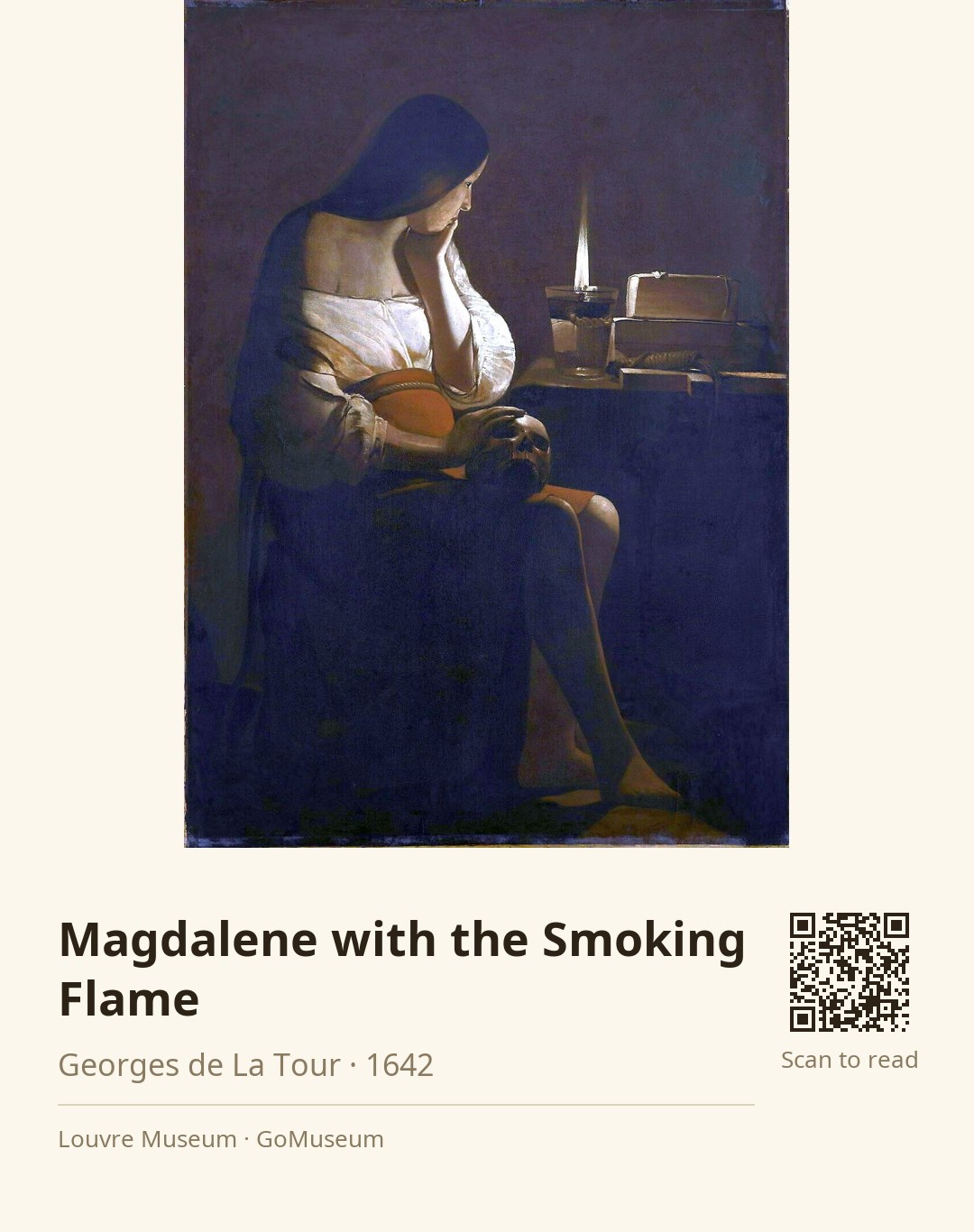
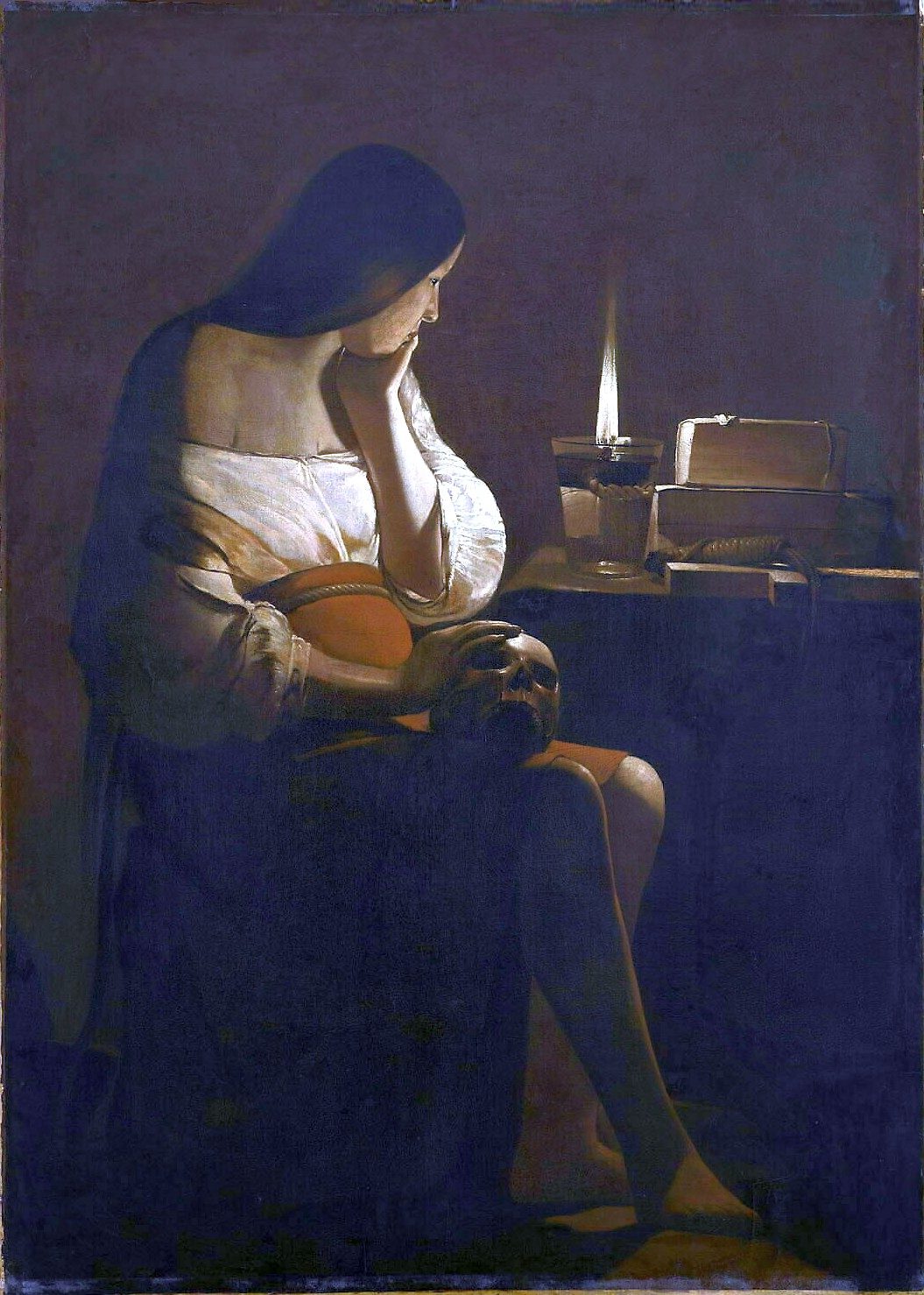
🎧 This work has audio narration — listen in the appTake a moment to really look at "Magdalene with the Smoking Flame." Notice how Mary Magdalene is captured in a moment of deep contemplation, her hand resting under her chin, gazing intently at the flickering candlelight. The skull on her lap and the open Bible beside her add layers of meaning, suggesting a meditation on mortality and faith.
These details matter because they reflect the Baroque era's fascination with the themes of repentance and inner reflection. La Tour's use of light and shadow here is masterful; the candle's glow illuminates her face, contrasting starkly with the dark background, drawing you into her world of solitude and introspection.
Created around 1642, La Tour was influenced by Caravaggio, but his work is imbued with a sense of sincerity and calmness, steering away from the violence often depicted in Caravaggio's scenes. Mary Magdalene, traditionally seen as a symbol of redemption, embodies the struggle between earthly desires and spiritual enlightenment.
As you stand here, think about what this painting conveys about the human experience. What do you see in her expression? What thoughts might she be wrestling with in this quiet moment?
Georges de La Tour was a French Baroque painter born on March 13, 1593, in Vic-sur-Seille. He spent most of his life in the Duchy of Lorraine, where he became known for his religious paintings characterized by dramatic chiaroscuro and candlelit scenes. Influenced by Caravaggio and the Dutch Caravaggisti, La Tour's work reflects a unique blend of Nordic, Italian, and French artistic traditions. His keen observation of everyday life and mastery of light and shadow set him apart as an original successor to Caravaggio.
Married to Diane Le Nerf in 1617, La Tour established a successful studio in Lunéville, gaining recognition as "Painter to the King" in 1638. Despite his acclaim during his lifetime, he fell into obscurity after his death in 1652, largely forgotten until his rediscovery in the early 20th century by art historian Hermann Voss. La Tour's influence extended beyond painting, inspiring writers such as André Malraux and René Char. His legacy endures as a pivotal figure in art history, celebrated for his innovative approach to light and composition in religious art.
Georges de La Tour's 'Magdalene with the Smoking Flame' was created around 1640, a time when the artist was deeply influenced by the dramatic chiaroscuro of Caravaggio. The painting, known in French as 'La Madeleine à la veilleuse', captures Mary Magdalene in a moment of profound contemplation. The Louvre version of this painting was acquired in 1949 from the French Administration des Douanes, but its whereabouts before that remain a mystery. La Tour's career flourished amid the turmoil of the Thirty Years War, and he received significant patronage from the court in Lorraine and later from King Louis XIII in Paris. His works often reflect the spiritual struggles of his subjects, and this particular piece resonates with the Baroque era's fascination with themes of repentance and redemption. Interestingly, La Tour created multiple versions of this theme, suggesting a strong interest from patrons in the complex emotional states of figures like Magdalene.
As you gaze at 'Magdalene with the Smoking Flame', pay attention to the way La Tour handles light and shadow. The candlelight not only illuminates Mary’s face but also creates a striking contrast with the dark background, enhancing the painting's emotional depth. The brushwork feels deliberate yet fluid, capturing the softness of her skin against the roughness of the skull resting in her lap. Notice how the composition draws your eye to her contemplative expression, with her hand under her chin, creating a sense of intimacy. The absence of a mirror, present in other versions, shifts the focus entirely to her internal struggle, while the inclusion of the skull and Bible emphasizes the themes of mortality and faith. The overall effect is one of serene introspection, inviting you to ponder the weight of her thoughts.
A fascinating tidbit about 'Magdalene with the Smoking Flame' is that during World War II, the Louvre version of the painting was hidden in a German salt mine to protect it from bombings. This act of preservation speaks to the value placed on La Tour's work, even amidst the chaos of war.
The whereabouts of La Tour's 'Magdalene with the Smoking Flame' before its acquisition by the Louvre remain unknown, adding an intriguing layer to its history.
La Tour lived during the Thirty Years War, which deeply affected his surroundings and likely influenced the somber themes of contemplation and mortality present in his paintings.
While both versions depict Mary Magdalene, subtle differences in lighting, pose, and symbolism highlight La Tour's exploration of emotional depth and the complexity of the subject.