Andromache Mourning Hector
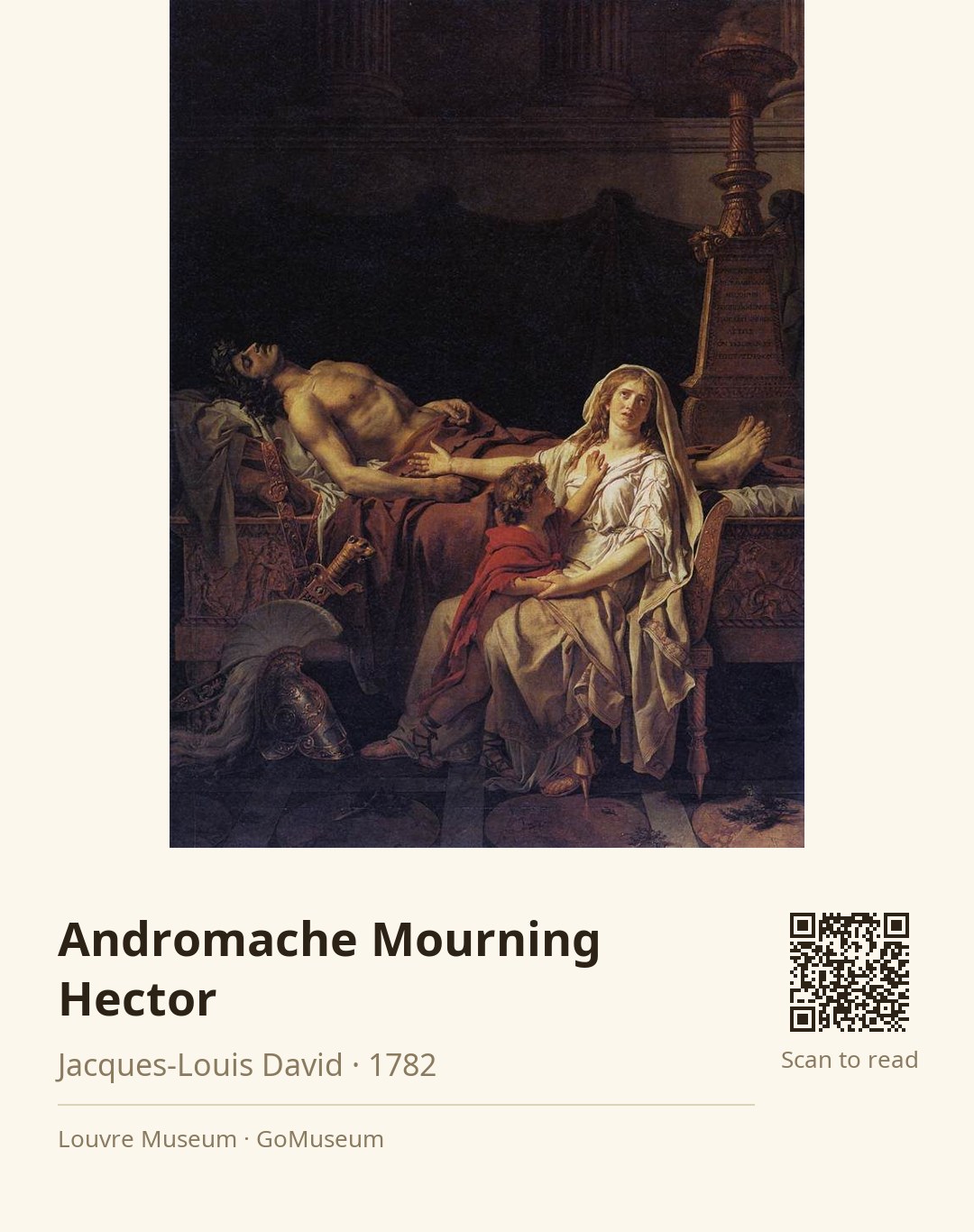
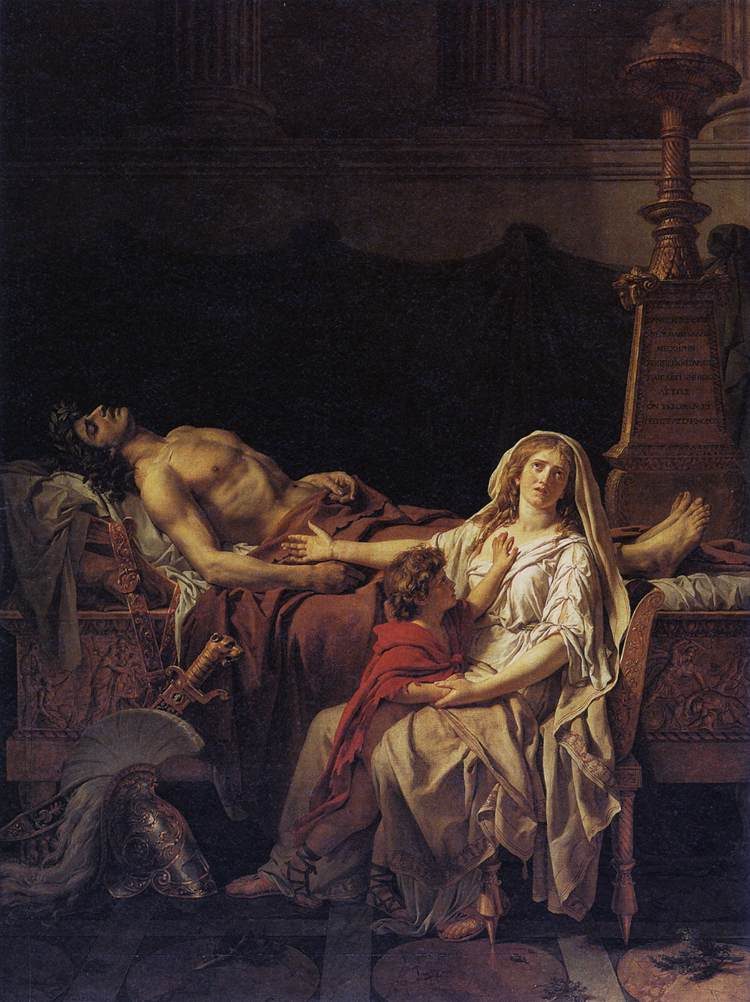
🎧 This work has audio narration — listen in the appTake a moment to really look at "Andromache Mourning Hector." Notice how the light falls dramatically on Andromache’s face, illuminating her sorrow while casting her son, Astyanax, in shadow. This contrast isn’t just for show; it highlights the weight of grief she carries, a stark reminder of the loss that has shattered her world.
The way David captures her despair is masterful—her tear-filled eyes and the gentle touch of her hand on her son’s arm speak volumes about a mother’s heartbreak and the fragility of life.
It’s not just a depiction of mourning; it’s a reflection of the emotional depth that Neoclassicism sought to convey, moving away from the frivolity of Rococo art.
As you stand here, consider the timelessness of Andromache’s grief. How does her story resonate with the losses we face today? What does it mean to mourn, and how do we find solace in our darkest moments?
Jacques-Louis David was a pivotal French painter born on August 30, 1748, in Paris. He emerged as the leading figure of the Neoclassical movement, marking a significant shift in artistic taste from the frivolity of Rococo to a more austere and emotionally charged classical style. His early life was marked by personal tragedy, losing his father at a young age, which shaped his character and determination to pursue art against familial expectations.
David's career flourished during the tumultuous political landscape of France, where he became an ardent supporter of the French Revolution, aligning himself with figures like Robespierre. His political engagement influenced his art, producing iconic works such as "The Death of Marat" and "The Coronation of Napoleon," which reflect both historical narratives and his personal convictions. After the fall of Napoleon, David faced exile but continued to influence generations of artists, establishing a legacy that shaped academic painting in the early 19th century. His works remain celebrated in major museums, particularly the Louvre, solidifying his status as a cornerstone of Western art history. David's life and art were inextricably linked to the evolving identity of France, embodying the spirit of revolution and the quest for artistic integrity.
Jacques-Louis David's 'Andromache Mourning Hector' was presented on August 23, 1783, as a pièce de réception for his admission to the Académie Royale. This was a significant moment in his career, as it not only showcased his talent but also marked a shift in artistic taste from the Rococo frivolity to the emotional depth of Neoclassicism. The painting was received unanimously, earning David immediate acclaim. It now resides in the Louvre, but it originally belonged to the École Nationale Supérieure des Beaux-Arts, gifted by David's grandson in 1886.
In 'Andromache Mourning Hector,' David employs a dramatic use of light and shadow, reminiscent of Caravaggio's chiaroscuro technique. Notice how the stark contrast between the illuminated figures and the dark background heightens the emotional intensity of the scene. The brushwork is meticulous, with soft strokes capturing the delicate expressions of grief on Andromache's face. The composition is carefully structured; Andromache is positioned in the foreground, her white garments symbolizing purity and sorrow, while Hector's lifeless body lies in the background, almost blending into the shadows. David's choice of colors—dark tones punctuated by the bright red of Astyanax's cloak—further emphasizes the themes of life and death, drawing your eye to the interplay of despair and innocence.
This isn't just a decorative choice; it connects the artwork to its classical roots and adds a layer of authenticity to the scene. David often incorporated text into his works, a technique that invites viewers to engage more deeply with the narrative and themes he explores.
The candlestick features an inscription in Greek, which adds a layer of historical context and invites viewers to engage more deeply with the narrative of the painting.
David's own life was marked by loss and hardship, including the death of his father when he was young, which may have deepened his understanding of sorrow and informed his emotional depiction of Andromache's mourning.