Orphan Girl at the Cemetery
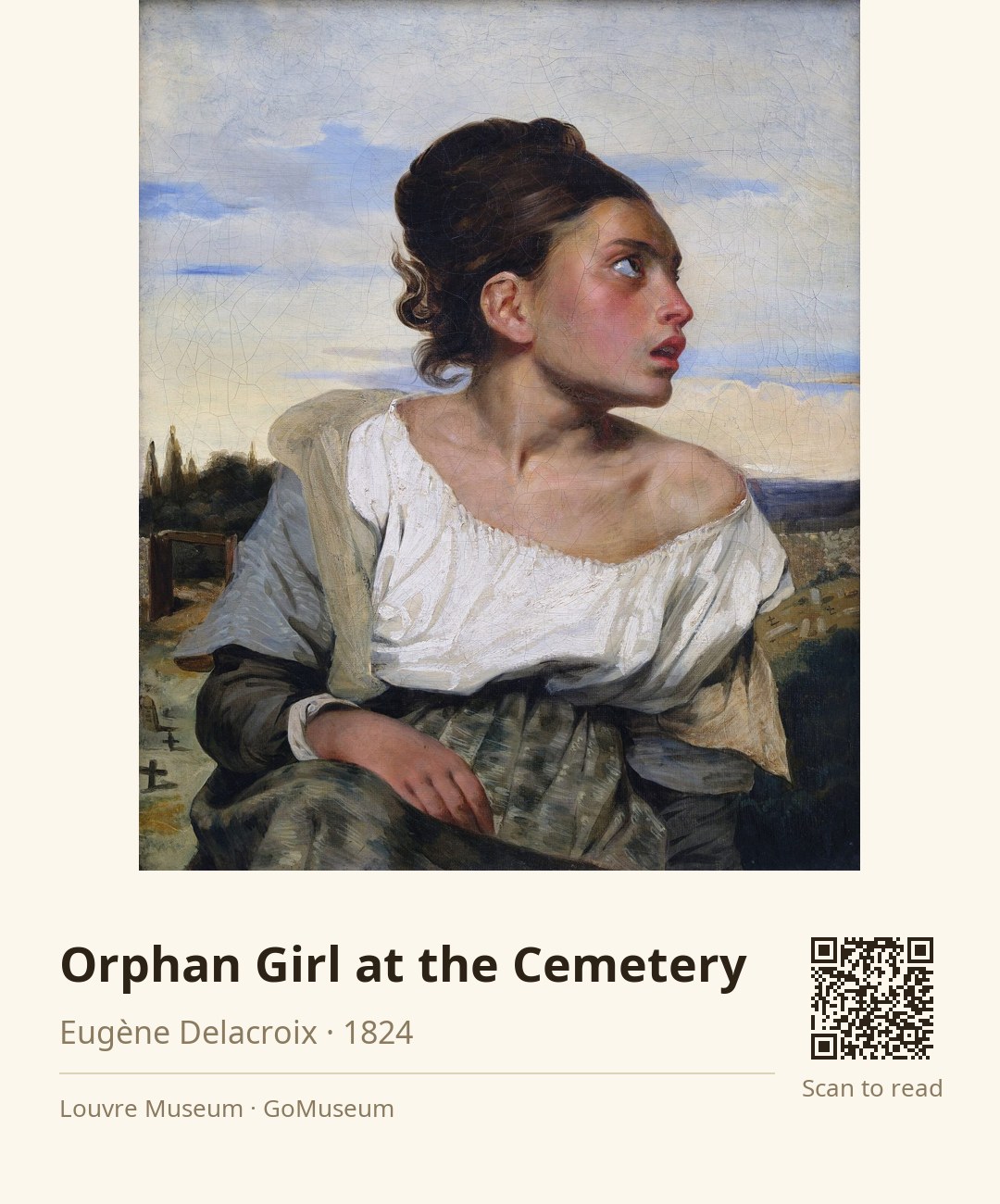
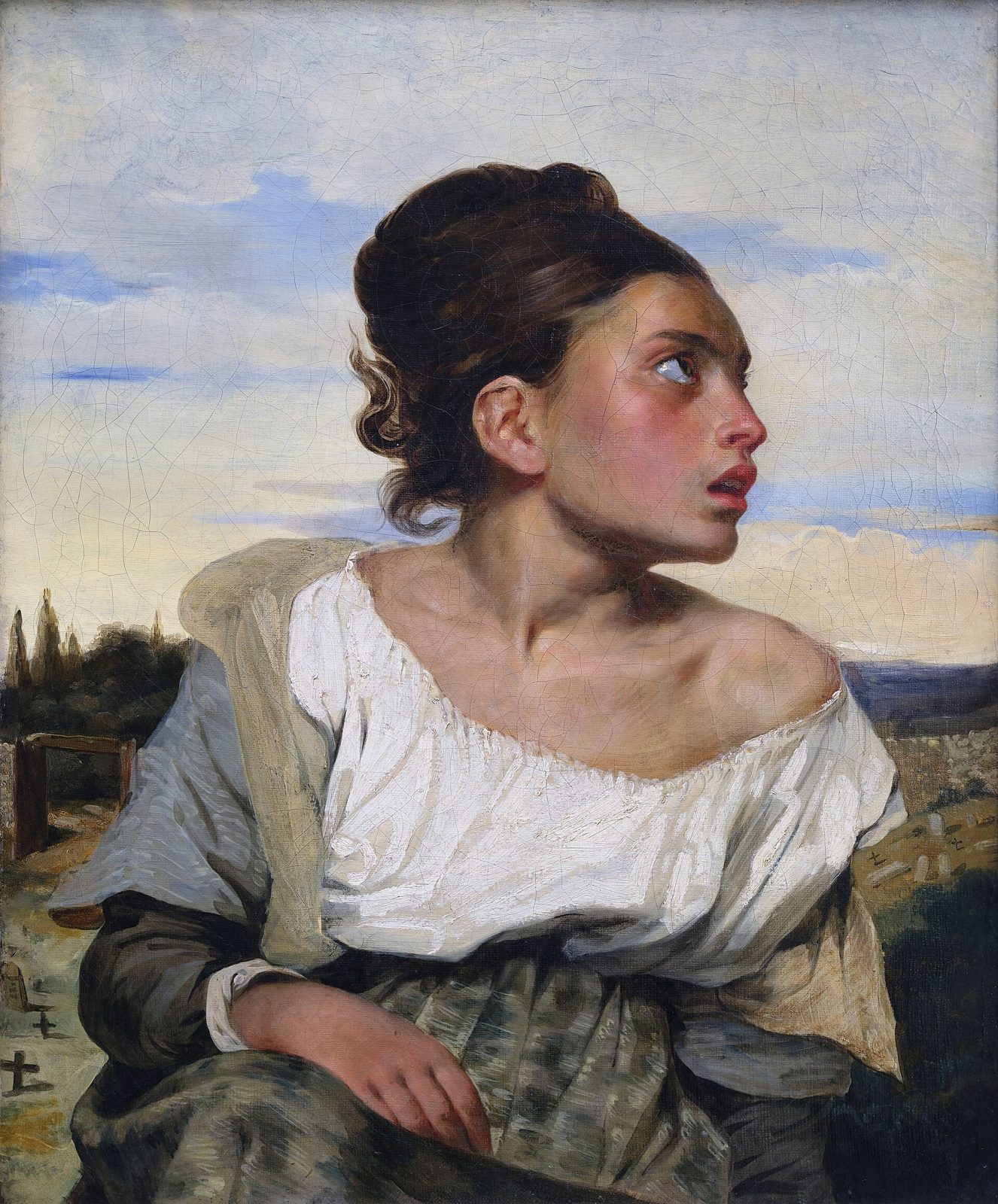
🎧 This work has audio narration — listen in the appTake a moment to really look at "Orphan Girl at the Cemetery" by Eugène Delacroix. Notice how the girl’s tear-filled eyes seem to plead for something just out of reach. Her dress, slipping off one shoulder, adds to her vulnerability, while her weak hand rests on her thigh, as if she’s struggling to hold herself together in this moment of despair.
These details are crucial because they pull you deep into her emotional world. Delacroix masterfully captures not just a scene, but a profound sense of loss and isolation. The dim sky and the neglected cemetery amplify her sorrow, making you feel the weight of her grief as if it were your own.
Created in 1824, this painting is often seen as a preparatory work for Delacroix's later piece, "Massacre at Chios." Yet, it stands alone as a masterpiece, showcasing his unique ability to convey raw emotion through color and form, inspired by the dramatic styles of Rubens and the Venetian masters.
As you take in this poignant image, think about what it means to feel utterly alone. What stories do you think this girl carries with her?
Eugène Delacroix, born on April 26, 1798, in Charenton-Saint-Maurice, emerged as a pivotal figure in the French Romantic movement. He diverged from the Neoclassical ideals of his contemporaries, such as Ingres, drawing inspiration from the vibrant colors and dynamic forms of Rubens and the Venetian Renaissance. His works, characterized by dramatic themes and a passion for the exotic, often reflected his travels in North Africa and his fascination with the sublime forces of nature, influenced by literary figures like Lord Byron.
Delacroix's career was marked by both acclaim and controversy; his early painting, "The Barque of Dante," stirred public debate but was ultimately recognized by the state. His later masterpieces, including "Liberty Leading the People," showcased his ability to blend historical and contemporary narratives, solidifying his status as a master of expressive brushwork and color theory. His innovative techniques laid the groundwork for Impressionism and inspired the Symbolist movement.
Despite personal struggles, including early orphanhood and financial hardships, Delacroix's legacy endures. He is celebrated not only for his paintings but also for his lithographs and writings, which reveal his artistic philosophy. As one of the last old masters, his influence resonates through art history, marking him as a cornerstone of Romanticism and a precursor to modern artistic movements. Delacroix passed away on August 13, 1863, leaving a profound impact on the art world.
Eugène Delacroix's 'Orphan Girl at the Cemetery' was created around 1824, during a pivotal moment in his career. This painting was exhibited at the Salon of 1824, the same year he showcased his more famous work, 'Massacre at Chios.' The reception was mixed; while some critics praised his emotional depth, others were less kind, reflecting the ongoing tension between Romanticism and Neoclassicism in the art world. The painting is now housed in the Musée du Louvre, where it continues to evoke strong emotions from viewers.
Delacroix's technique in 'Orphan Girl at the Cemetery' is a masterclass in emotional expression through color and brushwork. The girl's tear-filled eyes draw you in, while the soft, almost ethereal quality of the light enhances her vulnerability. Notice how the brushstrokes are both fluid and restless, creating a sense of movement that contrasts with the stillness of the cemetery. The palette is dominated by cool tones, with pale blues and grays that evoke a somber atmosphere, yet there are hints of warmth in the girl's skin and the muted colors of her dress. This juxtaposition amplifies her isolation. The composition is carefully structured; her body language—her weak hand resting on her thigh and the dress slipping from her shoulder—speaks volumes about her despair, making the viewer feel her emotional weight.
One intriguing aspect of 'Orphan Girl at the Cemetery' is that it was initially thought to be a preparatory study for 'Massacre at Chios.' However, it gained recognition in its own right, showcasing Delacroix's ability to convey deep emotional narratives. Interestingly, despite its somber subject, the painting was created during a time when Delacroix was also exploring vibrant colors and dynamic compositions, reflecting his complex artistic journey.
Delacroix's use of fluid and restless brushstrokes creates a sense of movement that contrasts with the stillness of the cemetery, enhancing the emotional weight of the girl's despair.