The Valpinçon Bather
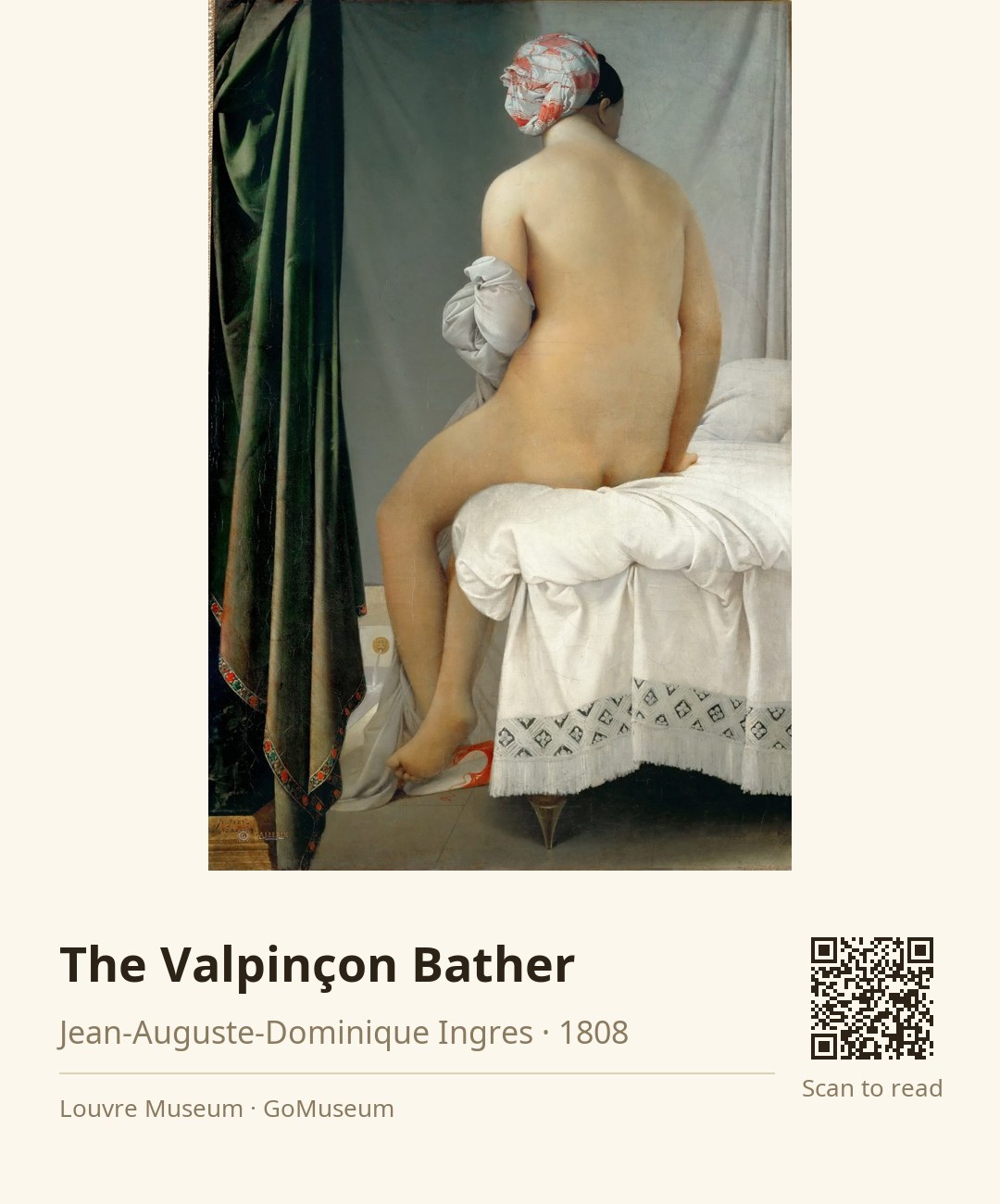
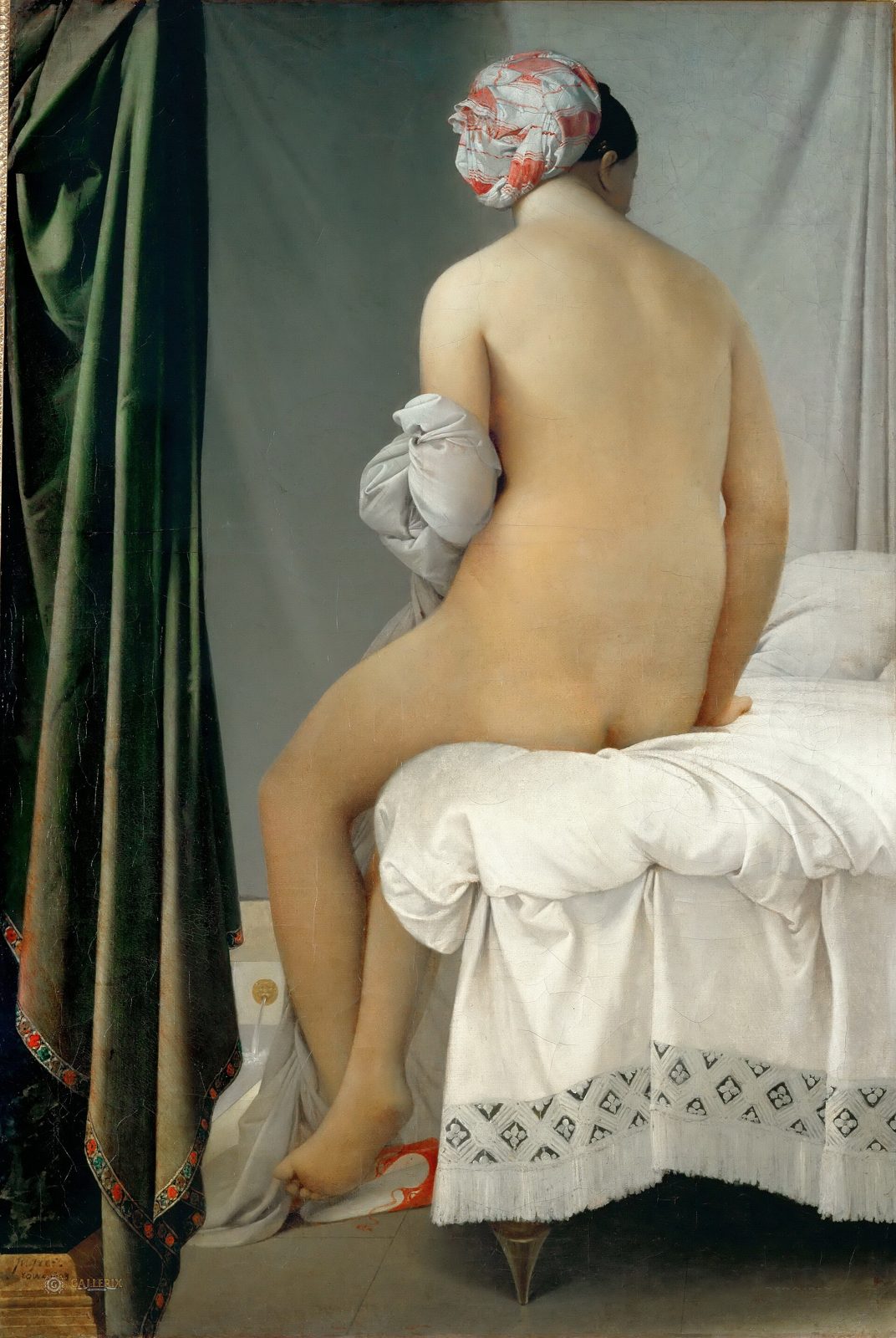
🎧 This work has audio narration — listen in the appTake a moment to really absorb the scene before you in "The Valpinçon Bather." Notice how the figure of the woman is captured from behind, her body gracefully draped in soft fabrics that cascade around her. The metallic green drapery contrasts beautifully with the warm tones of her skin, creating a delicate balance that draws your eye.
This interplay of light and shadow is not just for aesthetics; it speaks to Ingres' mastery of form and texture. The way the light caresses her back and legs evokes a sense of calm and serenity, inviting you to ponder the intimate moment he’s portraying. Unlike many nudes of his time, this painting radiates a quiet sensuality rather than overt sexuality, suggesting a deeper narrative about beauty and vulnerability.
Created in 1808 while Ingres was at the French Academy in Rome, this piece marked a pivotal moment in his artistic journey. Initially titled "Seated Woman," it was later renamed after one of its 19th-century owners. Despite its rocky reception at first, it has since been celebrated for its harmonious lines and exquisite detail.
As you stand here, consider how this artwork has influenced countless artists and continues to resonate in modern culture. What emotions does this serene bather evoke in you?
Jean-Auguste-Dominique Ingres was a pivotal figure in French Neoclassicism, born on August 29, 1780, in Montauban. He was the son of a versatile artist, which nurtured his early artistic inclinations. Ingres studied under Jacques-Louis David in Paris, where he developed a commitment to academic traditions, aspiring to elevate history painting above all genres. His early career was marked by struggles, as critics dismissed his style as archaic, yet he persevered, achieving recognition with works like "The Vow of Louis XIII" in 1824.
His portraits, characterized by expressive distortions, became his most celebrated contributions, influencing modern artists such as Matisse and Picasso. Ingres's time in Italy, from 1806 to 1824, was crucial; he immersed himself in the study of Renaissance masters, which shaped his distinctive style. Despite facing criticism for his meticulous approach, he remained steadfast in his vision of beauty, emphasizing drawing over color.
Later in life, he returned to Paris, where he continued to create significant works, including "The Turkish Bath." Ingres's legacy endures as a bridge between classical traditions and modern art, embodying the tension between adherence to established norms and the evolving landscape of artistic expression. He passed away on January 14, 1867, leaving behind a profound impact on the art world.
In 1808, Jean-Auguste-Dominique Ingres painted 'The Valpinçon Bather' while studying at the French Academy in Rome. The painting was not well-received at its first exhibition, facing criticism that would haunt Ingres for years. However, nearly fifty years later, as his reputation grew, the Goncourt brothers praised it, noting the exquisite amber tones of the figure. By 1879, it found a permanent home in the Louvre, where it has remained ever since, celebrated for its harmonious lines and delicate light. This transformation from a rocky debut to a revered masterpiece highlights the shifting tides of artistic appreciation and Ingres' enduring legacy in the art world.
As you gaze at 'The Valpinçon Bather,' take a moment to appreciate Ingres' meticulous brushwork. The smooth, almost enamel-like finish of the skin contrasts with the rich textures of the metallic green drapery. Notice how the light dances across the figure, creating a gentle play of highlights and shadows that accentuates her curves. Ingres' choice to depict the model from behind invites a sense of intimacy and mystery, drawing you into the scene. The composition is carefully structured, with the drapery framing the figure and guiding your eye through the painting. This thoughtful arrangement not only showcases his technical prowess but also evokes a serene atmosphere, making the viewer feel as if they are witnessing a private moment.
Ingres' approach combined a serene sensuality with a sense of chaste elegance, steering away from the overt sexuality that characterized earlier works. This painting not only solidified Ingres' reputation as a master of the Neoclassical style but also influenced future generations of artists, including the likes of Matisse and Picasso, who drew inspiration from his unique handling of form and light. The way Ingres captured the human body, creating an almost weightless quality, challenged traditional representations and opened the door for modern interpretations of the nude. Remember, this isn't just a painting; it's a conversation starter about beauty, form, and the evolution of artistic expression.
Did you know that Ingres originally titled this painting 'Seated Woman'? It wasn't until it changed hands in the 19th century that it became known as 'The Valpinçon Bather', named after one of its owners. This shift in title reflects how the perception of art can evolve over time, often influenced by the stories we attach to them.
Ingres was heavily influenced by the works of Raphael and the Italian Renaissance, which shaped his approach to form and composition. He admired Raphael's idealized beauty and sought to emulate that in his own depictions of the human figure.
Before fully committing to painting, Ingres was an accomplished violinist, which fostered his appreciation for harmony and rhythm. This musical background is reflected in the fluidity and grace of the forms in 'The Valpinçon Bather,' suggesting a visual symphony in his brushwork.
Upon its initial exhibition, 'The Valpinçon Bather' faced criticism and was not well-received, with many critics finding fault in its style and execution. This rocky debut marked a challenging start for Ingres, but the painting later gained acclaim as his reputation grew.