 Image: Marie-Lan Nguyen
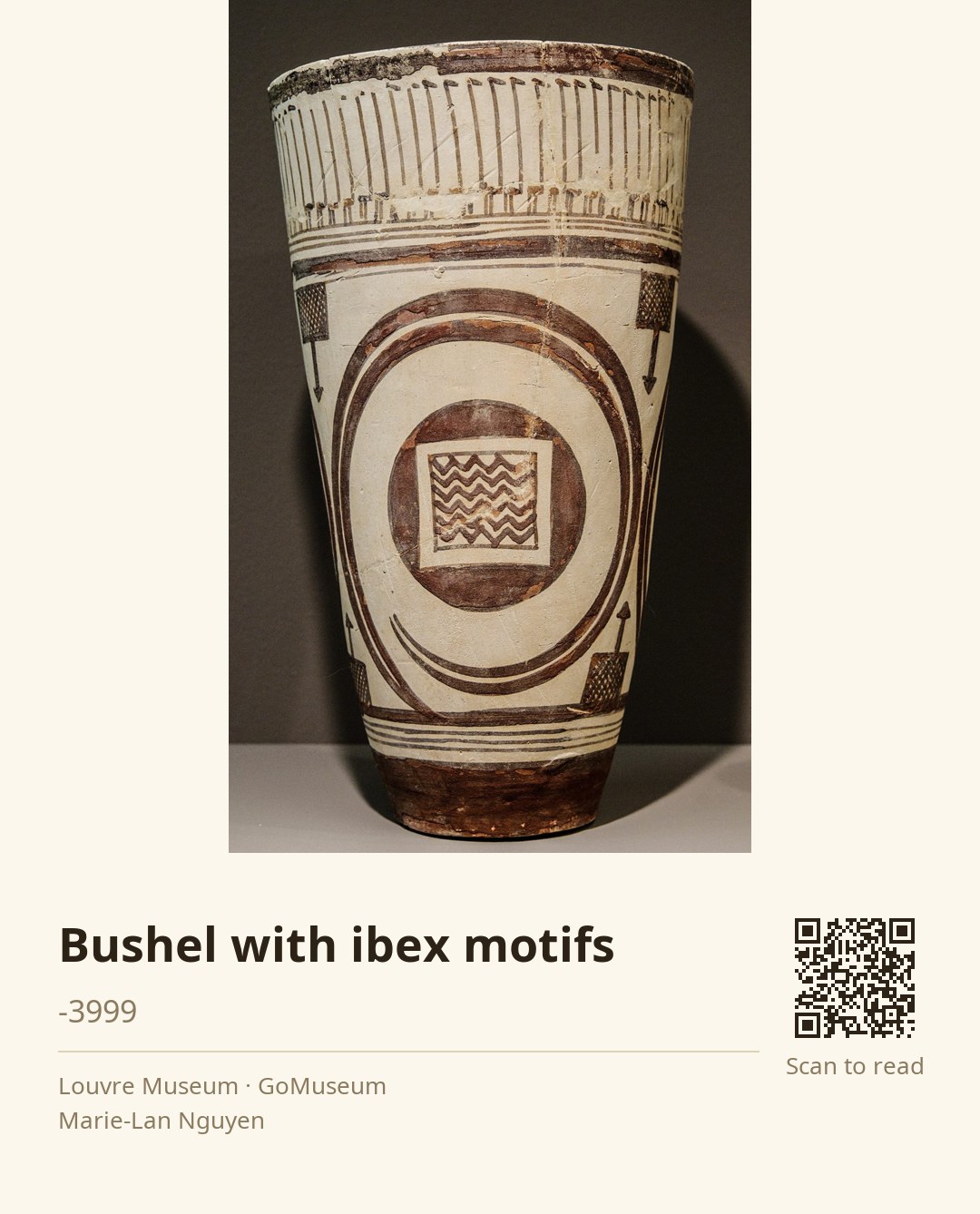
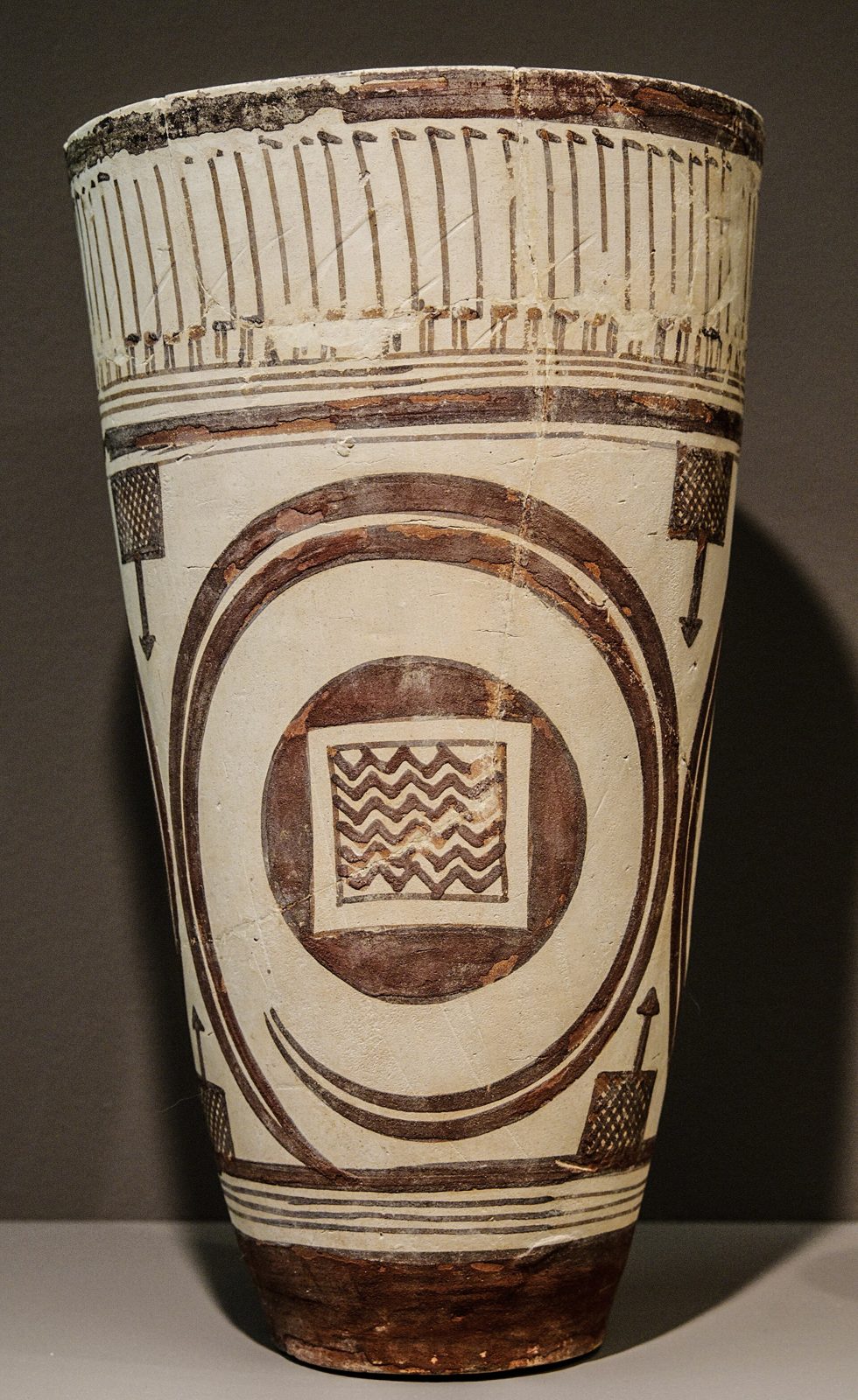
Bushel with ibex motifs
🎧 This work has audio narration — listen in the appTake a moment to really look at this bushel with ibex motifs. Notice the striking simplicity of the ibex, its horns curling back in a perfect arc. Isn’t it fascinating how the artist used just a few geometric shapes to convey such a powerful image? Those triangles and curves are not just for decoration; they capture the essence of the ibex, a creature that roamed the Zagros Mountains nearby.
Discovered in a necropolis during early 20th-century excavations, this bushel was likely used in funerary practices, connecting the living with the spiritual world. Imagine the stories this vessel could tell about the people who once held it.
As you stand here, think about the connection between art, culture, and the natural world. What do you think the ibex represents for us today?
The bushel with ibex motifs was unearthed during a significant excavation of a necropolis in Susa, led by the French archaeologist Jacques de Morgan between 1906 and 1908. This excavation was part of a broader effort to uncover the rich history of one of the earliest urban centers in the Near East, located in what is now Iran. Once discovered, this piece quickly gained attention for its unique craftsmanship and intricate animal motifs, particularly the ibex. It was likely used in funerary practices, connecting the deceased with the spiritual realm. Today, it resides in the Louvre Museum in Paris, where it is celebrated as a prime example of early animal style pottery, showcasing the artistic trends of its time.
One fascinating tidbit about the Bushel with ibex motifs is its connection to funerary practices. This large vessel was not just a decorative piece; it served a significant role in the burial rituals of the early inhabitants of Susa. Imagine it being placed in a grave, perhaps filled with offerings, as a way to honor the deceased.
In addition to the ibex, the bushel showcases long-necked birds in the upper register and reclining dogs, which are believed to be saluki or greyhound types, reflecting the fauna of the region.
The cylindrical shape of the bushel, emphasized by the roundness of the ibex's horns and other geometric elements, may reflect the functional and aesthetic values of the time, suggesting a blend of utility and artistry in ancient pottery.